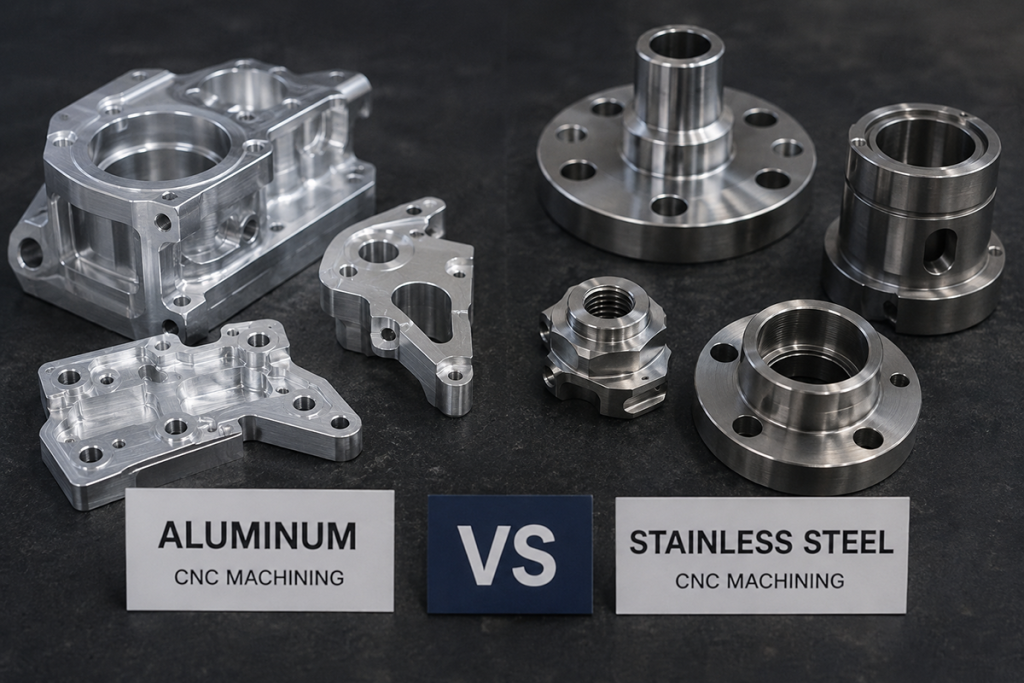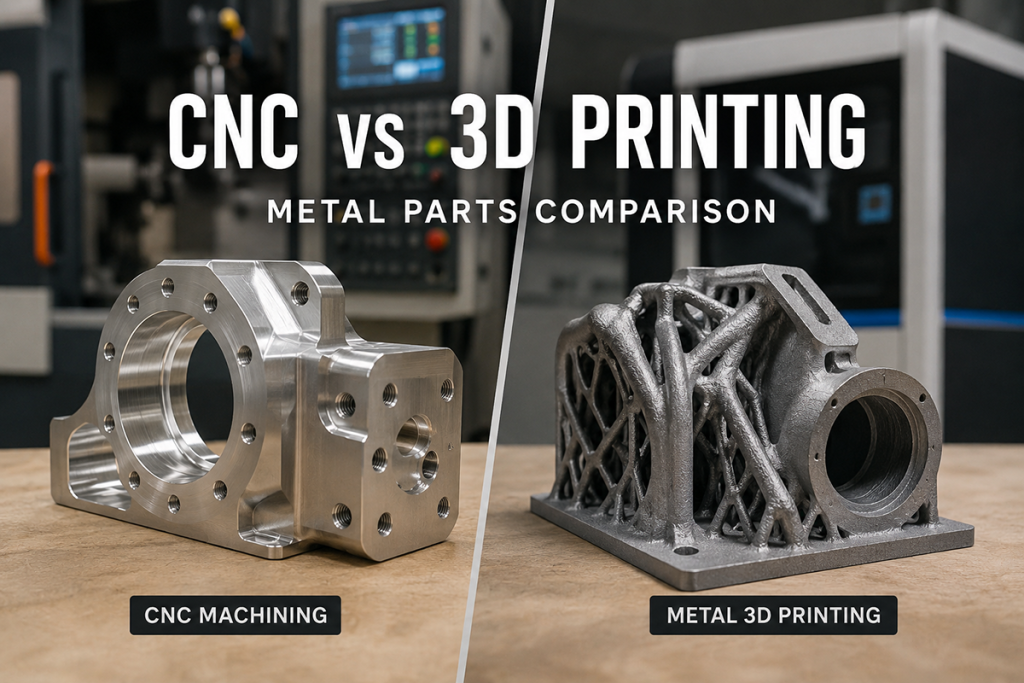
Introduction
CNC machining vs casting is a fundamental comparison in modern manufacturing, especially for engineers and sourcing managers responsible for selecting the most suitable production method for metal parts. Both processes are widely used across industries such as automotive, industrial equipment, and machinery, yet they differ significantly in terms of precision, cost structure, and scalability.
Choosing the right method is not simply a matter of preference—it directly impacts product performance, production efficiency, and overall project cost. A process that works well for high-volume structural components may not be suitable for precision assemblies, and vice versa. Misalignment between process and application often leads to unnecessary machining operations, quality inconsistencies, or delayed production timelines.
This article provides a practical, engineering-focused breakdown of CNC machining and casting. By comparing their differences in cost, accuracy, and application scenarios, you will gain a clear understanding of when to use CNC machining and when to use casting for your specific project requirements.
What Is CNC Machining
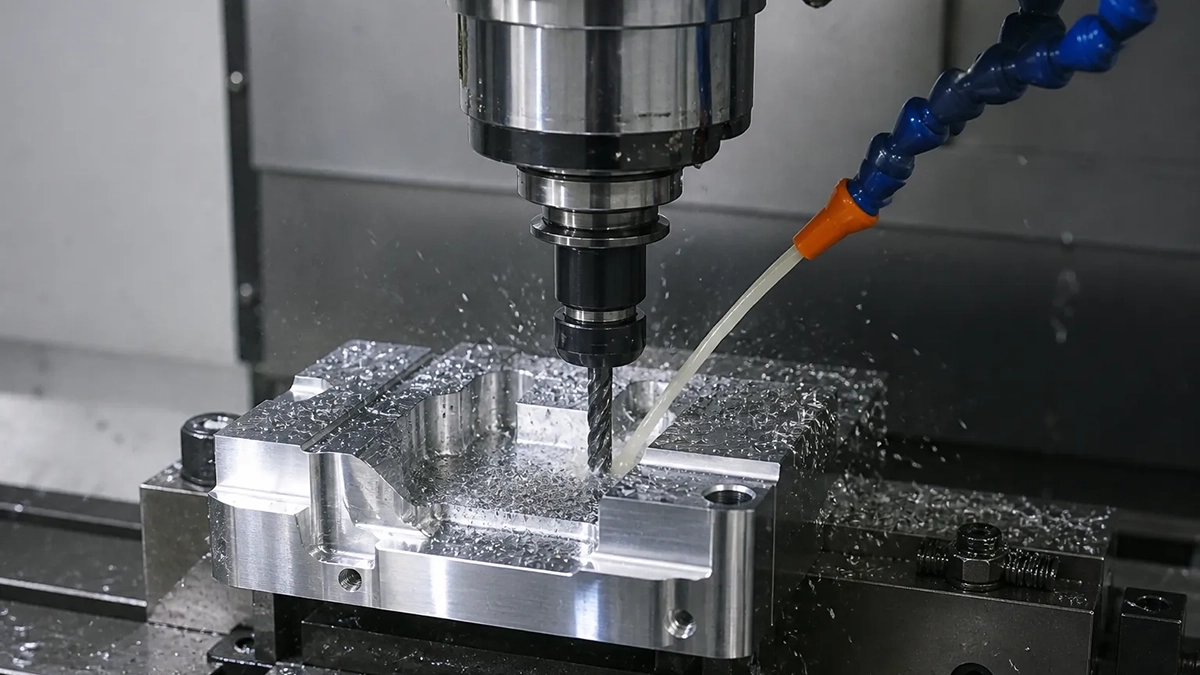
CNC machining is a subtractive manufacturing process in which material is removed from a solid workpiece using computer-controlled cutting tools. The process is driven by digital design files (CAD models) and translated into machine instructions (CAM programs), allowing for highly precise and repeatable production. Unlike formative methods, CNC machining starts with a block, plate, or bar of material and progressively removes material until the final geometry is achieved.
One of the defining characteristics of CNC machining is its ability to maintain tight dimensional tolerances. In most industrial applications, tolerances of ±0.01 mm are achievable, and even tighter tolerances can be reached with advanced equipment and proper process control. This level of accuracy is critical for components that must interface with other parts, such as bearing housings, mounting brackets, or precision mechanical assemblies.
The process typically involves multiple operations, including milling, turning, drilling, and tapping. Each operation is controlled through programmed toolpaths, ensuring consistency across production runs. Because the process is digitally controlled, parts can be reproduced with minimal variation, which is essential for applications requiring high repeatability.
Another major advantage of CNC machining is its flexibility. Since no molds or tooling are required, design changes can be implemented quickly without incurring additional setup costs. This makes CNC machining particularly suitable for prototyping, custom components, and low-to-medium volume production. Engineers can iterate designs, test functionality, and refine specifications without committing to expensive tooling upfront.
Material selection is also broad. CNC machining supports a wide range of metals and plastics, including:
- Aluminum alloys (commonly used for lightweight structural parts)
- Stainless steel (for strength and corrosion resistance)
- Titanium (for high-performance applications)
- Brass and copper (for electrical and precision components)
- Engineering plastics such as POM, ABS, and nylon
Because the process retains the original material grain structure, machined parts often exhibit consistent mechanical properties compared to cast components. This is especially important for parts subjected to load, vibration, or repeated stress cycles.
For companies sourcing parts through precision CNC machining services, the process offers a combination of speed, accuracy, and adaptability. It is commonly used in industries such as robotics, aerospace, medical devices, and industrial automation, where precision and reliability are non-negotiable.
However, CNC machining is not without limitations. Material waste can be higher compared to casting, especially for large parts, and per-unit cost tends to remain relatively stable regardless of volume. These factors become more significant when evaluating production at scale, which is where alternative processes such as casting may offer advantages.
What Is Casting
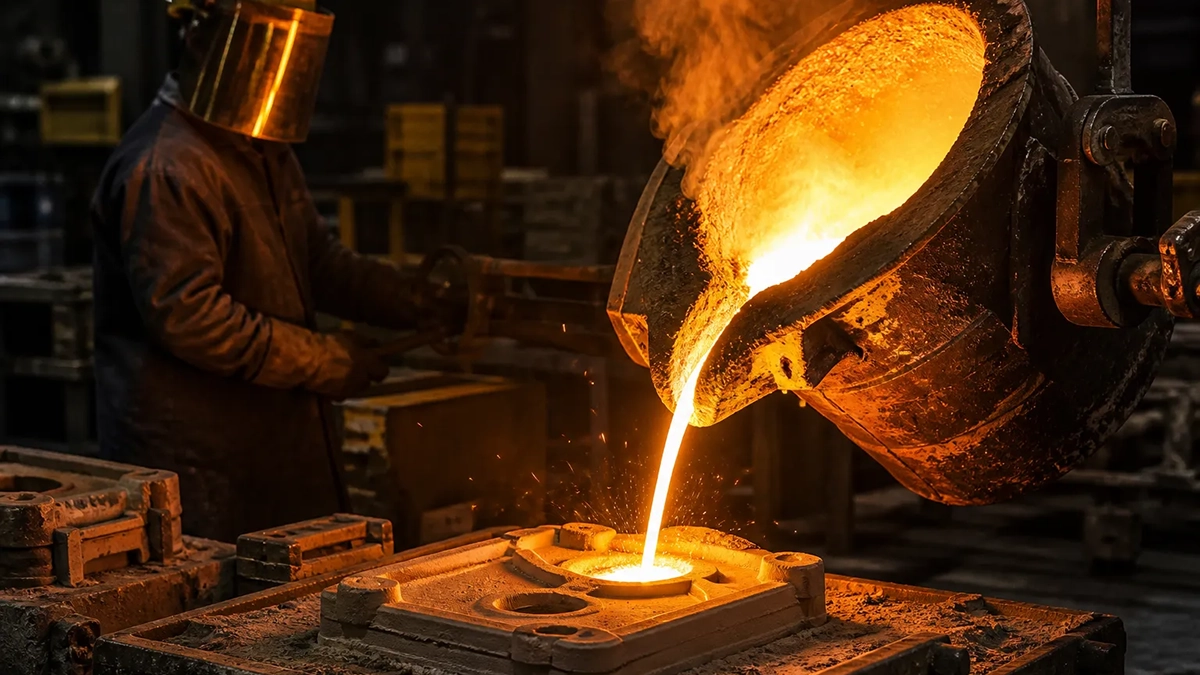
Casting is a formative manufacturing process in which molten metal is poured into a mold cavity and allowed to solidify into the desired shape. Unlike CNC machining, which removes material from a solid block, casting forms the part directly, making it particularly effective for producing complex geometries and large structural components. This process has been widely used in industries such as automotive, heavy machinery, and industrial equipment for decades due to its scalability and cost efficiency.
The casting process generally involves several key steps: mold design, mold preparation, metal melting, pouring, solidification, and finishing. The mold itself can be made from different materials depending on the casting method, and its design plays a critical role in determining part quality, dimensional accuracy, and production consistency.
There are several common types of casting processes, each suited to different applications:
- Sand casting: One of the most versatile methods, suitable for large parts and low-volume production. It allows for flexible mold creation but typically results in rougher surface finishes and lower dimensional accuracy.
- Die casting: Uses high-pressure injection of molten metal into steel molds. This method offers better repeatability and surface finish, making it ideal for high-volume production of smaller components.
- Investment casting: Also known as lost-wax casting, it is used for producing intricate shapes with relatively high precision and smoother surfaces compared to sand casting.
The main advantage of casting lies in its ability to produce near-net shape parts. This means that the final geometry is close to the desired shape, reducing the amount of material removal required in secondary processes. For large components or parts with internal cavities—such as pump housings, engine blocks, or structural brackets—casting can be significantly more efficient than machining from a solid block.
From a cost perspective, casting becomes more economical as production volume increases. Although initial tooling costs for molds can be substantial, these costs are distributed across large production runs, reducing the per-unit cost. This is why casting is commonly used in high-volume manufacturing environments, particularly in regions such as China and Southeast Asia, where large-scale production is standard.
However, casting also introduces certain limitations. Factors such as cooling rate, shrinkage, and gas entrapment can lead to defects like porosity or dimensional variation. As a result, cast parts often require secondary CNC machining operations to achieve critical tolerances, surface finishes, or functional features such as threaded holes and precision mating surfaces.
In practice, casting and machining are often used together rather than as direct alternatives. Casting provides the base shape, while CNC machining ensures accuracy and functionality. Understanding this relationship is essential when evaluating CNC vs casting differences in real-world production scenarios.
For more technical background on casting processes, you can refer to metal casting fundamentals, which outlines the variations and industrial applications of different casting methods.
Key Differences Between CNC Machining and Casting
Understanding the practical differences between CNC machining vs casting is essential for selecting the right manufacturing process. While both methods are widely used, they differ significantly in terms of precision, cost structure, production efficiency, and material performance. These differences directly impact product quality, lead time, and overall project feasibility.
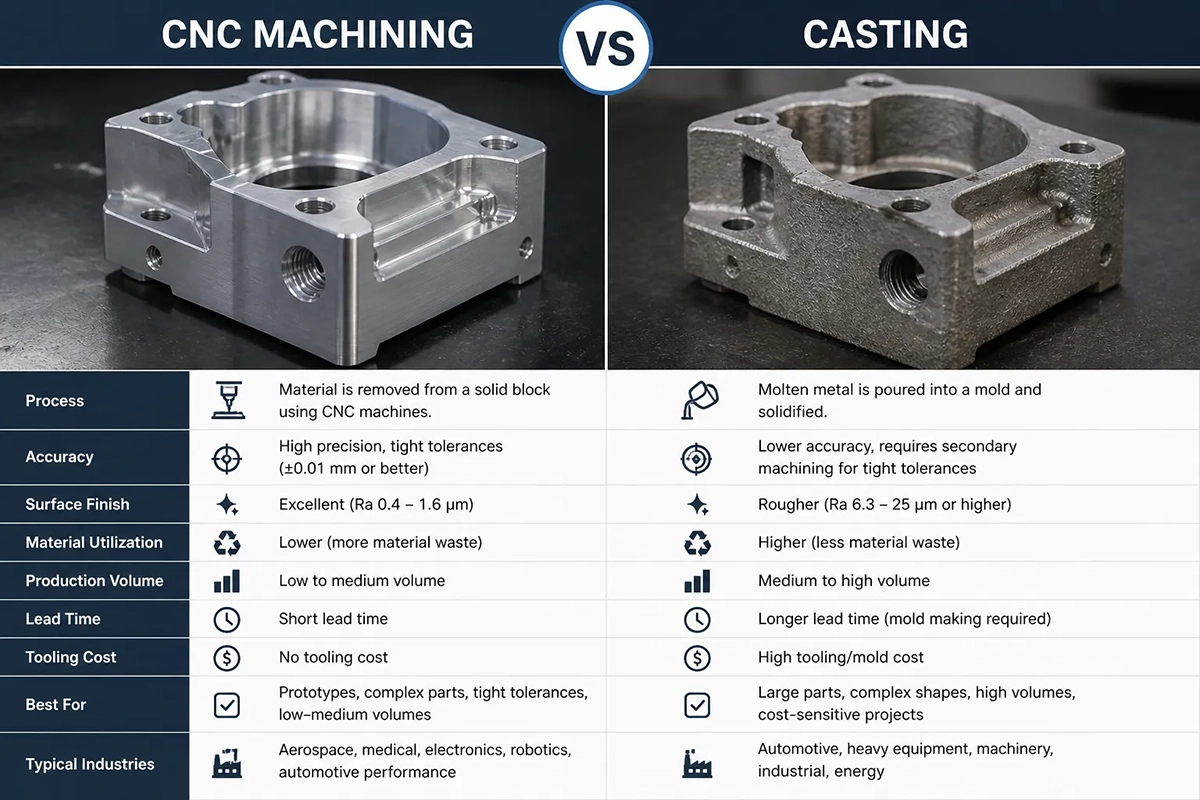
Below is a structured comparison of the most important factors engineers and buyers should evaluate:
- Precision and Tolerance
CNC machining offers superior dimensional accuracy, typically achieving tolerances of ±0.01 mm or tighter depending on the setup. This makes it ideal for components that require precise alignment or tight fits. Casting processes, especially sand casting, generally have lower accuracy and often require secondary machining to meet critical tolerances. - Surface Finish
Machined parts usually have a smoother and more consistent surface finish directly from the process. Casting often results in rougher surfaces, particularly in sand casting, and may require additional finishing operations such as grinding, polishing, or machining. - Production Volume
CNC machining is well-suited for low-to-medium production volumes and prototyping, as it does not require tooling. Casting becomes more advantageous at high volumes, where mold costs can be distributed across many parts, reducing the per-unit cost. - Cost Structure
CNC machining has minimal setup cost but higher per-unit cost due to material removal and machining time. Casting requires higher upfront investment in molds, but offers lower per-unit cost when producing large quantities. - Material Efficiency
Casting is generally more material-efficient because it forms parts close to their final shape, reducing waste. CNC machining removes excess material, which can lead to higher material consumption, especially for large components. - Material Properties
Machined parts retain the original grain structure of the material, often resulting in better strength and consistency. Casting can introduce variations in microstructure due to cooling and solidification, which may affect mechanical properties. - Design Flexibility
CNC machining allows for easy design changes without additional tooling costs. Casting is less flexible once molds are created, making design changes more expensive and time-consuming. - Lead Time
CNC machining offers faster initial production since it does not require mold fabrication. Casting involves longer setup time due to mold design and validation, but can produce large quantities quickly once production begins.
For buyers comparing machining vs casting cost and performance, these differences highlight a key trade-off: CNC machining prioritizes precision and flexibility, while casting prioritizes efficiency and scalability. In many real-world projects, manufacturers combine both methods—using casting for base geometry and CNC machining for finishing critical features.
To explore how these differences apply to specific applications, such as automotive components, see CNC machining for automotive parts for practical use cases and performance requirements.
Cost Comparison: CNC Machining vs Casting
When evaluating CNC machining vs casting, cost is often the deciding factor for engineers and sourcing managers. However, comparing costs between these two processes is not straightforward, as their cost structures are fundamentally different. Understanding how each process generates cost—and how those costs scale with production volume—is critical for making the right decision.
Tooling vs No Tooling Cost
The most significant difference lies in tooling. CNC machining does not require molds or dies, which means there is little to no upfront investment. Production can begin as soon as the design is finalized, making it highly suitable for prototypes and small batch production.
In contrast, casting requires mold creation, which can range from a few hundred dollars for simple sand casting to several thousand dollars for high-precision die casting. This initial investment increases project risk, especially if design changes are expected. Once the mold is produced, modifications can be costly and time-consuming.
Per-Unit Cost at Different Volumes
CNC machining typically has a stable per-unit cost. Since each part requires machining time and material removal, the cost per part remains relatively consistent regardless of production volume. This makes CNC machining cost-effective for:
- Prototypes
- Custom parts
- Low-to-medium production runs
Casting, on the other hand, has a declining per-unit cost as production volume increases. Once tooling costs are absorbed, each additional part becomes significantly cheaper. This makes casting the preferred option for:
- Mass production
- High-volume automotive components
- Large-scale industrial parts
Material and Waste Considerations
Material usage also plays a role in cost. CNC machining removes material from a solid block, which can lead to higher material waste, especially for large or complex parts. While scrap material can sometimes be recycled, it still contributes to overall cost.
Casting is more material-efficient because it produces near-net shape parts. This reduces waste and lowers material costs per unit, particularly in high-volume production scenarios.
Hidden Costs and Risk Factors
Beyond direct manufacturing costs, there are additional factors to consider:
- Lead time risk: Casting requires mold development, which can delay production
- Quality variation: Casting defects such as porosity may increase rejection rates
- Post-processing: Many cast parts require secondary machining
CNC machining generally has more predictable cost outcomes because it is digitally controlled and does not depend on mold conditions or cooling behavior.
For buyers analyzing machining vs casting cost, the key takeaway is that CNC machining minimizes upfront investment and risk, while casting reduces cost at scale. The optimal choice depends on production volume, design stability, and budget constraints.
To better understand how material selection impacts machining cost, you can explore CNC machining materials and how different alloys affect production efficiency and pricing.
Accuracy and Surface Finish Comparison
When comparing CNC machining vs casting, accuracy and surface finish are often decisive factors, especially for components that require tight tolerances, precise alignment, or high-quality interfaces. These characteristics directly affect how parts fit, function, and perform over time, making them critical considerations in industries such as robotics, automotive, and industrial equipment manufacturing.
Dimensional Accuracy and Tolerances
CNC machining is widely recognized for its ability to achieve high dimensional accuracy. Because the process is controlled digitally and material is removed using precise toolpaths, tolerances as tight as ±0.01 mm are achievable in standard production environments. For high-precision applications, even tighter tolerances can be reached with specialized equipment and process control.
This level of accuracy is essential for parts such as bearing housings, mating surfaces, threaded components, and assemblies where multiple parts must fit together seamlessly. CNC machining ensures repeatability across production batches, reducing the risk of misalignment or assembly issues.
In contrast, casting processes generally have lower dimensional accuracy due to factors such as mold variation, material shrinkage, and cooling behavior. Sand casting, for example, may have tolerances in the range of ±0.5 mm or more, depending on the part size and process control. Even higher-precision methods like die casting still cannot consistently match the accuracy of CNC machining without additional finishing operations.
Surface Finish Quality
Surface finish is another important distinction. CNC machined parts typically have a smoother and more controlled finish directly from the machining process. Surface roughness can be adjusted through cutting parameters, tool selection, and finishing passes, allowing manufacturers to meet specific requirements for functional or aesthetic surfaces.
Cast parts, on the other hand, often have rougher surfaces due to the nature of mold-based forming. Sand casting produces relatively coarse surfaces, while die casting and investment casting can achieve smoother finishes but still may require post-processing such as polishing, grinding, or machining to meet final specifications.
Secondary Processing Requirements
Because of these limitations, casting is often combined with CNC machining to achieve the required accuracy and finish. Critical features—such as holes, threads, sealing surfaces, and precision interfaces—are typically machined after casting to ensure proper functionality.
This hybrid approach highlights an important point in the casting vs machining accuracy comparison: casting alone is rarely sufficient for high-precision applications. Instead, it is used to form the base geometry, while machining ensures final dimensional control.
When Accuracy Matters Most
CNC machining is the preferred choice when:
- Tight tolerances are required
- Parts must fit precisely in assemblies
- Surface finish affects performance (e.g., sealing, friction)
- Consistency across batches is critical
For a deeper understanding of tolerance standards in manufacturing, you can refer to geometric dimensioning and tolerancing, which explains how precision is defined and controlled in engineering applications.
In summary, CNC machining delivers superior accuracy and surface quality, while casting requires additional processing to achieve similar results. This distinction plays a major role in determining which process is more suitable for a given project.
When to Choose CNC Machining
After comparing CNC machining vs casting in terms of cost, accuracy, and production characteristics, the next step is understanding when CNC machining is the more appropriate choice. In real-world manufacturing, CNC machining is not simply “more precise”—it is strategically selected when flexibility, control, and performance consistency are required throughout the production cycle.
Low-to-Medium Volume Production
CNC machining is particularly well-suited for low-to-medium production runs where the cost of tooling cannot be justified. Because no molds or dies are required, production can begin immediately after the design is finalized. This is ideal for:
- Custom components
- Limited production batches
- Spare parts and replacement components
For companies that operate across multiple product lines or frequently update designs, CNC machining eliminates the need for repeated tooling investment and reduces financial risk.
High Precision and Tight Tolerances
One of the most common reasons to choose CNC machining is the requirement for tight tolerances and precise geometries. Components that must align with other parts, maintain consistent dimensions, or meet strict engineering specifications benefit significantly from CNC machining.
This is especially relevant in industries such as robotics, automation systems, and precision machinery, where even small deviations can lead to assembly issues or performance failure.
Rapid Prototyping and Short Lead Time
CNC machining is widely used in product development because it supports fast turnaround. Without the need for tooling, parts can move from CAD design to physical production within days. This allows engineers to:
- Test functionality quickly
- Validate design concepts
- Reduce development cycles
For projects with tight deadlines or evolving specifications, CNC machining provides a level of responsiveness that casting cannot match.
Material Strength and Structural Integrity
Because CNC machining starts with solid material, the final part retains its original grain structure. This results in more consistent mechanical properties compared to cast parts, which may experience microstructural variation during solidification.
This makes CNC machining the preferred option for:
- Load-bearing components
- Parts subject to vibration or stress
- Critical functional assemblies
Design Flexibility and Iteration
In situations where the design may change—such as early-stage product development or custom engineering projects—CNC machining provides unmatched flexibility. Design modifications can be implemented without additional tooling cost, allowing for continuous optimization.
For buyers evaluating when to use CNC machining, the key advantages can be summarized as:
- No tooling cost or setup delay
- High precision and repeatability
- Fast turnaround for prototypes and small batches
- Strong and consistent material properties
To see how CNC machining performs in real-world automotive applications, you can review this CNC machined automotive bracket case study, which demonstrates how tight tolerances and structural performance are achieved in production.
When to Choose Casting
While CNC machining offers clear advantages in precision and flexibility, there are many scenarios where casting becomes the more practical and cost-effective solution. In the comparison of CNC machining vs casting, casting is typically selected when production scale, part complexity, and cost efficiency are the primary drivers of the project.
High-Volume Production
Casting is most advantageous when producing large quantities of identical parts. Although the initial tooling cost for molds can be significant, this investment is distributed across the total production volume, resulting in a much lower per-unit cost over time.
This makes casting the preferred choice in industries such as automotive manufacturing, consumer products, and industrial equipment, where thousands or even millions of parts may be required. Once the mold is validated, production can run continuously with high efficiency.
Complex Geometries and Internal Features
One of the strongest advantages of casting is its ability to produce complex shapes that would be difficult or inefficient to machine. This includes:
- Internal cavities and hollow structures
- Thin walls combined with large external dimensions
- Organic or non-linear geometries
In many cases, achieving these features with CNC machining would require multiple setups, specialized tooling, or even be impractical due to accessibility limitations. Casting allows these geometries to be formed directly within the mold.
Cost Efficiency at Scale
From a financial perspective, casting becomes significantly more cost-effective as production volume increases. The key advantage lies in its ability to minimize material waste and reduce machining time. Near-net shape production means that less material needs to be removed, lowering both material and processing costs.
This is particularly relevant in regions with established high-volume manufacturing ecosystems, such as China and Southeast Asia, where casting is widely used to support large-scale industrial production.
Large Structural Components
Casting is also well-suited for producing large components that would be inefficient to machine from a solid block. Examples include:
- Engine blocks and housings
- Pump bodies and valve casings
- Heavy machinery frames
Machining these parts would involve significant material removal, leading to higher cost and longer processing time. Casting provides a more efficient way to produce these structures with reduced waste.
Stable Designs with Long Production Life
Because casting requires mold creation, it is best suited for designs that are unlikely to change. Once the tooling is produced, modifying the design can be costly. Therefore, casting is typically chosen for products with stable specifications and long production cycles.
For buyers evaluating when to use casting, the decision often comes down to production scale and design complexity. If the project involves high volumes, complex shapes, and a stable design, casting is usually the more efficient and economical solution.
However, it is important to note that many cast components still require secondary machining to achieve critical tolerances and functional features. This reinforces the idea that casting and CNC machining are often complementary rather than mutually exclusive processes.
Real-World Application Examples
Understanding CNC machining vs casting in theory is useful, but real value comes from seeing how each process performs in practical applications. In manufacturing environments, the choice is rarely abstract—it is driven by functional requirements, industry standards, and production constraints. Below are common examples across industries where each method is applied based on real engineering and sourcing needs.
Automotive Components
The automotive industry uses both CNC machining and casting extensively, often within the same component lifecycle. For example, engine blocks, transmission housings, and structural brackets are typically produced through casting because they require complex geometries and are manufactured in high volumes.
However, critical features such as mounting surfaces, bearing seats, and threaded holes are almost always finished using CNC machining. This ensures proper alignment, sealing performance, and dimensional accuracy. In this context, casting provides the base structure, while machining guarantees functionality.
For precision parts such as custom brackets or performance components, CNC machining may be used exclusively. A detailed example can be seen in this automotive CNC bracket case, where tight tolerances and structural integrity are required for reliable performance.
Industrial Equipment and Machinery
In industrial equipment manufacturing, the choice between machining and casting depends heavily on part function. Large housings, frames, and enclosures are often cast to reduce cost and material waste. These components do not always require tight tolerances across the entire structure, making casting a practical solution.
On the other hand, functional components such as shafts, connectors, and precision interfaces are typically machined. These parts must meet strict tolerance and surface finish requirements to ensure proper operation within mechanical systems.
This combination highlights a common pattern: casting is used for structural elements, while machining is used for functional features.
Robotics and Precision Systems
In robotics and automation systems, CNC machining is often the dominant process due to the need for high precision and repeatability. Components such as actuator housings, mounting plates, and sensor brackets must align precisely with electronic and mechanical systems.
Even small deviations can lead to performance issues, making casting less suitable for these applications unless followed by secondary machining. As a result, CNC machining is typically preferred for low-to-medium volume production in robotics, where flexibility and accuracy are essential.
Structural vs Precision Parts
A practical way to understand the CNC vs casting differences is to categorize parts into two groups:
- Structural parts: Large, load-bearing components with less strict tolerance requirements (often cast)
- Precision parts: Components requiring tight tolerances, smooth finishes, and exact alignment (typically machined)
This distinction helps engineers and buyers quickly determine which process is more suitable for a given application. In many cases, a hybrid approach—combining casting and CNC machining—delivers the best balance between cost and performance.
For more application-specific insights, you can explore automotive CNC parts manufacturing, which demonstrates how machining is used to meet strict industry requirements.
How to Decide for Your Project
After reviewing the differences between CNC machining vs casting, the final step is applying this knowledge to your specific project. In practice, the decision is rarely based on a single factor. Instead, it requires evaluating multiple technical and commercial considerations together to determine the most suitable manufacturing approach.
Below is a practical checklist that engineers and sourcing managers can use to guide their decision-making process:
1. Production Volume
- Low-to-medium volume: CNC machining is typically more cost-effective due to the absence of tooling
- High volume: Casting becomes more economical as mold costs are distributed across large quantities
2. Precision Requirements
- Tight tolerances (±0.01 mm or better): CNC machining is the preferred choice
- Moderate tolerances: Casting may be sufficient, often with secondary machining
3. Part Complexity
- Complex internal geometries: Casting can produce these more efficiently
- Accessible and well-defined features: CNC machining is more practical
4. Lead Time and Project Urgency
- Short lead time required: CNC machining allows immediate production without tooling delays
- Flexible timeline: Casting can be considered if tooling lead time is acceptable
5. Design Stability
- Frequent design changes: CNC machining provides flexibility with minimal additional cost
- Stable, long-term design: Casting is more suitable once tooling is established
6. Material and Performance Requirements
- High structural integrity and consistency: CNC machining retains original material properties
- Large structural components: Casting may be more efficient for size and cost
7. Budget Structure
- Limited upfront budget: CNC machining avoids tooling investment
- Long-term cost optimization: Casting reduces per-unit cost at scale
By evaluating these factors together, you can determine which process aligns best with your technical requirements and business objectives. In many cases, the optimal solution is not strictly CNC machining or casting, but a combination of both—using casting for base geometry and machining for critical features.
If you are still unsure which approach is right for your project, consulting with an experienced manufacturing partner can help clarify trade-offs and avoid costly mistakes early in the process. Reviewing your design, material selection, and production goals together often leads to a more efficient and reliable solution.
Conclusion
The decision between CNC machining vs casting ultimately comes down to how well each process aligns with your project’s technical requirements and production strategy. CNC machining stands out for precision, flexibility, and rapid turnaround, making it ideal for prototypes, low-to-medium volume runs, and parts that demand tight tolerances. Casting, on the other hand, excels in high-volume manufacturing, complex geometries, and cost efficiency at scale—particularly when designs are stable and production demand is consistent.
In real manufacturing environments, these processes are often used together rather than in isolation. Casting can efficiently create near-net shapes, while CNC machining ensures critical features meet exact specifications. This combined approach allows manufacturers to balance cost, quality, and performance in a practical way.
For engineers and sourcing managers, the key is to evaluate volume, precision requirements, lead time, material performance, and budget as a whole—not individually. Making the right choice early in the project can reduce rework, improve part reliability, and optimize overall production cost.
If you are currently planning a project or comparing manufacturing options, working with a capable supplier can help translate design requirements into the most efficient production strategy. Our team provides precision CNC machining services for both prototyping and production, helping you select the right process based on real engineering and cost considerations.
Have a design ready? Upload your CAD files to receive a fast, practical quote and technical feedback tailored to your application.