Steel CNC Machining for Custom Metal Parts
Steel CNC machining supports custom metal parts that require strength, durability, wear resistance, and stable performance in industrial, automotive, and mechanical applications.
Why Steel Is Used in CNC Machining
Steel is widely selected for CNC machining when a part needs higher strength, better wear resistance, and reliable performance under load. It is suitable for industrial equipment components, mechanical parts, brackets, shafts, plates, and custom structural elements.
01
High Strength
Steel is suitable for components that must support load, resist deformation, or perform reliably in mechanical systems.
02
Wear Resistance
Steel performs well in applications involving repeated movement, contact, friction, or long-term mechanical use.
03
Industrial Durability
Steel CNC parts are commonly used in equipment, fixtures, supports, and assemblies where durability matters.
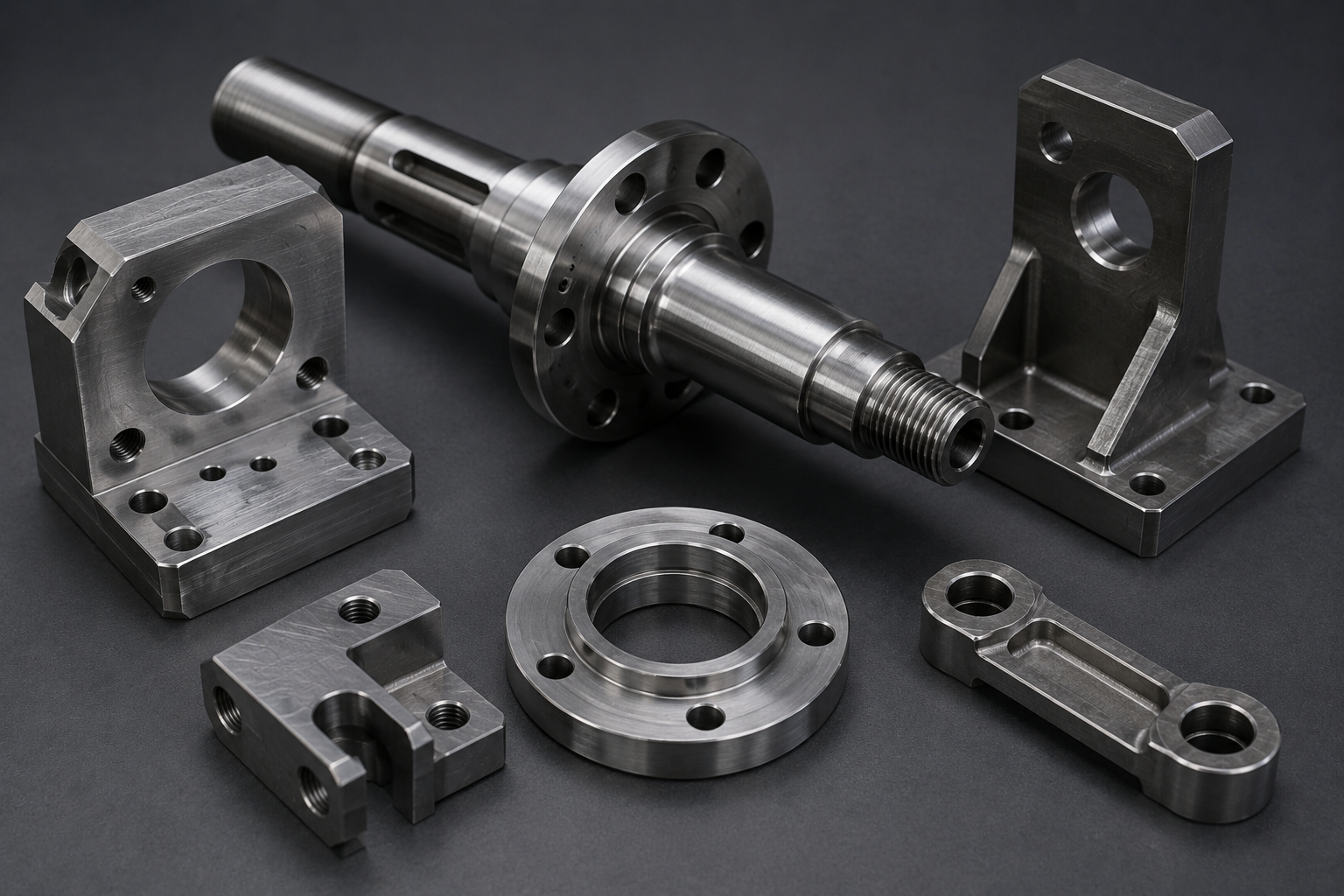
Common Steel Materials for CNC Machining
Different steel materials are selected based on part function, strength requirements, machinability, surface treatment needs, and operating environment.
Before machining, we review your drawing, tolerance requirements, application use, quantity, and finish expectations to help determine whether carbon steel, mild steel, alloy steel, or another steel grade is suitable.
What to Consider Before Steel CNC Machining
Steel machining requires attention to cutting conditions, tool wear, heat control, surface finish, and part geometry. Confirming these details early helps reduce production risk.
01
Tolerance Requirements
Critical dimensions should be clearly marked so machining strategy and inspection needs can be reviewed.
02
Tooling & Heat Control
Steel can increase tool wear and heat during machining, so cutting parameters must be selected carefully.
03
Surface Treatment
Finishing options such as black oxide, plating, polishing, or coating may be considered depending on application needs.
04
Production Quantity
Prototype and small-batch steel parts may require different machining plans compared with larger production runs.
Typical Steel CNC Machining Applications
Steel CNC machining is used for custom metal components that need strength, repeatability, and long-term durability in real working conditions.
Common applications include industrial equipment parts, automotive components, fixture plates, mechanical supports, shafts, spacers, brackets, mounting blocks, and drawing-based custom metal parts.
02
Project Review
Send drawings, material preference, tolerance requirements, quantity, and surface finish needs for practical review.
Need Steel CNC Machining for Custom Parts?
Send your drawing, material requirements, quantity, tolerance expectations, and surface finish needs. We will review your project and provide practical machining feedback.