Introduction
Aluminum vs stainless steel for CNC machining is one of the most common material comparisons in precision manufacturing. Both materials are widely used across industries such as automotive, industrial equipment, robotics, aerospace, and consumer products, yet they offer very different machining characteristics, mechanical properties, and cost structures.
Choosing the right material affects far more than part strength alone. It influences machining speed, tool wear, corrosion resistance, surface finish quality, and overall production cost. A material that performs well in lightweight structural applications may not be suitable for high-load or corrosive environments.
This guide provides a practical comparison of aluminum and stainless steel in CNC machining, helping engineers and sourcing managers understand how each material behaves in real production environments and when each option is most suitable.
Machinability: Why Aluminum Is Easier to Machine Than Stainless Steel
One of the biggest differences in aluminum vs stainless steel for CNC machining is machinability. In practical manufacturing environments, machinability directly affects production speed, tooling cost, lead time, and overall machining efficiency. For many engineers and sourcing managers, this becomes one of the most important factors when selecting a material.
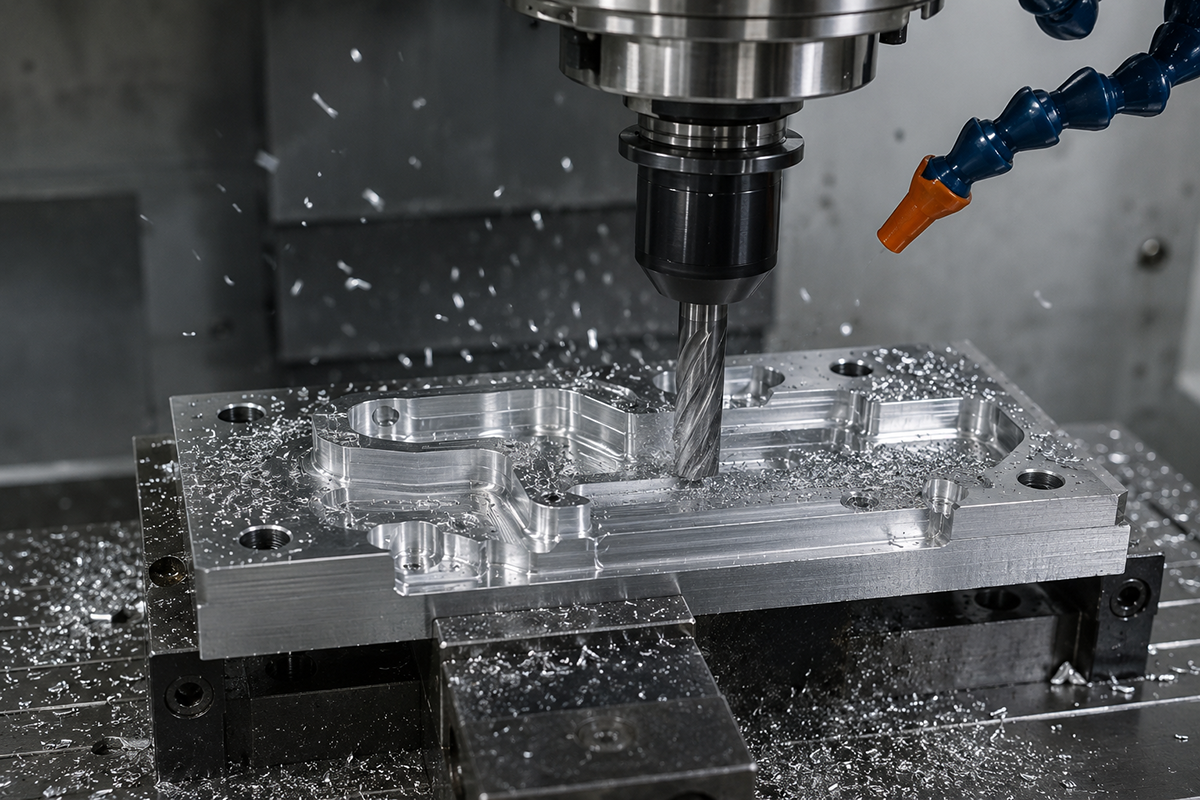
Aluminum is widely regarded as one of the easiest metals to machine. Its lower hardness and softer material structure allow cutting tools to remove material quickly with less resistance. This enables higher spindle speeds, faster feed rates, and shorter cycle times compared to stainless steel.
In CNC machining operations, this translates into several practical advantages:
- Faster production speed
- Lower tool wear
- Reduced machining cost
- Improved turnaround time
For example, aluminum is commonly used in prototype development and low-to-medium volume production because parts can be machined rapidly without excessive tool wear. This is especially important in industries such as robotics, automotive prototyping, and industrial automation, where development cycles are short and design changes occur frequently.
Another major advantage is chip evacuation. Aluminum produces smaller and more manageable chips during machining, reducing the risk of heat buildup and improving process stability. Surface finishes are also easier to achieve, making aluminum suitable for parts requiring clean cosmetic appearance or precision mating surfaces.
Stainless steel, by comparison, is significantly more difficult to machine. Its higher hardness and toughness generate greater cutting resistance, which increases heat and accelerates tool wear. Certain stainless steel grades also exhibit work hardening behavior, meaning the material becomes harder during machining if cutting conditions are not optimized.
As a result, machining stainless steel often requires:
- Slower cutting speeds
- More rigid setups
- Higher-quality cutting tools
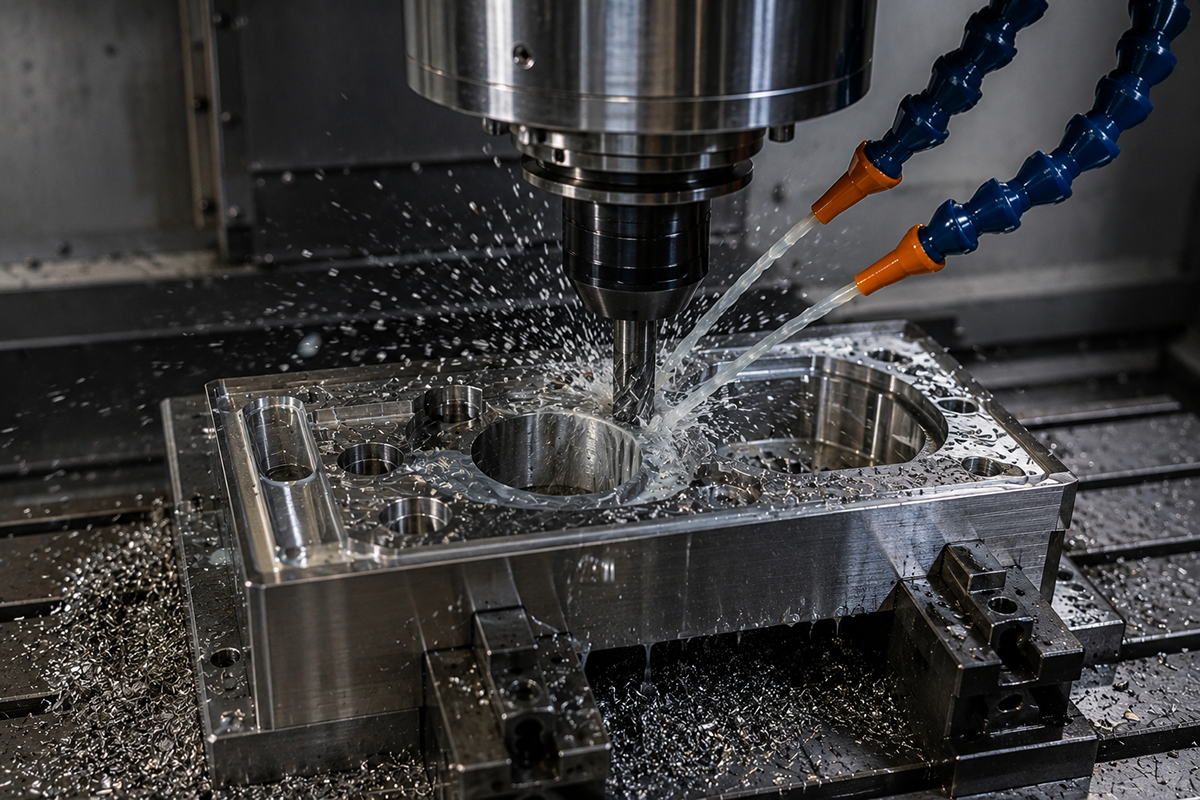
- Additional coolant management
These factors increase machining time and production cost. However, despite the added difficulty, stainless steel remains essential for applications requiring high strength, corrosion resistance, or long-term durability.
From a sourcing perspective, aluminum is usually preferred when manufacturing efficiency and lightweight performance are priorities. Stainless steel is selected when environmental resistance and mechanical strength outweigh machining speed and cost considerations.
For companies evaluating CNC machining materials, machinability should not be viewed only as a production issue—it directly influences pricing, lead time, and scalability throughout the entire project lifecycle.
Strength, Weight, and Structural Performance
Beyond machinability, the comparison of aluminum vs stainless steel for CNC machining often comes down to structural performance. Engineers must balance factors such as strength, weight, rigidity, and durability based on the functional requirements of the final component. While both materials are widely used in CNC machining, they perform very differently under load and in real operating environments.
Weight and Density Differences
One of aluminum’s biggest advantages is its low density. Aluminum is approximately one-third the weight of stainless steel, making it highly attractive for applications where reducing mass is important. This is especially relevant in:
- Automotive components
- Robotics systems
- Aerospace assemblies
- Portable industrial equipment
Reducing weight improves energy efficiency, simplifies handling, and lowers mechanical load on moving systems. In robotics and automation applications, lighter components can improve responsiveness and reduce motor stress, which directly affects long-term system performance.
Strength and Load Capacity
Stainless steel, however, generally provides higher tensile strength and greater resistance to deformation under heavy load. This makes it more suitable for:
- High-load structural parts
- Industrial fixtures
- Heavy-duty machinery components
- Parts exposed to impact or repeated stress
In environments where parts are subjected to constant vibration, pressure, or mechanical stress, stainless steel offers greater long-term reliability. Its rigidity also helps maintain dimensional stability in demanding operating conditions.
Aluminum can still provide excellent structural performance when the correct alloy is selected. Grades such as 6061 and 7075 aluminum are widely used in CNC machining because they combine lightweight characteristics with relatively high strength. However, even high-strength aluminum alloys generally cannot match stainless steel in ultimate load-bearing capacity.
Fatigue and Long-Term Durability
Another important consideration is fatigue resistance. Stainless steel typically performs better in applications involving repeated loading cycles or harsh industrial environments. Aluminum, while durable, may experience fatigue-related weakening over time if exposed to continuous high stress.
This distinction becomes critical in applications such as:
- Industrial automation systems
- Mechanical support structures
- Transportation equipment
Balancing Weight and Strength
In many real-world projects, the material decision is not about which metal is “better,” but which property matters more for the application. Aluminum is often chosen when reducing weight and improving machinability are priorities. Stainless steel is selected when structural strength, rigidity, and long-term durability are more important.
For example, automotive prototype brackets and lightweight housings are commonly machined from aluminum to improve efficiency and reduce manufacturing cost. Meanwhile, stainless steel is frequently used for industrial mounts, shafts, and structural interfaces that require higher mechanical strength.
Understanding these trade-offs is essential when selecting materials for precision CNC machining services, as the material choice directly impacts not only performance but also machining strategy, lead time, and overall project cost.
Corrosion Resistance and Environmental Performance
When comparing aluminum vs stainless steel for CNC machining, corrosion resistance is another major factor that influences material selection. Parts used in industrial environments are often exposed to moisture, chemicals, temperature variation, and outdoor conditions, making environmental performance critical for long-term reliability.
How Aluminum Resists Corrosion
Aluminum naturally forms a thin oxide layer when exposed to air. This protective layer helps prevent further oxidation and gives aluminum good corrosion resistance in many environments. For general industrial and indoor applications, aluminum performs well without requiring extensive surface treatment.
This is one reason aluminum is widely used for:
- Lightweight enclosures
- Automotive components
- Consumer electronics housings
- Robotics and automation systems
However, aluminum is not immune to corrosion. In highly acidic, alkaline, or salt-heavy environments, the oxide layer can break down over time. Marine environments and chemical exposure can accelerate corrosion if the correct alloy or coating is not selected.
To improve durability, aluminum parts are often treated with:
- Anodizing
- Powder coating
- Chemical conversion coatings
These treatments enhance corrosion resistance while also improving surface appearance and wear protection.
Stainless Steel and Corrosion Resistance
Stainless steel is generally considered superior in harsh or corrosive environments. Its chromium content creates a passive protective layer that continuously reforms when damaged, allowing stainless steel to maintain strong corrosion resistance even in demanding conditions.
This makes stainless steel a preferred material for:
- Food processing equipment
- Medical components
- Marine applications
- Chemical processing systems
- Outdoor industrial equipment
Grades such as 304 and 316 stainless steel are particularly common in CNC machining because they provide excellent resistance to moisture and chemical exposure.
Environmental Trade-Offs
Although stainless steel provides stronger corrosion resistance overall, this advantage comes with trade-offs. Stainless steel is heavier, more difficult to machine, and typically more expensive to process than aluminum. As a result, many projects do not require the full environmental resistance that stainless steel offers.
In controlled indoor environments or applications where weight reduction is important, aluminum often provides a better balance between corrosion performance and manufacturing efficiency.
Choosing Based on Operating Conditions
The best material choice depends heavily on where and how the part will be used:
- Indoor, lightweight, general industrial use: Aluminum is often sufficient
- Outdoor, high-moisture, or chemical exposure: Stainless steel is usually preferred
- Marine or food-grade environments: Stainless steel offers greater long-term reliability
For engineers evaluating aluminum CNC machining versus stainless steel machining, environmental conditions should always be considered alongside machinability and cost. Selecting a material with either insufficient or excessive corrosion resistance can lead to unnecessary expenses or reduced product lifespan.
For additional guidance on selecting suitable alloys, manufacturers often refer to standards published by organizations such as ASTM International, which defines material specifications for industrial applications.
Cost Comparison: Aluminum vs Stainless Steel in CNC Machining
Cost is one of the most important considerations in the comparison of aluminum vs stainless steel for CNC machining. However, the total manufacturing cost is influenced by far more than raw material pricing alone. Machining speed, tool wear, cycle time, finishing requirements, and production volume all contribute to the final cost structure.
Raw Material Cost
In most cases, aluminum is less expensive than stainless steel on a per-kilogram basis. Common machining grades such as 6061 aluminum are widely available and relatively affordable, making aluminum attractive for cost-sensitive projects.
Stainless steel, especially higher-performance grades like 316 or hardened alloys, generally has a higher material cost. This becomes more noticeable in large components or high-volume production where raw material usage significantly impacts total project cost.
Machining Time and Production Efficiency
The largest cost difference often comes from machining efficiency rather than material price itself. Aluminum machines much faster than stainless steel, allowing:
- Higher spindle speeds
- Shorter cycle times
- Reduced tool wear
- Lower labor and machine costs
Because stainless steel is harder and more resistant to cutting, machining operations take longer and place greater stress on cutting tools. This increases:
- Machine runtime
- Coolant usage
- Tool replacement frequency
- Overall production cost
For high-volume CNC machining, even small differences in cycle time can create significant cost variation over thousands of parts.
Tool Wear and Maintenance
Tool wear is another major cost factor. Aluminum’s softer structure causes relatively low wear on cutting tools, helping maintain stable production over longer machining cycles.
Stainless steel, by contrast, accelerates tool wear due to higher cutting resistance and heat generation. Some stainless grades also exhibit work hardening, increasing machining difficulty if cutting parameters are not optimized.
This means manufacturers often need:
- Higher-grade carbide tooling
- More frequent tool changes
- Slower machining strategies
All of these increase operating cost.
Finishing and Post-Processing
Surface treatment requirements can also influence total project cost. Aluminum is commonly anodized for corrosion protection and appearance enhancement, while stainless steel may require polishing, passivation, or specialized finishing depending on the application.
The complexity of the finishing process varies by industry and performance requirement.
Cost Efficiency by Application
In practical manufacturing scenarios:
- Aluminum is usually more cost-effective for prototypes, lightweight structures, and fast-turnaround production
- Stainless steel becomes justified when durability, corrosion resistance, or high mechanical strength outweigh machining cost
For sourcing managers evaluating total project cost, aluminum often provides the best balance between machinability and affordability. Stainless steel is selected when long-term environmental or structural performance is more critical than manufacturing efficiency.
To better understand how material selection impacts machining strategy and lead time, many manufacturers compare projects through CNC machining material analysis before finalizing production decisions.
Real-World Applications: When Aluminum or Stainless Steel Makes More Sense
In real manufacturing environments, the decision between aluminum vs stainless steel for CNC machining is rarely based on a single property. Instead, engineers select materials according to the specific functional and operational requirements of the application. Understanding how these materials are used in actual production scenarios provides a clearer perspective on their advantages and limitations.
Automotive and Transportation Components
Aluminum is heavily used in automotive CNC machining because of its lightweight properties and excellent machinability. Reducing component weight improves fuel efficiency, lowers mechanical load, and supports faster system response.
Common aluminum CNC machined automotive parts include:
- Mounting brackets
- Lightweight housings
- Suspension components
- Prototype structural parts
For example, prototype development and aftermarket performance components often rely on 6061 or 7075 aluminum because these alloys can be machined quickly while still providing sufficient structural strength.
Stainless steel, however, is frequently selected for automotive parts exposed to higher stress or harsh operating conditions, such as:
- Exhaust system components
- Industrial vehicle fixtures
- Corrosion-resistant mounting systems
Its higher durability and corrosion resistance justify the increased machining cost in these environments.
Industrial Equipment and Machinery
In industrial machinery applications, both materials are commonly used—but for different purposes.
Aluminum is often chosen for:
- Machine covers and enclosures
- Automation frames
- Robotics housings
- Lightweight positioning systems
Its reduced weight simplifies assembly and lowers stress on moving mechanical systems.
Stainless steel is preferred for:
- Heavy-duty fixtures
- Shaft supports
- Load-bearing structures
- Components exposed to moisture or chemicals
In production facilities where equipment operates continuously under vibration or mechanical stress, stainless steel provides greater long-term structural stability.
Medical and Food Processing Applications
Stainless steel dominates industries where hygiene and corrosion resistance are critical. Grades such as 304 and 316 stainless steel are widely used for CNC machined medical and food-processing components because they resist contamination and maintain durability under repeated cleaning cycles.
Aluminum is less common in these environments unless weight reduction is essential and environmental exposure is limited.
Robotics and Automation Systems
In robotics and automation, aluminum is often the preferred material because it combines lightweight performance with fast machining capability. Lower component weight improves actuator response and reduces energy consumption across moving systems.
However, stainless steel may still be used in areas requiring:
- Higher wear resistance
- Rigid structural interfaces
- Long-term durability under repeated load
Balancing Performance and Manufacturing Efficiency
These application examples demonstrate an important principle: aluminum is generally favored when machining efficiency, lightweight performance, and fast turnaround are priorities, while stainless steel is selected when environmental resistance, strength, and durability become more important.
For companies sourcing custom CNC machining services, understanding how each material performs in practical applications helps ensure the final design aligns with both operational requirements and manufacturing efficiency.
How to Choose Between Aluminum and Stainless Steel for Your CNC Project
After comparing aluminum vs stainless steel for CNC machining across machinability, strength, corrosion resistance, and cost, the final decision comes down to aligning material performance with project priorities. In practice, engineers and sourcing managers rarely select materials based on a single property alone. Instead, they evaluate how the material affects manufacturing efficiency, long-term reliability, and overall product performance.
Choose Aluminum When:
- Weight reduction is important
- Fast machining and shorter lead times are required
- Production efficiency and lower machining cost are priorities
- The application involves prototyping or low-to-medium production volume
- The operating environment is relatively controlled
Aluminum is particularly effective for projects that demand flexibility and rapid production. Because it machines quickly and places less stress on cutting tools, it helps reduce cycle times and overall manufacturing cost.
This makes aluminum highly suitable for:
- Automotive prototypes
- Robotics components
- Industrial enclosures
- Lightweight structural assemblies
For many CNC machining projects, aluminum offers the best balance between machinability, affordability, and functional performance.
Choose Stainless Steel When:
- High strength and rigidity are required
- The part will operate in corrosive environments
- Long-term durability is critical
- The component experiences heavy load or vibration
- Food-grade or medical-grade performance is necessary
Although stainless steel increases machining complexity and production cost, it provides superior environmental resistance and structural reliability in demanding applications.
This makes stainless steel more suitable for:
- Industrial equipment interfaces
- Marine and outdoor components
- Medical and food-processing systems
- Heavy-duty machinery parts
Evaluate the Entire Manufacturing Process
A common mistake in material selection is focusing only on raw material cost while ignoring machining efficiency and long-term operational requirements. A lower-cost material may increase production time or reduce durability, while a higher-cost material may ultimately lower maintenance or replacement costs over the product lifecycle.
When evaluating material options, consider:
- Total machining time
- Tool wear and maintenance
- Required tolerances and finish quality
- Environmental exposure
- Expected product lifespan
In many cases, discussing the application directly with an experienced machining supplier leads to a more efficient and cost-effective solution than selecting materials based only on specifications.
For buyers reviewing CNC machining material options, the key is to choose the material that best supports both manufacturing efficiency and real operating conditions—not simply the strongest or cheapest option available.
Conclusion
There is no universal winner in the comparison of aluminum vs stainless steel for CNC machining. Aluminum provides excellent machinability, lightweight performance, and lower production cost, making it ideal for fast-moving projects and precision components where efficiency matters. Stainless steel delivers superior strength, corrosion resistance, and durability, making it the preferred option for demanding industrial environments and long-term structural applications.
The right material depends on how the component will be used, the production volume, environmental conditions, and overall project priorities. Evaluating these factors together helps ensure that the final design achieves the best balance between performance, manufacturability, and cost.
If you are currently selecting materials for a CNC machining project, our team can help evaluate your application requirements and recommend the most suitable production approach based on real engineering and manufacturing considerations.