Introduction
CNC vs 3D printing metal parts has become an important decision for engineers, product developers, and sourcing managers who need reliable metal components for prototypes, functional testing, or production. Both methods can produce high-quality metal parts, but they are built around very different manufacturing principles. CNC machining removes material from a solid block, while metal 3D printing builds parts layer by layer from metal powder or wire-based feedstock.
For many buyers, the choice is not always obvious. CNC machining is widely trusted for tight tolerances, smooth surface finishes, material consistency, and repeatable production. Metal 3D printing, on the other hand, can be valuable when the part has complex internal structures, lightweight lattice designs, or geometries that would be difficult or impossible to machine conventionally.
The real decision depends on the project goal. If the part requires precision mating surfaces, threaded holes, flatness control, or a predictable surface finish, CNC machining is often the safer and more practical choice. If the design involves complex internal channels, topology-optimized structures, or one-off experimental geometries, metal 3D printing may offer advantages during early development.
From a B2B sourcing perspective, cost and lead time also matter. CNC machining usually provides a more predictable cost structure for prototypes, low-to-medium volume production, and custom metal parts. It does not require mold tooling and works with widely available engineering materials such as aluminum, stainless steel, brass, copper, and titanium. Metal 3D printing may reduce assembly complexity or material waste for certain designs, but post-processing, heat treatment, support removal, and secondary CNC machining can increase total project cost.
This guide compares CNC machining and metal 3D printing from a practical engineering viewpoint. Rather than treating one process as universally better, it explains how accuracy, cost, material performance, surface finish, production volume, and real-world use cases affect the final decision. For companies evaluating precision CNC machining services or choosing a manufacturing method for custom metal parts, the goal is to select the process that best fits the part’s function, budget, and production stage.
What Is CNC Machining for Metal Parts?
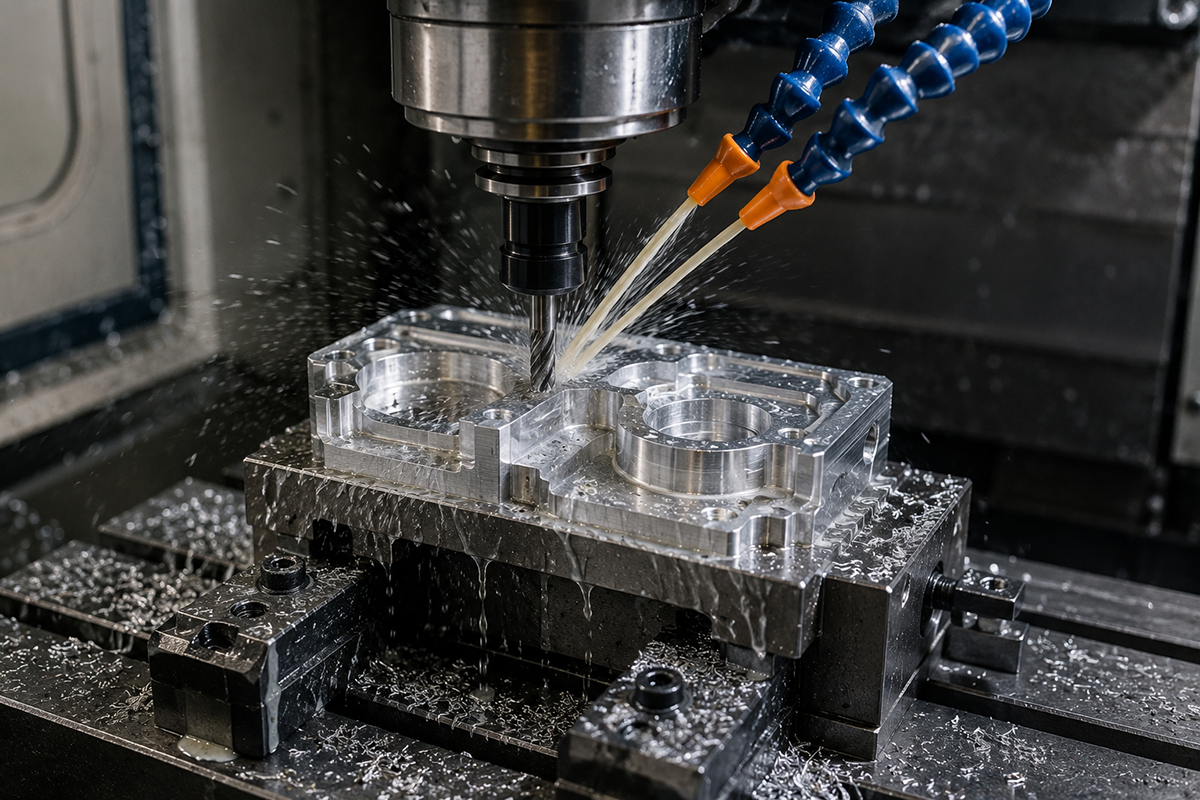
CNC machining is a subtractive manufacturing process used to produce metal parts by removing material from a solid block, bar, plate, or casting blank. The process is controlled by digital machining programs, allowing cutting tools to follow precise toolpaths and create the required geometry. For B2B buyers, this makes CNC machining especially valuable when a project requires predictable dimensions, repeatable quality, and functional surfaces that must fit accurately with other components.
In metal part production, CNC machining usually includes several core operations. Milling is used to create pockets, profiles, slots, holes, and flat surfaces. Turning is used for cylindrical parts such as shafts, bushings, threaded components, and round housings. Drilling, tapping, boring, reaming, and surface finishing may also be added depending on the drawing requirements. Because the process can combine multiple operations, CNC machining is suitable for both simple brackets and complex precision components.
Why CNC Machining Is Still Widely Used
The main advantage of CNC machining is control. A machined part starts from certified material stock, which means the material properties are generally consistent and traceable. This is important for industrial equipment, automotive components, robotics parts, and mechanical assemblies where strength, dimensional stability, and reliability matter. Compared with processes that build or form parts from powder, liquid metal, or molds, CNC machining gives engineers more confidence in material behavior and final geometry.
Accuracy is another key reason CNC machining remains a preferred process. With the right machine, tooling, fixture, and inspection workflow, CNC machined parts can achieve tight tolerances and reliable repeatability across batches. This matters when parts require mating surfaces, bearing fits, threaded holes, sealing faces, or alignment features. In these cases, even if another process is used to create the rough shape, CNC machining is often still required for the final precision features.
Common CNC Machining Materials
CNC machining supports a broad range of engineering metals, including:
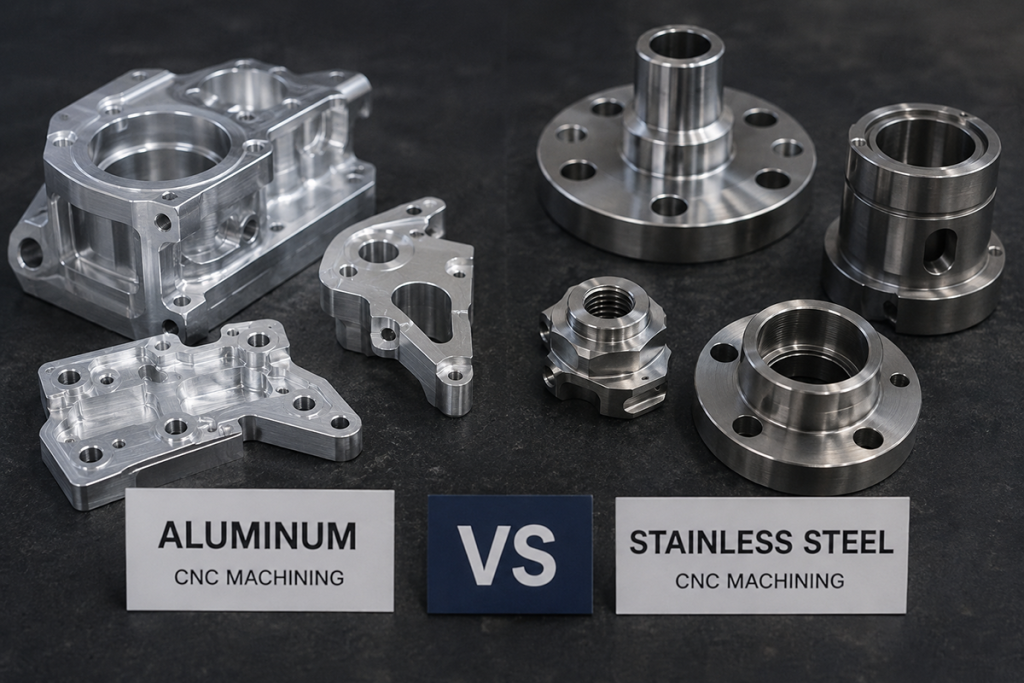
- Aluminum alloys such as 6061 and 7075 for lightweight structural parts
- Stainless steel such as 304 and 316 for corrosion-resistant applications
- Carbon steel and alloy steel for strength-focused components
- Brass and copper for electrical, thermal, and precision fittings
- Titanium for high strength-to-weight applications
This wide material compatibility makes CNC machining practical for different project stages, from prototype validation to production-ready custom parts. For example, an automotive bracket may use aluminum for weight reduction, while an industrial shaft support may require stainless steel for durability and corrosion resistance.
Where CNC Machining Fits Best
CNC machining is usually the stronger choice when the part requires precision, good surface finish, material consistency, and flexible production quantities. It is especially suitable for prototypes, engineering samples, low-to-medium volume production, and custom metal components that need to meet clear drawing requirements.
For companies comparing CNC machining with metal 3D printing, the key point is that CNC is not only a manufacturing method—it is often the finishing process that ensures functional accuracy. Even when metal 3D printing is used for complex shapes, CNC machining may still be needed afterward to finish critical holes, threads, sealing surfaces, and assembly interfaces.
What Is Metal 3D Printing?
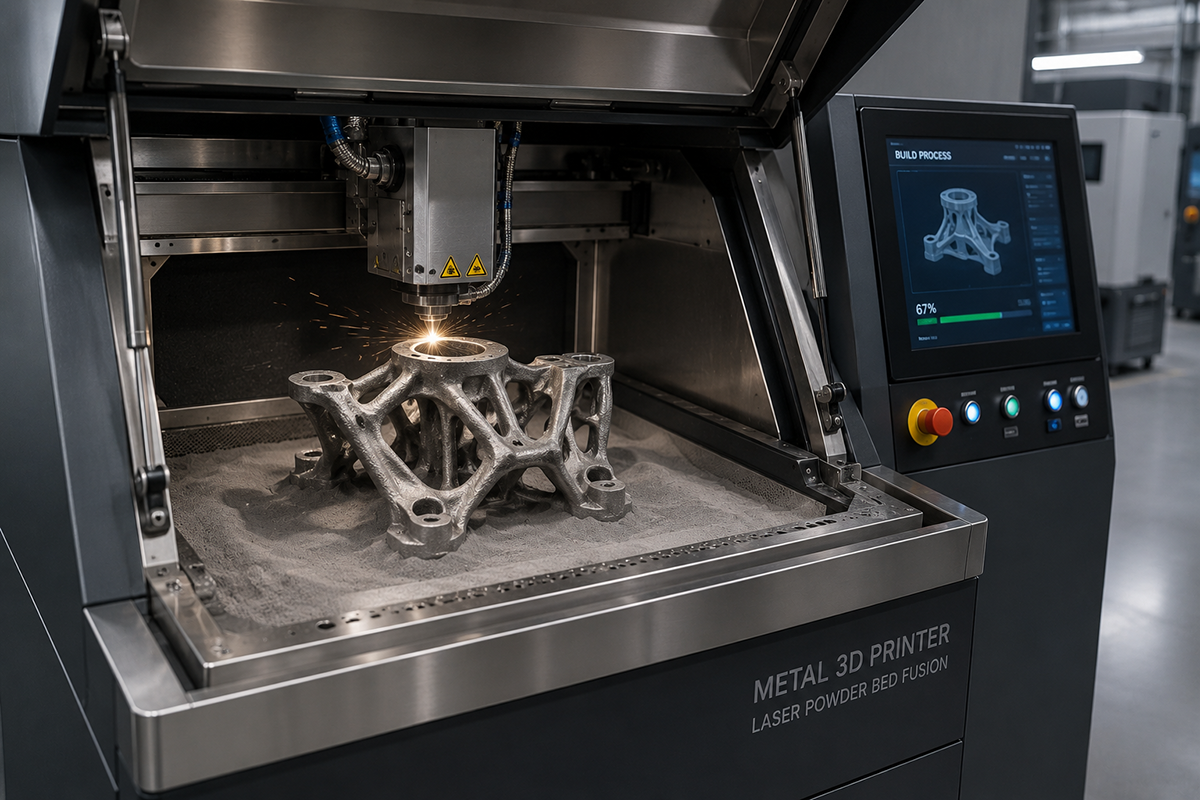
Metal 3D printing, also known as metal additive manufacturing, is a process that builds metal parts layer by layer instead of cutting them from solid stock. Unlike CNC machining, which removes material to reach the final shape, metal 3D printing adds material only where needed based on a digital 3D model. This difference gives the process unique advantages for complex geometries, lightweight structures, and early-stage design exploration.
In industrial applications, the most common metal 3D printing processes include powder bed fusion methods such as DMLS, SLM, or LPBF, where a laser selectively melts metal powder layer by layer. Another method is directed energy deposition, where metal powder or wire is fed into a melt pool created by a laser or electron beam. Binder jetting is also used in some production environments, although parts typically require sintering or additional densification steps after printing.
Why Metal 3D Printing Is Used
The main advantage of metal 3D printing is design freedom. It can produce shapes that are difficult or sometimes impossible to machine using conventional subtractive methods. This includes internal channels, lattice structures, topology-optimized parts, and lightweight components with organic geometries. For industries such as aerospace, medical devices, motorsport, and advanced robotics, this capability can be valuable when weight reduction or internal flow paths matter more than simple machining efficiency.
For example, a heat exchanger with complex internal channels may be better suited to metal 3D printing because the internal geometry cannot be easily accessed by cutting tools. Similarly, a topology-optimized bracket may use less material while maintaining strength in specific load paths. In these cases, metal 3D printing can support designs that would be impractical with traditional machining alone.
Common Metal 3D Printing Materials
Metal 3D printing supports several engineering metals, although material options are usually more limited and more expensive compared with CNC machining stock. Common materials include:
- Titanium alloys for aerospace, medical, and lightweight structural parts
- Stainless steel for corrosion-resistant functional components
- Aluminum alloys for lightweight prototypes and special applications
- Nickel alloys for high-temperature or demanding industrial environments
- Tool steel for inserts, molds, and wear-resistant components
Although these materials can be highly capable, printed metal parts often require additional post-processing. This may include support removal, stress relief, heat treatment, surface finishing, hot isostatic pressing, or secondary CNC machining. These steps are important because as-printed surfaces are usually rougher than machined surfaces, and dimensional accuracy may not be sufficient for critical assembly features.
Where Metal 3D Printing Fits Best
Metal 3D printing is usually strongest when the design cannot be produced efficiently with conventional machining, or when part consolidation creates meaningful value. It can reduce the number of assembled components by printing complex shapes as a single part. This can be useful for experimental designs, lightweight structures, and applications where performance gains justify the higher production cost.
However, metal 3D printing is not always the most economical or practical choice for standard brackets, plates, housings, shafts, and precision interfaces. For many B2B manufacturing projects, CNC machining remains more predictable in cost, tolerance, surface finish, and material availability. The best approach is to evaluate whether the design truly benefits from additive manufacturing, or whether a machined part can meet the requirement more efficiently.
Accuracy and Tolerance Comparison
Accuracy is one of the most important factors when comparing CNC vs 3D printing metal parts. In many B2B projects, a part is not judged only by whether its shape looks correct, but by whether it meets drawing requirements, fits into an assembly, and performs reliably under real operating conditions. This is where CNC machining and metal 3D printing differ significantly.
CNC Machining Accuracy
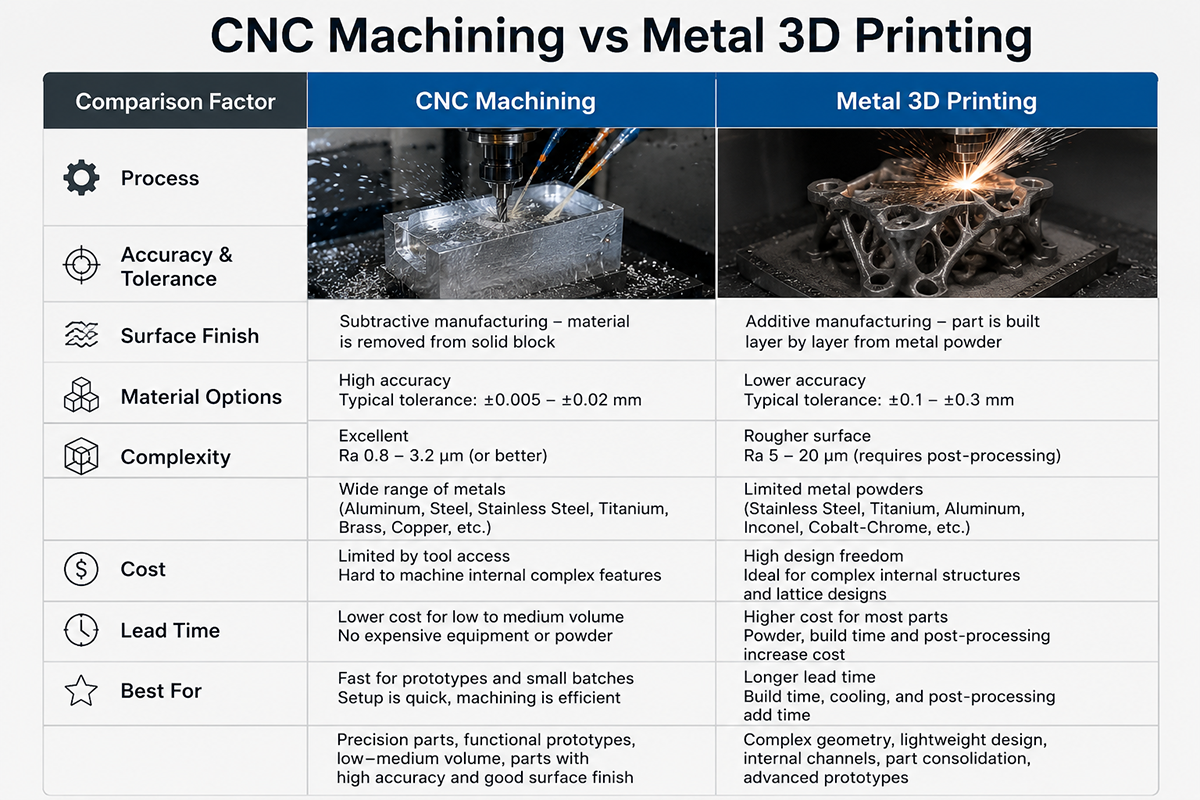
CNC machining is generally stronger when tight tolerances are required. Because the process removes material using controlled cutting paths, it can produce accurate holes, flat surfaces, threads, slots, and mating features with high repeatability. For many industrial applications, CNC machining can achieve tolerances around ±0.01 mm depending on part geometry, material, equipment, fixturing, and inspection requirements.
This level of accuracy is especially important for parts such as:
- Bearing housings
- Mounting brackets
- Precision fixtures
- Threaded components
- Sealing surfaces
- Automotive and industrial assembly parts
For these components, small dimensional errors can cause alignment problems, vibration, leakage, or assembly failure. CNC machining gives engineers better control over these functional details because each critical feature can be machined and inspected according to the drawing.
Metal 3D Printing Accuracy
Metal 3D printing can create complex shapes, but its dimensional accuracy is usually less predictable than CNC machining. Printed metal parts are affected by layer thickness, thermal distortion, support structures, powder behavior, shrinkage, and post-processing. As a result, dimensional variation can be higher, especially on thin walls, large flat surfaces, or features that require precise alignment.
For many printed metal parts, the as-printed geometry is close to the intended shape, but not always accurate enough for functional interfaces. This is why secondary CNC machining is commonly required after printing. Features such as holes, threads, sealing faces, and mating surfaces often need machining to meet final tolerances.
Surface Finish Differences
Surface finish is another major difference. CNC machined parts typically have smoother and more controlled surfaces because toolpaths, cutting tools, feeds, speeds, and finishing passes can be adjusted. This is useful when the surface affects fit, sealing, friction, or appearance.
Metal 3D printed parts usually have rougher surfaces due to the layer-by-layer build process and powder-based material behavior. Surface finishing methods such as machining, polishing, blasting, or grinding may be needed depending on the application.
Practical Accuracy Decision
For sourcing managers, the key question is not simply whether metal 3D printing can produce the shape. The better question is whether the printed part can meet the required tolerance and surface finish without excessive post-processing.
In general:
- Choose CNC machining when tight tolerances and smooth surfaces are critical.
- Consider metal 3D printing when geometry complexity is more important than direct as-printed accuracy.
- Use both processes when printed geometry needs CNC finishing for functional features.
For projects involving precision interfaces or assembly-critical parts, precision CNC machining services are often the more predictable choice. Metal 3D printing becomes more attractive when the design complexity creates enough value to justify additional finishing steps.
Cost Comparison: CNC Machining vs Metal 3D Printing
Cost is one of the most practical factors when comparing CNC vs 3D printing metal parts. However, the cost difference is not always simple. CNC machining and metal 3D printing calculate cost in very different ways, so the better option depends on part geometry, material, quantity, tolerance requirements, and post-processing needs.
CNC Machining Cost Structure
CNC machining cost is mainly driven by machine time, material cost, setup complexity, tooling, fixture requirements, and inspection needs. For standard metal parts such as brackets, housings, plates, shafts, and mounting components, CNC machining is often more cost-effective because the process is mature, predictable, and widely available.
Since CNC machining does not require mold tooling, it is especially practical for prototypes and low-to-medium volume production. Once the CAD file, drawing, material, and tolerance requirements are confirmed, production can begin without the upfront cost of molds or dedicated tooling. This makes CNC machining attractive for companies that need functional samples, engineering validation parts, or custom components without committing to mass production.
However, CNC machining becomes less efficient when the part requires removing a large amount of material from a solid block. Deep pockets, thin walls, complex internal features, and difficult-to-access geometries can increase machining time significantly. More setups, longer toolpaths, and specialized tools all add cost.
Metal 3D Printing Cost Structure
Metal 3D printing cost is usually driven by build time, machine capacity, powder material cost, part orientation, support structures, post-processing, and quality validation. The raw material cost is often higher than standard CNC machining stock, and the printing process itself can be expensive due to specialized equipment and controlled build environments.
In addition, printed metal parts often require several secondary steps:
- Support removal
- Stress relief or heat treatment
- Surface finishing
- Dimensional inspection
- Secondary CNC machining for critical features
These post-processing steps can make the final cost much higher than the initial printing quote suggests. For buyers, it is important to compare total finished-part cost, not just the cost of producing the rough printed shape.
When 3D Printing Can Reduce Cost
Metal 3D printing can become cost-effective when it eliminates assembly steps or enables a design that would be extremely expensive to machine. For example, if a complex part can replace several welded or assembled components, additive manufacturing may reduce total system cost. It can also be useful for one-off experimental parts where tooling or multi-axis machining would be inefficient.
In general, CNC machining is usually more economical for standard precision parts, simple-to-moderate geometries, and small-to-medium production runs. Metal 3D printing becomes more competitive when design complexity creates real functional value.
For sourcing managers, the best cost comparison should include:
- Raw material cost
- Machine time or build time
- Setup and programming
- Post-processing
- Inspection requirements
- Scrap or rework risk
- Production volume
If your project involves standard machined features and clear tolerance requirements, CNC machining will often provide a more predictable cost path. If the part includes complex internal channels, lightweight lattice structures, or consolidated assemblies, metal 3D printing may be worth evaluating despite the higher processing cost.
Material Performance and Mechanical Properties
When comparing CNC vs 3D printing metal parts, material performance is just as important as accuracy and cost. A part may look correct dimensionally, but if its mechanical properties are not suitable for the working environment, it may fail under load, vibration, temperature change, or long-term stress. For engineers and sourcing managers, this is one of the most important areas to evaluate before selecting a manufacturing process.
Material Consistency in CNC Machining
CNC machining starts from solid metal stock, such as plate, bar, billet, or forged material. These materials are produced through established industrial processes and usually come with clear material specifications, certifications, and predictable mechanical properties. This gives CNC machined parts a strong advantage when material reliability is critical.
Because the part is cut from a solid block, the original material structure is generally preserved. This is especially important for components that need consistent strength, fatigue resistance, or dimensional stability. In applications such as automotive brackets, industrial fixtures, robotic mounts, and machinery components, predictable material behavior helps reduce risk during assembly and operation.
CNC machining also supports a wide range of standard engineering metals, including:
- Aluminum alloys such as 6061 and 7075
- Stainless steel such as 304 and 316
- Carbon steel and alloy steel
- Brass, copper, and bronze
- Titanium and specialty alloys
This broad material availability makes CNC machining practical for projects where the material has already been specified by design requirements, industry standards, or customer drawings.
Material Behavior in Metal 3D Printing
Metal 3D printing can produce strong and functional metal parts, but the material behavior is influenced by the printing process. Since parts are built layer by layer, properties may vary depending on build direction, powder quality, laser parameters, cooling rates, and post-processing. This means printed parts can show different strength behavior in different directions, a condition often referred to as anisotropy.
Heat treatment and stress relief are often required to improve stability and reduce internal stress. In some high-performance applications, additional processes such as hot isostatic pressing may be used to reduce porosity and improve mechanical performance. These steps can produce excellent results, but they also add cost, lead time, and process complexity.
Porosity, Fatigue, and Long-Term Reliability
One concern with metal 3D printing is internal porosity. Even with advanced equipment, tiny voids or incomplete fusion areas may occur if the process is not tightly controlled. These defects can affect fatigue performance, especially in parts exposed to repeated loading, vibration, or impact.
CNC machined parts, by contrast, usually offer more predictable fatigue behavior because they are produced from wrought or certified stock material. For this reason, CNC machining is often preferred when the part must operate reliably under mechanical stress over a long service life.
Practical Material Selection Guidance
For standard industrial parts, CNC machining usually provides the most predictable material performance. It is especially suitable when strength, dimensional stability, and repeatable mechanical properties are required. Metal 3D printing becomes more attractive when complex geometry or weight reduction provides enough functional benefit to justify additional material validation and post-processing.
For buyers comparing process options, the key question is not only whether a part can be made, but whether the final material condition is suitable for its real working environment. If the part must meet strict strength, fatigue, or assembly requirements, CNC machining is often the safer and more predictable route. If the design requires internal channels, lightweight lattice structures, or advanced geometry, metal 3D printing may be worth considering with proper post-processing and inspection.
Surface Finish and Post-Processing Requirements
Surface finish is another major factor when comparing CNC vs 3D printing metal parts. In many engineering projects, the external appearance of a part is only one part of the issue. Surface quality can also affect assembly fit, sealing performance, friction, wear resistance, coating adhesion, and long-term durability. For sourcing managers, this means the finished surface condition should be evaluated as part of the total manufacturing cost, not treated as a secondary detail.
CNC Machining Surface Finish
CNC machining generally provides better surface finish control because the final surface is created by cutting tools following defined toolpaths. By adjusting cutting parameters, tool selection, finishing passes, coolant strategy, and machine stability, manufacturers can produce surfaces that meet both functional and cosmetic requirements.
For example, a CNC machined aluminum housing can be finished with clean edges, smooth faces, and precise mounting surfaces. Stainless steel parts can also be machined to achieve reliable sealing areas, bearing seats, or polished interfaces when required. This makes CNC machining especially suitable for components where surface quality affects part performance.
Common surface-related requirements for CNC machined parts include:
- Flat mating surfaces for assembly
- Smooth sealing faces for fluid or air-tight systems
- Controlled roughness for sliding or rotating contact
- Clean cosmetic surfaces for visible industrial components
- Prepared surfaces for anodizing, plating, polishing, or coating
Another advantage is predictability. Once machining parameters are validated, the same finish can usually be repeated across production batches. This is important for industrial buyers who need consistent results from one order to the next.
Metal 3D Printing Surface Finish
Metal 3D printed parts usually have rougher surfaces directly after printing. This is caused by the layer-by-layer build process, powder particles, support structures, thermal behavior, and build orientation. Even when the printed geometry is accurate enough for the general shape, the surface may not be suitable for functional interfaces without additional finishing.
As-printed surfaces may show:
- Visible layer lines
- Rough powder-based texture
- Support contact marks
- Uneven surface quality depending on orientation
- Higher roughness on overhangs or complex features
For non-critical prototypes or internal structures, this may be acceptable. However, for parts that require smooth sealing, low friction, tight assembly, or professional appearance, post-processing is usually necessary.
Common Post-Processing Steps
Metal 3D printed parts often require several post-processing operations before they can be used as finished functional components. These may include:
- Support removal
- Stress relief heat treatment
- Shot blasting or bead blasting
- Grinding or polishing
- Surface coating
- Secondary CNC machining for critical surfaces
This is one reason metal 3D printing may appear attractive at first but become more expensive after all finishing requirements are included. A printed part may still need CNC machining for holes, threads, flatness, sealing faces, and assembly interfaces.
Practical Surface Finish Decision
If the project requires clean visible surfaces, predictable roughness, precise mating features, or minimal post-processing, CNC machining is usually the more practical choice. If the part’s value comes from complex internal geometry or lightweight structural design, metal 3D printing may still be suitable, but finishing requirements should be included early in the cost and lead time estimate.
For buyers comparing manufacturing options, the best approach is to define which surfaces are functional and which are non-critical. Functional surfaces should be clearly marked on drawings with tolerance and finish requirements. This helps the supplier determine whether the part can be fully machined, printed and finished, or produced through a hybrid process that combines both methods.
When to Choose CNC Machining for Metal Parts
For many industrial projects, CNC machining remains the more practical choice when the part must meet clear dimensional, mechanical, and production requirements. In the comparison of CNC vs 3D printing metal parts, CNC machining is usually selected when reliability, accuracy, material consistency, and repeatable production matter more than extreme design freedom.
Choose CNC Machining for Tight Tolerances
CNC machining is the stronger option when the part includes precision features that must fit with other components. This includes holes, threads, bearing seats, sealing surfaces, slots, counterbores, and flat mounting faces. These features often require controlled dimensions and stable surface quality, which CNC machining can provide more predictably than metal 3D printing alone.
For example, an automotive bracket, robotic mounting plate, or industrial fixture may look simple, but its function depends heavily on hole position, flatness, and assembly accuracy. If these features are slightly out of tolerance, the part may cause alignment problems, vibration, or installation failure. CNC machining is usually better suited for these requirements because the process is built around controlled cutting and inspection.
Choose CNC Machining for Standard Industrial Materials
CNC machining is also the preferred option when the project requires commonly available engineering materials. Aluminum, stainless steel, brass, copper, carbon steel, and titanium are widely available in standard stock forms. This makes material sourcing more predictable and often more cost-effective.
For projects where material certification, strength consistency, or specific alloy selection matters, CNC machining offers a clear advantage. Engineers can specify the exact material grade required for the application, and the part can be machined from certified stock material with known mechanical properties.
Choose CNC Machining for Prototypes and Low-to-Medium Volume Production
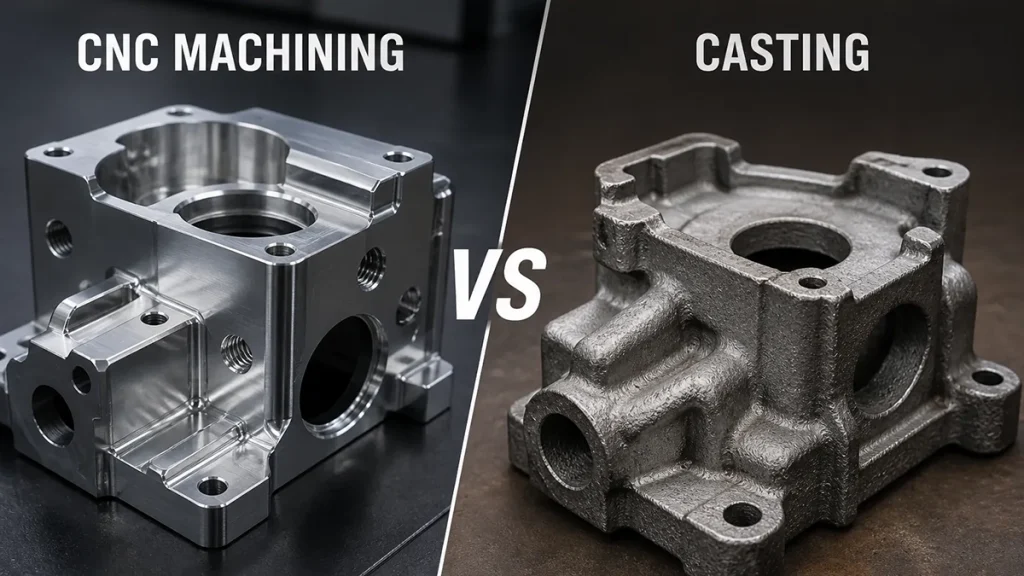
CNC machining is especially suitable for prototypes, engineering samples, and low-to-medium production runs. Unlike casting, it does not require tooling, and unlike metal 3D printing, it usually does not require complex post-processing for standard geometries. Once the design, material, and drawing requirements are confirmed, parts can move into production quickly.
This is useful for companies developing new products, testing mechanical assemblies, or sourcing custom components for industrial equipment. If the design may change after testing, CNC machining allows revisions without major production changes.
Choose CNC Machining for Predictable Cost and Lead Time
For many sourcing managers, predictability is just as important as technical capability. CNC machining usually provides a clearer cost structure for standard parts because pricing is based on material, machining time, setup, tolerance, and finishing requirements. This makes it easier to compare quotes and estimate lead time.
CNC machining is often the better choice when the project involves:
- Standard brackets, housings, plates, shafts, and fixtures
- Parts with functional holes, threads, or flat mating surfaces
- Low-to-medium volume production
- Certified material stock and predictable mechanical properties
- Short development cycles and design changes
- Clear tolerance and surface finish requirements
For companies evaluating custom CNC machining services, the key benefit is not only that CNC can make accurate parts. It is that CNC machining provides a practical path from prototype to production with consistent quality, manageable cost, and familiar material options. Metal 3D printing may be valuable for special geometries, but for many industrial metal parts, CNC machining remains the more dependable manufacturing route.
When to Choose Metal 3D Printing for Metal Parts
Although CNC machining is often the more predictable option for standard precision components, metal 3D printing can be the better choice when the design takes full advantage of additive manufacturing. In the comparison of CNC vs 3D printing metal parts, metal 3D printing is not usually selected because it is cheaper or more accurate for ordinary parts. It is selected when the geometry, performance goal, or development strategy cannot be achieved efficiently through conventional machining.
Choose Metal 3D Printing for Complex Internal Geometry
The strongest advantage of metal 3D printing is its ability to create internal features that are difficult or impossible to machine. CNC tools need physical access to the cutting area, which limits the types of internal cavities, curved channels, and enclosed structures that can be produced. Metal 3D printing builds the part layer by layer, allowing more freedom in internal design.
This makes metal 3D printing useful for parts such as:
- Internal cooling channels
- Complex heat exchangers
- Fluid flow components
- Lightweight internal lattice structures
- Topology-optimized brackets
For example, a component with curved internal cooling channels may be extremely difficult to machine from solid stock. In that case, additive manufacturing can create the internal geometry directly, reducing the need for separate components, welding, or assembly.
Choose Metal 3D Printing for Lightweight Design Optimization
Metal 3D printing is also valuable when weight reduction is a major engineering goal. In aerospace, motorsport, advanced robotics, and high-performance equipment, reducing unnecessary material can improve efficiency, movement speed, and energy performance. Additive manufacturing allows engineers to remove material from low-stress areas while keeping strength along key load paths.
This type of design is often called topology optimization. The resulting parts may have organic shapes or lattice structures that are difficult to create through CNC machining. When weight reduction delivers measurable performance value, metal 3D printing may justify its higher production cost.
Choose Metal 3D Printing for Part Consolidation
Another strong use case is part consolidation. Instead of producing multiple machined pieces and joining them through welding, fasteners, or assembly, metal 3D printing can sometimes create a single integrated component. This may reduce assembly time, lower the risk of joint failure, and simplify supply chain management.
However, this benefit only matters when the consolidated design creates real functional or production value. If a part is already simple and easy to machine, printing it as one piece may not reduce cost or improve performance.
Choose Metal 3D Printing for Experimental or Low-Quantity Advanced Designs
Metal 3D printing can be useful during early research, advanced prototype development, or experimental product testing. If engineers need to evaluate a geometry that cannot be machined conventionally, printing may allow faster validation before committing to a final production strategy.
Common scenarios include:
- Experimental aerospace structures
- Medical implant prototypes
- Advanced cooling components
- Custom tooling inserts
- Low-volume specialty parts
Important Limitation: Printing Does Not Eliminate Finishing
One mistake buyers sometimes make is assuming that metal 3D printing produces a finished precision part directly from the machine. In most industrial applications, this is not the case. Printed metal parts often require heat treatment, support removal, surface finishing, inspection, and secondary CNC machining for critical features.
For example, holes, threads, flat sealing surfaces, and precision mounting areas may still need to be machined after printing. This means the final manufacturing route may involve both processes, not just one.
Metal 3D printing is best chosen when design complexity creates enough value to justify the additional cost and post-processing. For simple brackets, plates, shafts, housings, and precision interfaces, CNC machining is usually more efficient. But for complex internal geometries, lightweight structures, and advanced consolidated designs, metal 3D printing can provide capabilities that CNC machining alone cannot easily achieve.
Real-World Use Cases: CNC Machining vs Metal 3D Printing
To make a practical decision between CNC vs 3D printing metal parts, it helps to look at real manufacturing scenarios rather than comparing the processes only in theory. In most B2B projects, the better method depends on the part’s function, geometry, tolerance requirements, material needs, and production stage. Some parts are clearly better suited to CNC machining, while others may benefit from metal 3D printing because of design complexity or performance optimization.
Automotive Parts and Mechanical Brackets
For automotive components, CNC machining is often the preferred choice when accuracy, strength consistency, and reliable fitment are required. Brackets, mounting plates, housings, adapters, and fixture components usually include holes, threads, flat faces, and alignment features. These areas must be controlled precisely to ensure correct assembly.
A CNC machined automotive bracket, for example, may require accurate hole positioning, stable flatness, and consistent material strength. In this type of application, CNC machining provides a more predictable route because the part can be made from certified aluminum or stainless steel stock and inspected against drawing requirements. This is why CNC machining is commonly used for functional automotive prototypes, aftermarket performance parts, and low-to-medium volume custom components.
Metal 3D printing can still be useful in automotive development, especially for motorsport or advanced prototype testing. If a bracket needs aggressive weight reduction, internal lattice structures, or topology-optimized geometry, metal 3D printing may support a design that would be difficult to machine. However, critical mounting holes and mating surfaces may still need CNC finishing afterward.
Internal link suggestion: Use a natural link to automotive CNC bracket case study when discussing precision brackets and real production examples.
Industrial Equipment Components
Industrial equipment parts often prioritize durability, predictable tolerances, and long-term reliability. Components such as machine fixtures, shafts, support blocks, guide plates, and structural interfaces are usually better suited to CNC machining because they rely on stable material properties and accurate geometry.
In these applications, the part may not look visually complex, but its function depends on precision. A shaft support, for example, must maintain alignment under load. A fixture plate must hold parts in the correct position during operation. A sealing interface must maintain flatness and surface quality. CNC machining is usually more practical for these requirements because it provides stronger control over functional surfaces.
Metal 3D printing may be useful for industrial components when internal flow channels, lightweight structures, or part consolidation create measurable value. For example, a custom cooling manifold with internal channels may be more suitable for additive manufacturing. But if the part is a standard block, plate, housing, or mechanical support, CNC machining is usually more cost-effective and easier to validate.
Aerospace, Robotics, and Advanced Engineering
Aerospace and robotics are two areas where both CNC machining and metal 3D printing can be valuable. CNC machining is widely used for aerospace-grade brackets, housings, fixtures, and structural components because it offers precision, traceable materials, and reliable mechanical performance. Robotics manufacturers also use CNC machining for actuator housings, mounting plates, sensor brackets, and lightweight aluminum parts where accuracy affects movement and alignment.
Metal 3D printing becomes more attractive when the design requires complex geometry that improves performance. Lightweight lattice parts, topology-optimized aerospace brackets, and internal cooling structures are common examples. In these cases, additive manufacturing may reduce weight or improve thermal performance in ways that traditional machining cannot easily achieve.
The important point is that metal 3D printing does not replace CNC machining completely. In many advanced applications, the printed part still needs CNC machining for precision interfaces, threads, sealing faces, or assembly-critical dimensions. This hybrid workflow is common because it combines the geometry freedom of additive manufacturing with the accuracy of CNC machining.
Prototype Development and Product Testing
For prototypes, the choice depends on what the prototype is intended to test. If the goal is to test fit, strength, assembly, or functional performance using production-like material, CNC machining is often the better option. It produces parts from real engineering stock and provides accurate surfaces for testing.
If the prototype is designed to test an advanced geometry that cannot be machined easily, metal 3D printing may be more useful. This is especially true for internal channels, integrated structures, or experimental lightweight forms. However, buyers should include post-processing and inspection in the project plan, because the first printed part may not be a finished functional component without additional work.
For most standard industrial prototypes, CNC machining provides a practical balance of cost, speed, accuracy, and material reliability. For advanced experimental geometries, metal 3D printing can open design options that would not be realistic with machining alone.
How to Decide Which Process Is Better for Your Project
Choosing between CNC vs 3D printing metal parts should not be based on trend, availability, or a general assumption that one process is more advanced than the other. The better process is the one that fits the part’s geometry, tolerance requirements, material needs, cost target, and production stage. For engineers and sourcing managers, the most practical approach is to evaluate the manufacturing decision through a structured checklist.
Start with the Part Function
The first question is what the part needs to do. If the part must carry load, maintain alignment, hold threads, support bearings, seal against another surface, or fit into an assembly with tight dimensional control, CNC machining is usually the stronger option. These requirements depend on predictable material properties and accurate functional surfaces.
If the part’s main value comes from complex internal geometry, integrated flow channels, lightweight lattice structures, or topology-optimized forms, metal 3D printing may be worth considering. In this case, the geometry itself may justify the higher cost and post-processing requirements.
Evaluate Geometry Complexity
Geometry is one of the clearest decision factors. CNC machining works best when the tool can physically access the features that need to be cut. Flat surfaces, pockets, holes, threads, slots, bosses, and external contours are well suited to CNC machining.
Metal 3D printing becomes useful when the design includes features that cutting tools cannot easily reach, such as:
- Curved internal channels
- Enclosed cavities
- Lattice structures
- Organic lightweight forms
- Part consolidation from multiple pieces into one component
If these complex features do not provide real performance value, CNC machining may still be more efficient.
Compare Tolerance and Surface Finish Needs
If the part requires tight tolerances, smooth mating faces, accurate hole positions, or controlled surface roughness, CNC machining is usually more predictable. Metal 3D printing can produce the overall shape, but critical features often still require secondary machining.
A practical rule is simple: if the most important part of the component is its precision interface, CNC machining should be strongly considered. If the most important part is internal complexity or lightweight design, metal 3D printing may be relevant.
Review Quantity and Production Stage
For prototypes and low-to-medium volume production, CNC machining is often cost-effective and fast, especially for standard geometries. It allows design changes without mold tooling and supports real material testing.
Metal 3D printing may be suitable for one-off advanced prototypes, but it does not automatically reduce cost. Build time, powder cost, support removal, heat treatment, surface finishing, and CNC finishing can all increase the final price.
Use a Practical Decision Checklist
- Choose CNC machining when accuracy, surface finish, material consistency, and predictable cost are priorities.
- Choose metal 3D printing when complex geometry, lightweight optimization, or part consolidation creates meaningful engineering value.
- Use both processes when the printed shape needs CNC finishing for functional holes, threads, sealing faces, or assembly surfaces.
For most standard industrial parts, CNC machining remains the more practical route. For advanced geometries that cannot be efficiently machined, metal 3D printing can be valuable when properly planned with finishing and inspection requirements included from the beginning.
Conclusion
The comparison of CNC vs 3D printing metal parts is not about which process is universally better. CNC machining and metal 3D printing solve different manufacturing problems. CNC machining provides accuracy, material reliability, smooth surface control, and predictable production for standard metal parts. Metal 3D printing provides design freedom for complex internal structures, lightweight geometries, and advanced experimental components.
For engineers, buyers, and sourcing managers, the best decision comes from matching the manufacturing method to the real function of the part. If the part needs tight tolerances, threads, flatness, sealing faces, and stable mechanical properties, CNC machining is often the more reliable and cost-effective choice. If the design includes internal channels, lattice structures, or geometry that cannot be machined efficiently, metal 3D printing may offer value despite higher post-processing requirements.
In many advanced projects, the strongest solution is not CNC machining or metal 3D printing alone, but a hybrid workflow. Metal 3D printing can create the complex base geometry, while CNC machining finishes the critical surfaces that determine assembly accuracy and functional performance.
If your project involves custom metal parts and you are unsure which process is more suitable, start by reviewing your CAD file, tolerance requirements, material needs, and production quantity. A practical manufacturing review can help determine whether CNC machining, metal 3D printing, or a combined approach will deliver the best result for cost, performance, and lead time.
For projects requiring accurate functional parts, our precision CNC machining services can support prototypes, low-to-medium volume production, and custom metal components based on real engineering requirements.