Introduction
CNC machining for industrial equipment is widely used when machinery components require accurate dimensions, reliable material performance, stable assembly fit, and flexible production without dedicated tooling. Industrial equipment parts often work under load, vibration, friction, temperature change, or repeated mechanical movement, so the finished component must be more than visually correct. It must fit, function, and remain stable in real operating conditions.
For buyers in North America, Europe, and other overseas markets sourcing custom industrial equipment components, CNC machining can support prototype development, replacement parts, low-volume production, and custom machinery builds. It is especially useful when the part requires precise holes, shafts, threads, flat surfaces, bearing fits, mounting faces, or material properties that standard off-the-shelf parts cannot provide.
Industrial equipment components can include brackets, mounting plates, shafts, housings, bushings, spacers, couplings, machine blocks, fixture parts, covers, adapter plates, and replacement components. Some parts are used in new equipment, while others are made to repair or improve existing machines. In both cases, machining accuracy, material choice, surface finish, and inspection requirements can directly affect equipment reliability.
CNC machining is valuable because it can produce functional parts from metals and engineering plastics without casting molds, stamping dies, or injection tooling. This makes it suitable for custom equipment, small batches, urgent replacements, and design changes during development. However, successful industrial CNC machining depends on clear drawings, realistic tolerances, suitable material selection, and proper quality control.
This guide explains where CNC machining works for industrial equipment components, which parts are commonly machined, what precision requirements matter, how materials affect performance, what drives cost, and what buyers should prepare before requesting a quote. If your project requires custom machine parts, equipment brackets, housings, shafts, or replacement components, experienced custom CNC machining services can help review the design and production requirements before manufacturing.
Why CNC Machining Is Used for Industrial Equipment Components
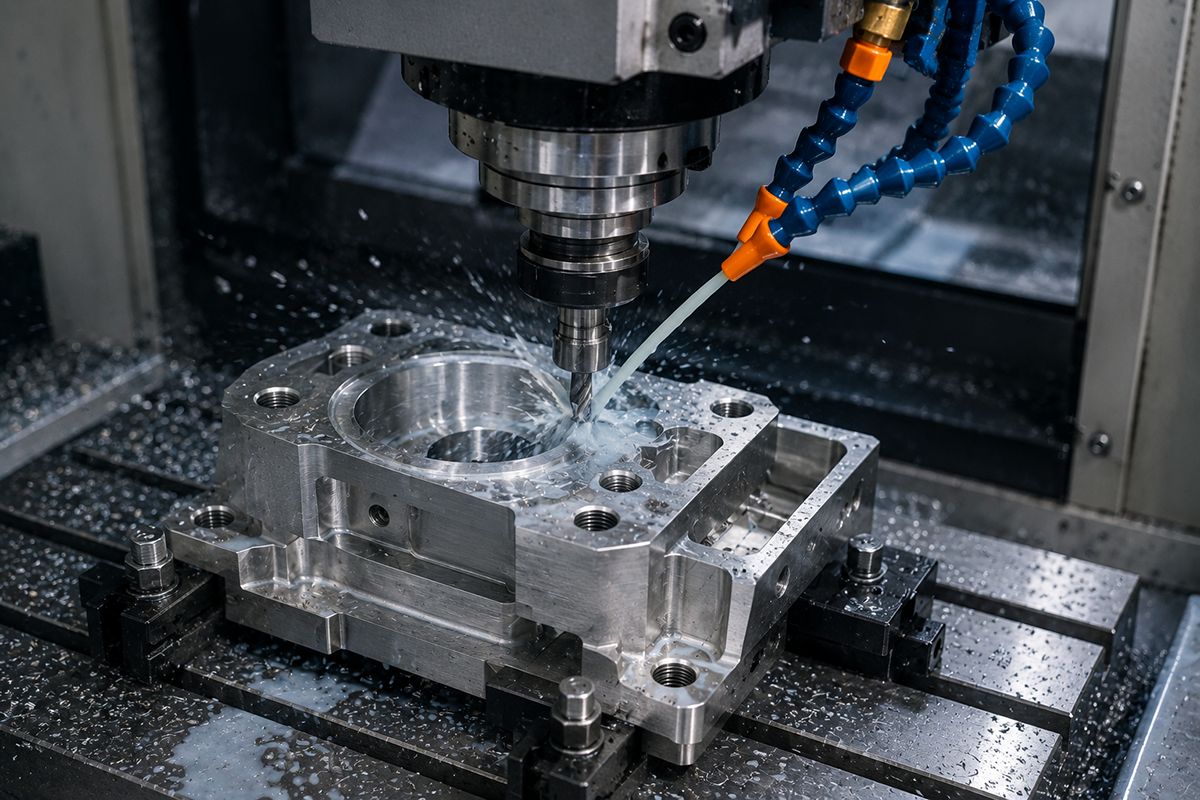
Industrial equipment often requires parts that are not available as standard catalog items. A machine may need a custom mounting plate, a modified shaft, a replacement block, a precision spacer, or a housing designed around a specific assembly. CNC machining is useful because it can create these parts directly from CAD files and engineering drawings without waiting for dedicated tooling.
For OEM equipment manufacturers, CNC machining helps during product development and low-volume production. For maintenance teams, it can support replacement parts when original components are discontinued, damaged, or difficult to source. For custom automation builders, it allows flexible production of brackets, adapters, fixtures, and special-purpose mechanical parts.
Another advantage is material flexibility. CNC machining can produce parts from aluminum, stainless steel, carbon steel, alloy steel, brass, copper, and engineering plastics. This allows buyers to choose a material based on strength, weight, corrosion resistance, wear behavior, electrical insulation, or cost. A machined equipment component can be optimized for its real working environment instead of being forced into a standard material format.
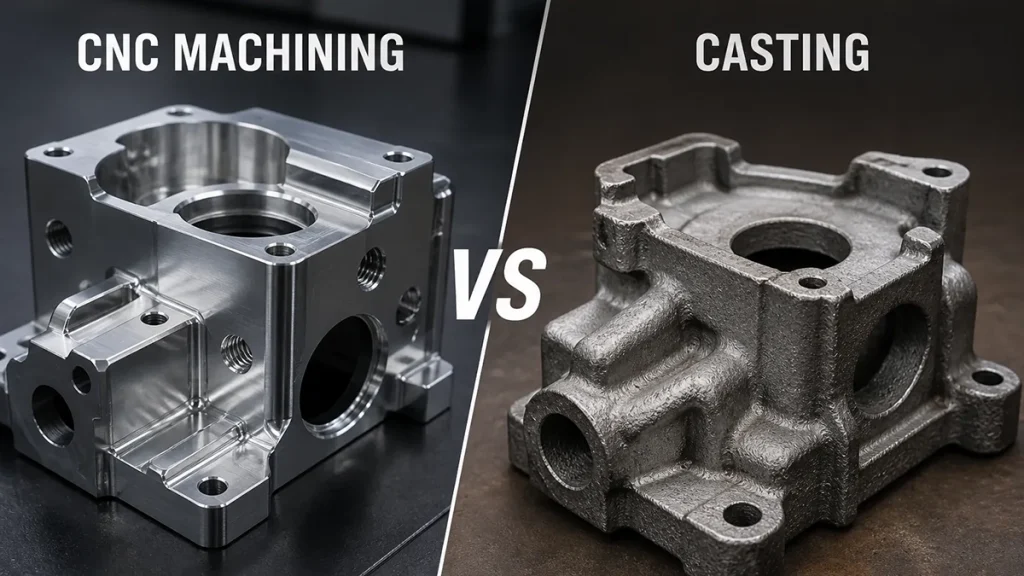
CNC machining also supports design changes. Industrial equipment projects often evolve during testing. Hole positions may change, mounting surfaces may be adjusted, or a bracket may need more clearance. Compared with casting, molding, or stamping, CNC machining allows faster changes because the process is driven by digital programs and machining setups rather than fixed tooling.
For this reason, custom CNC machining services are often used when industrial buyers need accuracy, flexibility, and reliable small-batch production. The process is especially practical when the part must match an existing assembly or when standard parts cannot meet the required fit, function, or material performance.
Common Industrial Equipment Components Made by CNC Machining
CNC machining is used across many types of industrial equipment, including automation systems, packaging machines, material handling equipment, pumps, compressors, test fixtures, production tooling, assembly machines, and custom mechanical systems. The specific part design varies by industry, but many components share similar functional requirements: accurate mounting, reliable alignment, smooth movement, and stable performance under load.
Brackets, Mounting Plates, and Adapter Parts
Brackets, mounting plates, and adapter plates are common CNC machined industrial parts. They may hold sensors, motors, actuators, guide rails, cameras, pneumatic components, or custom assemblies. These parts often need accurate hole positions, flat mounting surfaces, and enough rigidity to maintain alignment during operation.
Shafts, Spacers, Bushings, and Couplings
Shaft-related parts are used in rotating or sliding assemblies. They may require controlled diameters, concentricity, surface finish, and material strength. Spacers, bushings, and couplings may look simple, but they can affect movement, vibration, wear, and assembly clearance if dimensions are not controlled properly.
Machine Blocks, Housings, and Fixture Components
Machine blocks and housings often include pockets, threaded holes, bearing seats, grooves, and multiple mounting faces. Fixture components may be used to hold workpieces, position parts, or support repeatable assembly. These components need stable geometry and material performance because they often support the accuracy of the larger machine.
Replacement and Repair Components
Industrial equipment replacement parts are another important use case. When a machine is older or customized, original replacement parts may not be available. CNC machining can reproduce or improve damaged components based on old drawings, samples, or reverse-engineered measurements. For these parts, matching the original assembly fit is often more important than simply copying the visual shape.
Precision Requirements for Industrial Machinery Parts
Precision requirements for industrial machinery parts should be defined based on how the component functions in the equipment. Not every dimension needs a tight tolerance, but critical features must be controlled carefully. Overly loose dimensions can cause assembly problems, while unnecessarily tight tolerances can increase cost without improving performance.
Hole Position and Thread Accuracy
Hole position is often critical for brackets, mounting plates, housings, and machine blocks. If holes are misaligned, the part may not assemble correctly or may force other components out of position. Thread accuracy is also important when bolts, fittings, sensors, or mechanical elements must be installed repeatedly or under load.
Flatness, Parallelism, and Perpendicularity
Flatness matters when a component must sit flush against another surface. Poor flatness can create gaps, stress, vibration, or sealing issues. Parallelism and perpendicularity are important when parts guide movement, support shafts, or connect to precision assemblies. These geometric requirements should be defined clearly on the drawing when they affect function.
Concentricity and Shaft Fits
Rotating and shaft-related components may require controlled concentricity, roundness, and surface finish. If these dimensions are not stable, the equipment may experience vibration, uneven wear, noise, or reduced service life. Bearing seats, shaft diameters, and coupling interfaces should be marked as critical when they affect mechanical movement.
For more complex drawings, geometric controls such as flatness, perpendicularity, parallelism, and concentricity may be defined using GD&T overview principles, especially when the component must align with bearings, shafts, mounting faces, or other precision assemblies.
Assembly Clearance and Functional Tolerances
Industrial components often work as part of a larger assembly. Clearance between parts, alignment with other components, and access for fasteners can be just as important as individual dimensions. Buyers should identify which dimensions affect assembly so the supplier can focus inspection and machining control where it matters most.
Material Selection for Industrial Equipment CNC Parts
Material selection has a direct impact on performance, cost, machining stability, and service life. Industrial equipment parts may face load, friction, vibration, moisture, chemicals, temperature changes, or repeated mechanical movement. The best material depends on the part’s job inside the machine.
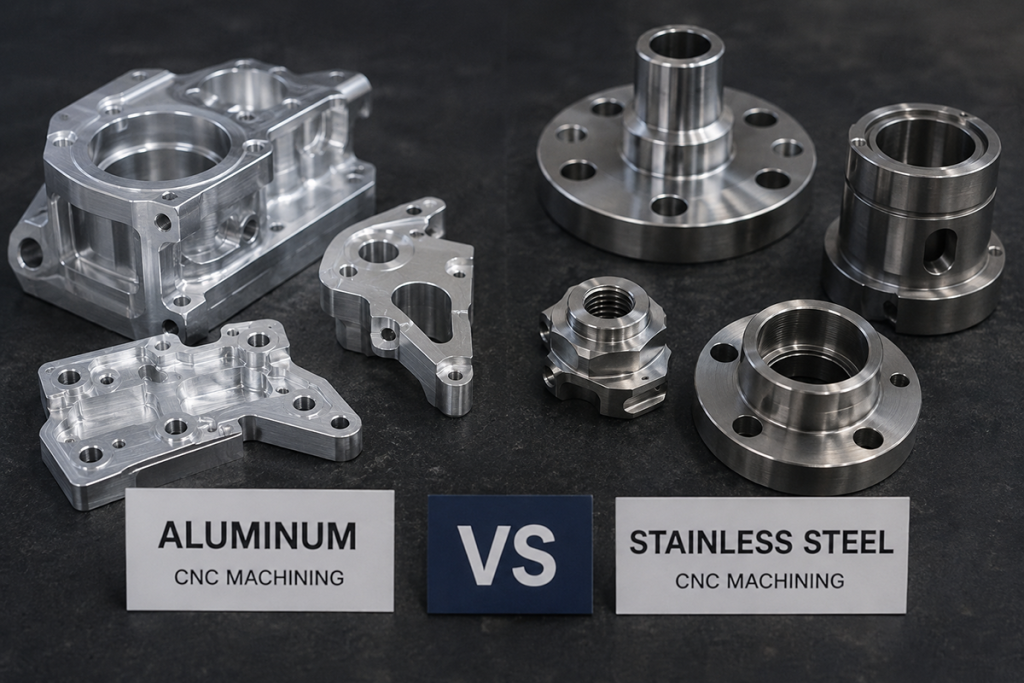
Aluminum is often used for lightweight brackets, covers, housings, and mounting plates. It machines efficiently, supports clean finishes, and can be anodized for appearance or surface protection. For equipment that needs reduced weight or fast production, aluminum CNC machining can be a practical choice.
Stainless steel is selected when corrosion resistance, durability, or cleaning compatibility matters. It is useful for parts exposed to moisture, washdown conditions, chemicals, or harsh industrial environments. Stainless steel CNC machining is more demanding than aluminum, but it can provide stronger long-term protection in the right application.
Carbon steel and alloy steel are often used for load-bearing components, shafts, structural blocks, and wear-related parts. These materials may offer better strength and toughness than aluminum or brass, but they may require coating, plating, black oxide, heat treatment, or other post-processing to improve surface performance.
Brass can be useful for fittings, bushings, valve-related components, and parts requiring clean threads or conductivity. Engineering plastics may be used for insulators, wear pads, guides, rollers, low-friction parts, and non-metallic components. Buyers can review CNC machining materials and the best materials for CNC machining to compare strength, corrosion resistance, machinability, and cost before finalizing a design.
Prototype, Replacement, and Low-Volume Production Needs
Industrial equipment projects often need CNC machining because the required quantity does not justify casting, molding, or stamping. A buyer may need one replacement part, five prototype components, or a small production batch for custom machinery. In these cases, CNC machining provides a practical path from drawing to functional part without expensive tooling.
During prototype development, CNC machining allows engineers to test fit, assembly, strength, motion, and material behavior. If a bracket needs more clearance or a housing requires a different mounting pattern, the design can be updated before the next batch. This is especially useful for custom automation systems and machinery under development.
For replacement parts, CNC machining can help restore equipment when standard spare parts are unavailable. A supplier may use an old drawing, a sample part, or reverse-engineered measurements to manufacture a replacement. In these projects, the buyer should provide as much information as possible about the equipment, mating parts, critical features, and operating conditions.
For low-volume industrial CNC parts, the goal is often consistency across a small batch. This may include repeated brackets, machine blocks, shafts, or fixture components used in several machines. CNC machining for prototypes vs production follows different priorities, so buyers should explain whether the order is for testing, repair, or repeat use.
Surface Finish and Post-Processing for Industrial Components
Surface finish and post-processing can affect corrosion resistance, wear behavior, appearance, cleaning, and assembly fit. Industrial equipment components are often used in environments where untreated surfaces may not perform well over time. The finish should be selected based on function rather than appearance alone.
Aluminum parts may require anodizing, bead blasting, powder coating, or chemical conversion coating. These finishes can improve corrosion resistance, appearance, and surface durability. Stainless steel parts may require passivation, polishing, brushing, or bead blasting depending on corrosion and cleaning requirements.
Steel components may need black oxide, zinc plating, nickel plating, heat treatment, painting, or other protective processes. These finishes can improve wear resistance or corrosion protection, but they may also affect dimensions. For precision mating surfaces, buyers should specify whether dimensions apply before or after finishing.
Deburring and edge breaking are also important. Sharp edges can create assembly risks, handling issues, or stress points. Internal burrs around holes, slots, and threads can interfere with fasteners or moving parts. If burr control is important, it should be included in the drawing or RFQ instead of assumed after machining.
Quality Control for Industrial CNC Machined Parts
Quality control for industrial CNC machined parts starts before machining begins. A supplier should review the drawing, material requirements, tolerances, surface finish, and inspection expectations. This review helps identify unclear dimensions, difficult features, unnecessary tight tolerances, or design details that may affect cost and manufacturability.
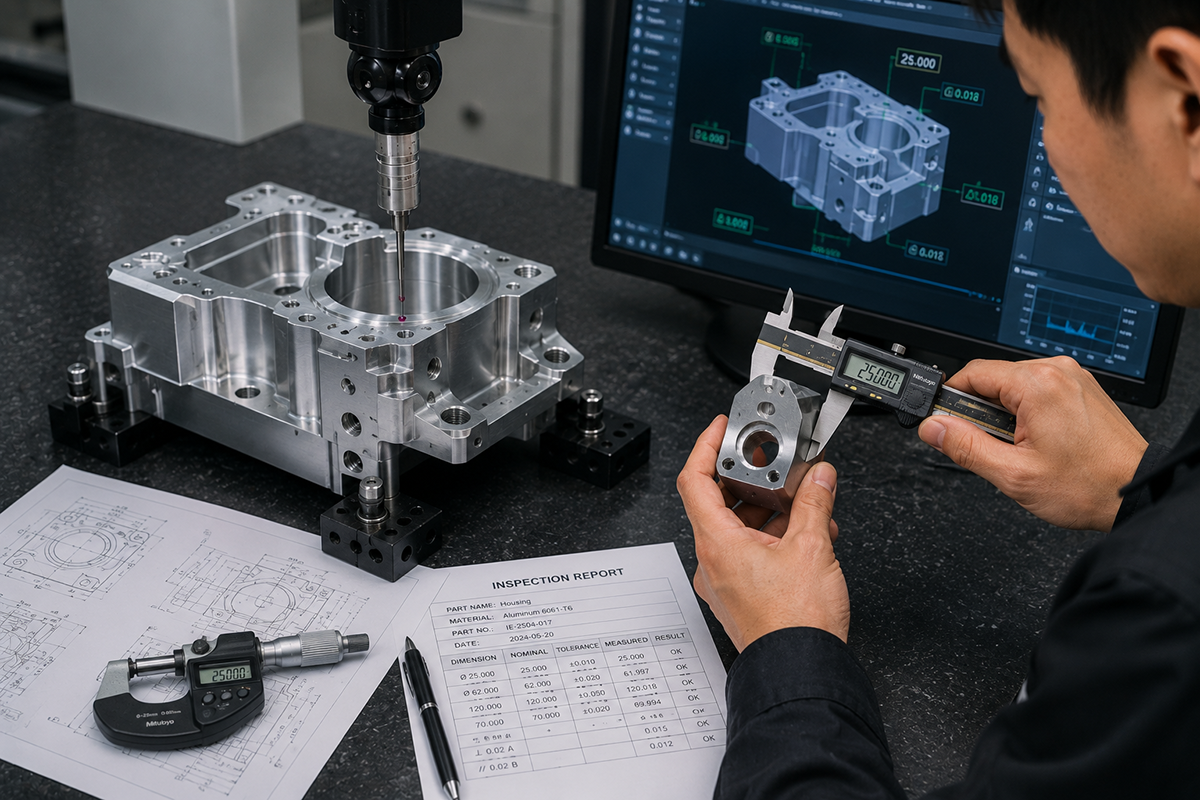
Inspection may include calipers, micrometers, height gauges, thread gauges, pin gauges, surface roughness checks, and CMM inspection depending on the part complexity. Critical dimensions should be identified clearly so the supplier knows which features require tighter control and documentation.
For replacement parts or machine-critical components, first article inspection can be useful before producing a full batch. This allows the buyer to confirm fit and function before committing to additional quantities. For repeat orders, batch consistency is important, especially when parts are used across multiple machines or assemblies.
Material verification may also be needed. If the part must be made from a specific aluminum, stainless steel, steel, brass, or plastic grade, the RFQ should state whether material certificates or traceability are required. Inspection and documentation requirements affect cost, but they can reduce risk for critical equipment components.
Cost Factors in CNC Machining for Industrial Equipment
Cost in CNC machining for industrial equipment depends on material, size, geometry, tolerance, surface finish, inspection, quantity, and lead time. A simple spacer or plate may be economical, while a large machine block with deep pockets, tight hole positions, threaded features, and surface treatment can require significantly more machining time.
Material is one of the first cost factors. Aluminum may machine quickly, while stainless steel and alloy steel require more controlled cutting conditions. Engineering plastics may reduce weight or friction but can require careful handling to avoid deformation. Material availability and stock size can also affect lead time.
Geometry is another major factor. Deep cavities, thin walls, multiple setups, small tools, and difficult access increase machining time. Tolerances also matter. Tight tolerances on every dimension can raise cost, while practical tolerances focused on critical areas can control price without reducing function.
Surface finish and post-processing add time and cost. Anodizing, plating, passivation, coating, polishing, heat treatment, and deburring should be defined early. Inspection requirements such as CMM reports, material certificates, and first article inspection also affect the quote. Buyers can review CNC machining cost factors to understand how these elements influence pricing across different custom parts.
What Buyers Should Prepare Before Requesting a Quote
A complete RFQ helps the supplier quote accurately and reduces back-and-forth communication. Buyers should provide 3D CAD files and 2D drawings whenever possible. The CAD file helps with geometry and toolpath review, while the drawing defines tolerances, material, finish, threads, and inspection requirements.
The RFQ should also explain the application. A supplier can make better recommendations when they know whether the part is used for mounting, rotation, sliding, sealing, support, replacement, testing, or long-term production. Load, vibration, temperature, moisture, chemical exposure, and expected service life can all affect material and finish decisions.
Buyers should identify critical features, including bearing fits, shaft diameters, threaded holes, flat mounting faces, alignment holes, sealing surfaces, and dimensions that affect assembly. Non-critical dimensions can usually use standard tolerances to control cost.
If no special tolerance is required, buyers can state a general tolerance standard such as ISO 2768, while marking only the critical dimensions with tighter requirements on the drawing.
If the project involves an industrial equipment replacement part, buyers should provide the old drawing, sample photos, worn part measurements, mating part details, and any known failure issues. If material choice is uncertain, reviewing how to choose CNC machining materials can help define strength, corrosion, wear, and cost priorities before quotation.
Conclusion
CNC machining for industrial equipment is valuable because it supports accurate, durable, and functional components for custom machines, replacement parts, prototypes, and low-volume production. These parts are not judged only by appearance. They must assemble correctly, handle real operating conditions, and maintain performance over time.
The success of a machined equipment component depends on practical tolerance planning, suitable material selection, stable machining, appropriate surface finish, and clear inspection requirements. Brackets, housings, shafts, machine blocks, bushings, spacers, couplings, fixture parts, and replacement components all require different design and quality priorities.
Buyers can improve quality and control cost by preparing complete RFQ information, marking critical dimensions, choosing materials based on the actual working environment, and allowing supplier feedback before production. CNC machining is especially effective when industrial parts need flexibility, precision, and reliable small-batch production without dedicated tooling.
If your project requires custom industrial equipment components, replacement machinery parts, or low-volume machined equipment components, our team can review your drawings and help evaluate material choice, tolerance feasibility, surface finish, inspection needs, and production cost before manufacturing.