Introduction
When to use CNC machining for prototypes vs production is an important question for engineers, product developers, and sourcing managers who need custom metal or plastic parts but are not sure which manufacturing stage they are entering. CNC machining is often associated with prototypes, but in many B2B projects it also plays a critical role in low-volume production, bridge production, replacement parts, and precision components that require stable quality without expensive tooling.
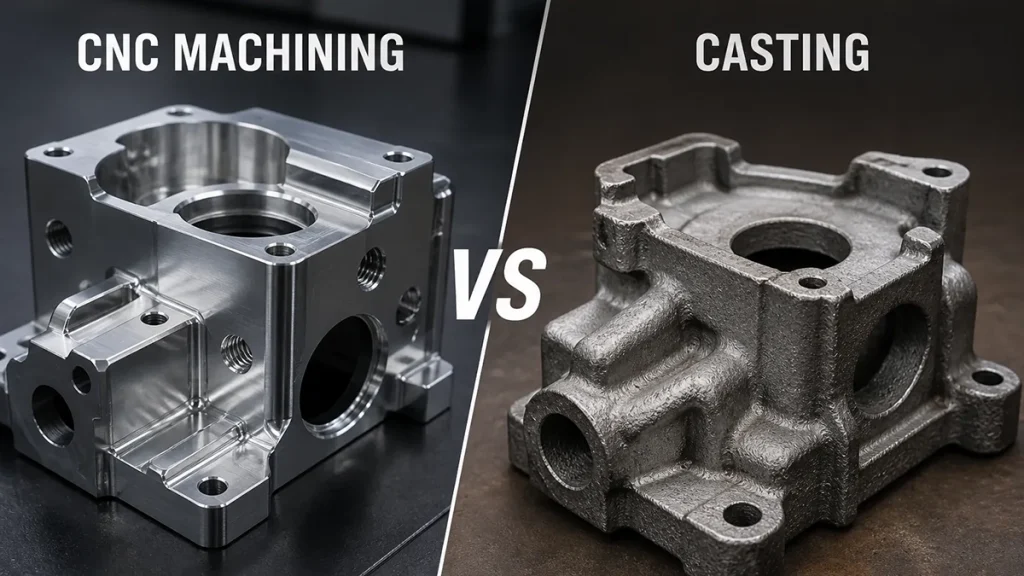
The main advantage of CNC machining is flexibility. Unlike casting, injection molding, or die-based production, CNC machining does not require dedicated molds before parts can be made. This makes it especially useful during early product development, when drawings may still change, materials may need to be tested, and engineers may need real functional parts quickly. A machined prototype can help validate fit, strength, assembly, surface finish, and tolerance requirements before a design moves into production.
However, CNC machining is not limited to prototype work. Many companies continue using CNC machining after validation because the process offers reliable precision, broad material compatibility, and strong repeatability for low-to-medium production volumes. For custom brackets, housings, shafts, fixtures, machine parts, and industrial components, CNC machining may remain the most practical production method when annual demand is not high enough to justify tooling.
The decision depends on several factors: part complexity, required tolerance, material choice, expected quantity, lead time, budget, and whether the design is stable. A prototype order may prioritize fast turnaround and design feedback, while a production order requires process repeatability, inspection consistency, and cost control across batches. Understanding this difference helps buyers avoid both over-investing in tooling too early and under-planning for repeat production.
This guide explains when CNC machining is suitable for prototypes, when it makes sense for production, and how buyers can decide whether CNC is the right manufacturing route for their project. For companies evaluating precision CNC machining services, the goal is to use CNC machining where it provides the best balance of speed, accuracy, cost, and manufacturing flexibility.
Why CNC Machining Is Useful During the Prototype Stage
During product development, CNC machining is often one of the most practical ways to turn a digital design into a real functional part. When deciding when to use CNC machining for prototypes vs production, the prototype stage is usually where CNC provides its clearest advantage: speed, flexibility, material accuracy, and the ability to test real-world performance before committing to larger production decisions.
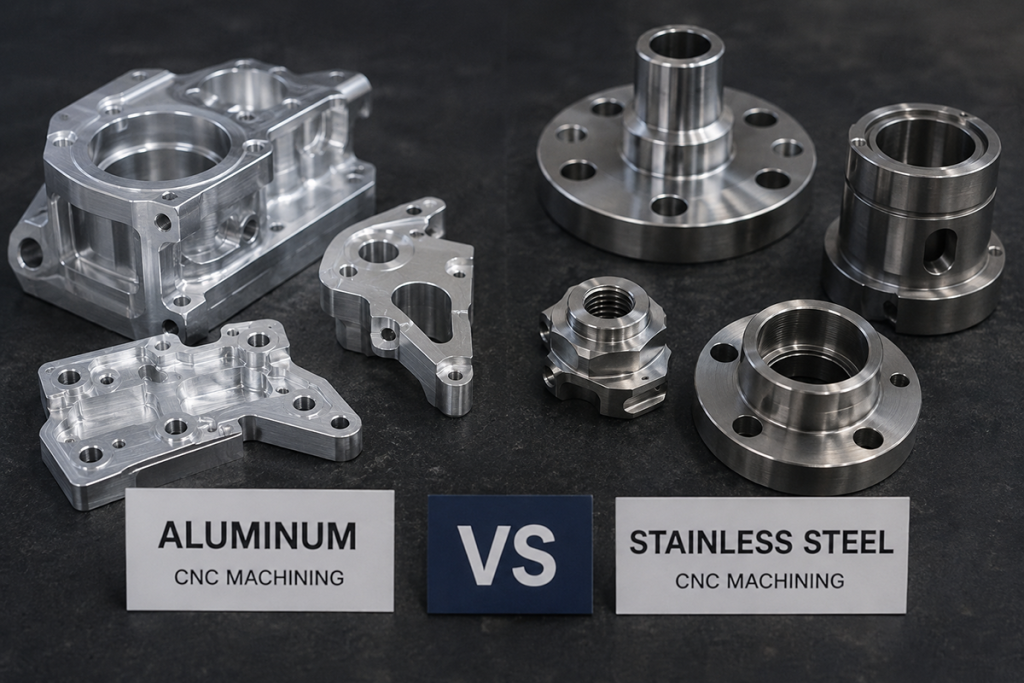
A prototype is not only a visual sample. In engineering and B2B manufacturing, a prototype often needs to validate whether the part fits into an assembly, carries load correctly, meets dimensional requirements, and performs as expected under operating conditions. CNC machining is valuable because it can produce parts from real engineering materials, including aluminum, stainless steel, brass, copper, carbon steel, and engineering plastics.
Testing Real Materials
One reason CNC machining is preferred for functional prototypes is that the part can be machined from the same or similar material intended for final production. This is important when material behavior affects performance. A plastic mock-up or non-metal printed sample may help check shape, but it may not accurately represent strength, stiffness, weight, thread durability, heat resistance, or surface finish.
For example, an aluminum automotive bracket prototype can be tested for fit, weight, mounting accuracy, and structural behavior much more realistically than a cosmetic sample. A stainless steel fitting can be tested for corrosion resistance and thread strength. A machined engineering plastic part can help verify low-friction or insulation performance before production begins.
Fast Design Iteration
CNC machining also supports fast design iteration. Because there is no need for mold tooling, a revised CAD model can be machined after design changes are made. This is useful when engineers are still adjusting hole positions, wall thickness, mounting features, or assembly clearances.
In prototype development, design changes are normal. A part may look correct in CAD but reveal issues during assembly or testing. CNC machining allows teams to revise and remake the part without wasting investment in molds or production tooling. This helps reduce early-stage project risk.
Validating Tolerances and Assembly Fit
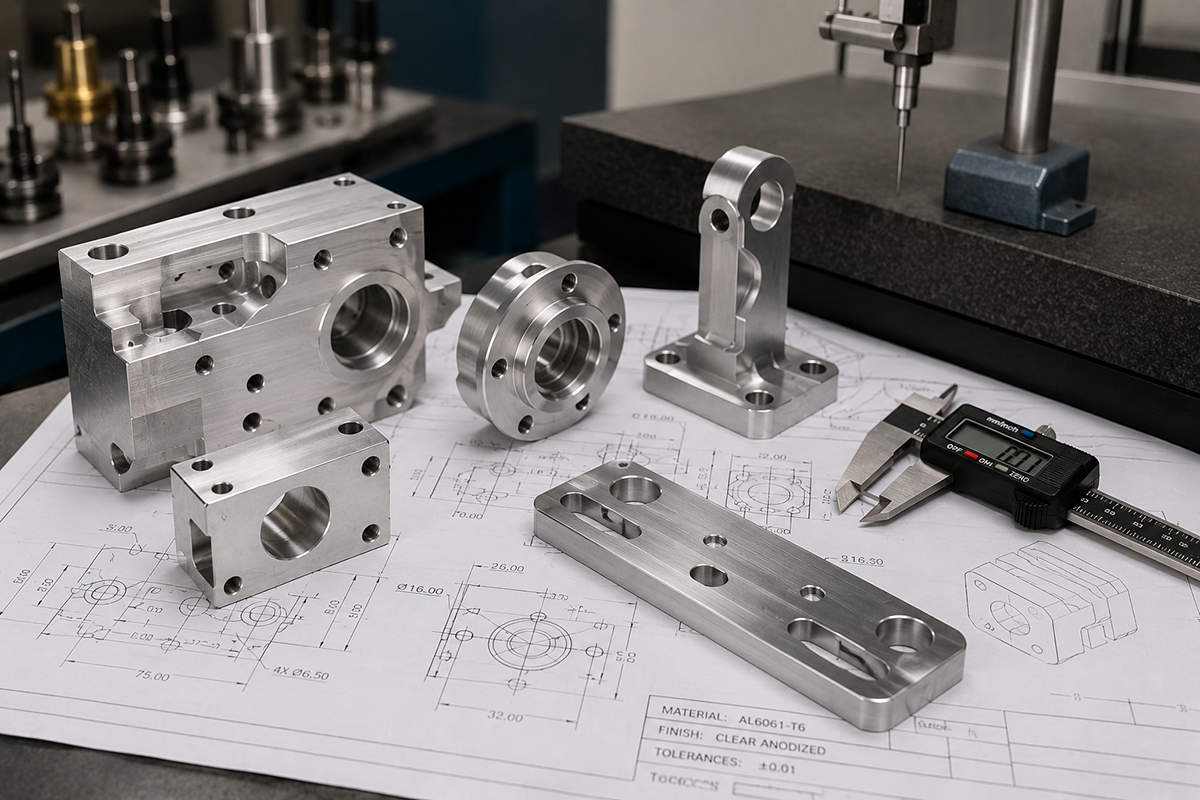
Prototype machining is also useful when tolerances matter. A CNC machined prototype can show whether the specified tolerance is realistic, too loose, or unnecessarily tight. This is especially important for holes, threads, bearing seats, sealing faces, and mating surfaces.
Testing a machined prototype can help answer practical questions:
- Do the holes align correctly during assembly?
- Is the wall thickness strong enough?
- Does the material deform under load?
- Are the threads durable enough?
- Is the surface finish suitable for function?
- Are any tolerances too expensive or unnecessary?
Reducing Risk Before Production
The biggest value of CNC machining in the prototype stage is risk reduction. Before ordering a larger batch or considering tooling-based processes, buyers can confirm whether the design, material, tolerance, and finish requirements are practical. A well-machined prototype helps identify manufacturing issues early, when changes are still relatively easy to make.
For teams preparing a new product or custom industrial component, prototype CNC machining provides a reliable bridge between design and production. It gives engineers real feedback from a physical part, while allowing sourcing managers to understand cost, lead time, and manufacturability before moving forward.
When CNC Machining Makes Sense for Low-Volume Production
Although CNC machining is commonly used for prototypes, it is also highly practical for low-volume production. In many B2B manufacturing projects, the transition from prototype to production does not automatically mean switching to casting, injection molding, stamping, or other tooling-based processes. When annual demand is limited, design updates are expected, or precision requirements remain high, CNC machining can continue to be the most efficient production method.
Low-volume production usually refers to small or moderate batches where tooling investment is difficult to justify. This may include 10 pieces, 50 pieces, 100 pieces, or recurring small batches depending on the industry and part type. For custom machinery components, automotive brackets, robotics parts, fixtures, housings, and replacement components, CNC machining often provides a strong balance between flexibility, cost control, and reliable part quality.
No Tooling Investment Required
One of the main reasons CNC machining works well for low-volume production is that it does not require dedicated molds or dies. Tooling-based processes can reduce unit cost at high volume, but they also require upfront investment and design stability. If the part quantity is not large enough, the tooling cost may make the project less economical.
CNC machining avoids this problem. Once the design, material, and drawing requirements are confirmed, production can begin directly from digital files and standard material stock. This is especially useful for companies that need functional parts but do not yet have predictable long-term demand.
Better Flexibility for Design Updates
Low-volume production often happens during a stage where the product is validated but still evolving. A company may need parts for pilot builds, field testing, early customer orders, or machine upgrades. In these situations, small design changes may still occur based on testing feedback or installation results.
CNC machining allows those changes to be implemented more easily than tooling-based production. Updating a CAD model and machining program is usually more practical than modifying a mold. This reduces risk when the design is not fully locked.
Consistent Quality Across Small Batches
Another advantage is repeatability. Once a CNC machining process is programmed and validated, the same setup can be used to produce consistent parts across small batches. This is important for parts with functional holes, threads, mating surfaces, or alignment features.
For production parts, quality expectations are usually higher than early prototypes. Buyers may need better consistency, clearer inspection requirements, and stable surface finish. CNC machining supports this through controlled toolpaths, repeatable setups, and defined inspection procedures.
Common Low-Volume CNC Production Examples
CNC machining is often suitable for low-volume production parts such as:
- Custom automotive brackets and mounts
- Industrial machine components
- Robotics housings and plates
- Replacement parts for equipment
- Precision fixtures and tooling components
- Custom shafts, bushings, and adapters
- Aluminum or stainless steel enclosures
For buyers deciding when to move from prototype machining to low-volume production, the key factors are quantity, design stability, tolerance requirements, and cost per part. If the design is still changing or the quantity is not high enough for tooling, CNC machining often remains the most practical route.
For material-related planning during low-volume production, reviewing CNC machining materials early can help balance part performance, machinability, cost, and delivery time before repeat orders begin.
Bridge Production: When CNC Machining Fills the Gap Before Mass Production
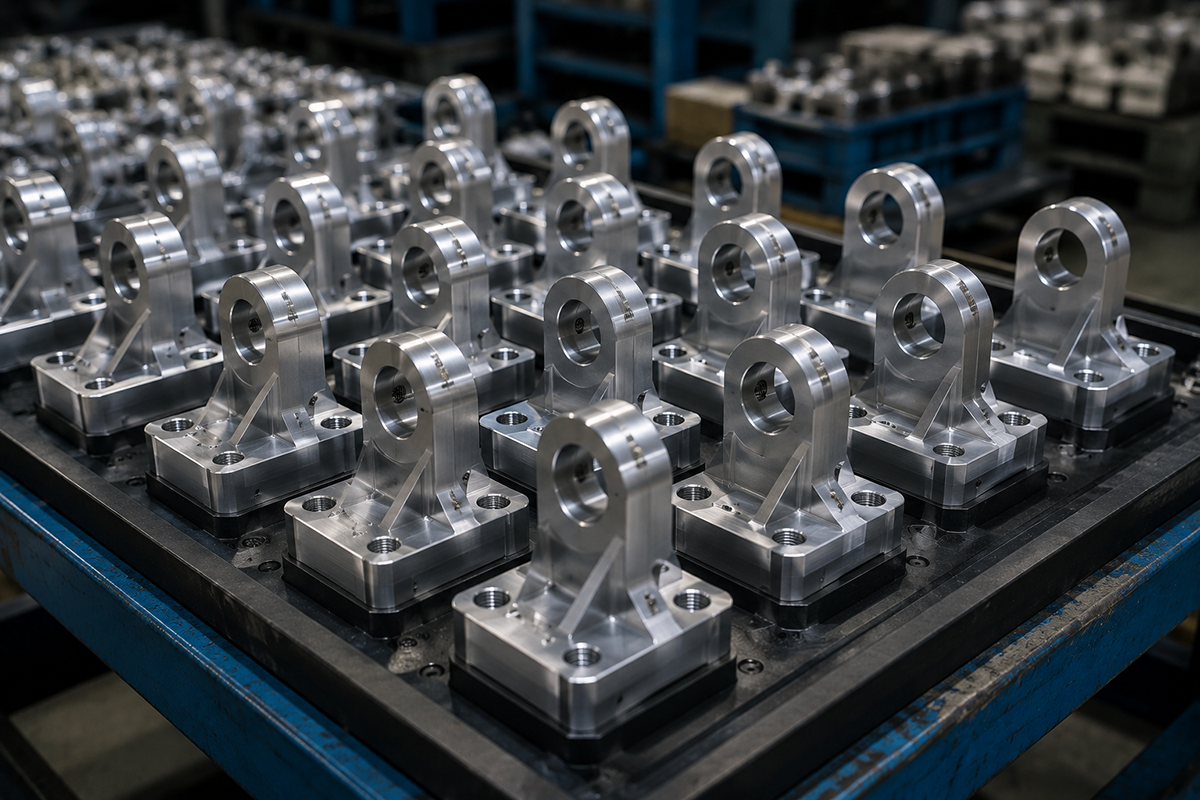
Another important situation in when to use CNC machining for prototypes vs production is bridge production. Bridge production refers to the stage between prototype validation and full-scale manufacturing. At this stage, the design may be functional and approved, but the company may not yet be ready to invest in tooling, commit to high-volume production, or finalize long-term demand forecasts.
This stage is common in B2B manufacturing. A company may need parts for pilot builds, early customer deliveries, field testing, equipment installation, investor demonstrations, or limited market launch. The quantity may be larger than a prototype order but still too small for casting, die tooling, stamping, or injection molding. In these cases, CNC machining can provide a practical production bridge.
Why Bridge Production Matters
Bridge production helps companies avoid two common risks. The first risk is moving into tooling too early. If the design changes after a mold or die is made, modifying the tooling can be expensive and time-consuming. The second risk is delaying market entry while waiting for mass-production tooling to be completed. CNC machining helps solve both problems by allowing parts to be produced quickly without permanent tooling investment.
For example, a company developing an industrial equipment component may need 30 to 100 parts for field testing before confirming the final version. A robotics manufacturer may need a batch of aluminum housings for pilot assembly. An automotive supplier may need custom brackets for validation builds before committing to larger production volumes. CNC machining allows these parts to be produced with real materials and controlled tolerances while the final production strategy is still being evaluated.
Better Control Before Scaling
Bridge production is also useful because it gives engineering and purchasing teams more data before scaling. A CNC machined bridge batch can reveal whether the design is easy to assemble, whether tolerances are appropriate, whether the material performs correctly, and whether any features should be simplified before larger production begins.
At this stage, small design improvements can still create meaningful savings. For example, reducing unnecessary tight tolerances, changing material grade, adjusting wall thickness, or simplifying hard-to-machine features may reduce cost before repeat production begins. These improvements are much easier to make during bridge production than after tooling-based mass production has started.
When CNC Bridge Production Is the Right Choice
CNC machining is often suitable for bridge production when:
- The design is mostly validated but may still require small adjustments
- Initial market or field demand is uncertain
- The required quantity is too low for tooling-based production
- Parts must be made from functional materials
- Tolerances, threads, and mating surfaces need reliable control
- Lead time is important before larger production begins
Compared with waiting for full tooling, CNC machining can help companies continue development, support early deliveries, and collect real-world feedback faster. It also allows sourcing teams to understand practical production cost before committing to a long-term manufacturing route.
Bridge production is especially valuable for custom metal parts where quality, fit, and functional performance matter more than the lowest possible unit cost. For many industrial projects, CNC machining provides the flexibility needed to move from tested prototype to early production without locking the design too soon.
When CNC Machining Is Suitable for Repeat Production
Repeat production is where CNC machining shifts from a prototype support process into a controlled manufacturing method. When evaluating when to use CNC machining for prototypes vs production, buyers should understand that CNC machining can remain highly effective even after the prototype stage, especially when the part requires precision, consistent quality, flexible quantities, or ongoing design control.
Not every production project needs mass-production tooling. In many industrial, automotive, robotics, and machinery applications, annual demand may be steady but not high enough to justify casting dies, injection molds, stamping tools, or dedicated fixtures for another manufacturing process. CNC machining allows companies to produce repeat batches without locking themselves into expensive tooling too early.
Repeat Orders with Stable Drawings
CNC machining becomes more efficient when the same part is ordered repeatedly. After the first production run, the supplier already understands the part geometry, material behavior, fixture strategy, tooling requirements, inspection method, and finishing needs. This can reduce quotation time, improve production planning, and create more stable lead times for future orders.
For example, a custom aluminum bracket may first be produced as a prototype, then ordered in batches of 20 or 50 pieces for pilot builds, and later repeated every few months for maintenance or equipment production. In this type of workflow, CNC machining provides a practical path from initial validation to repeat supply without requiring a major tooling investment.
Consistent Quality for Functional Parts
Repeat production requires more than making the same shape again. The parts must remain consistent across batches. CNC machining supports this through controlled programs, repeatable setups, documented material specifications, and defined inspection requirements. This is especially important for parts with functional surfaces, threaded holes, bearing fits, alignment features, or assembly-critical dimensions.
Production CNC machining is often suitable for:
- Industrial equipment components
- Automotive brackets and fixtures
- Robotics housings and mounting plates
- Custom shafts, spacers, and adapters
- Machine replacement parts
- Precision tooling and workholding components
In these applications, quality consistency is often more important than achieving the lowest possible unit price. A lower-cost process may not be attractive if it creates dimensional variation, requires extensive secondary machining, or increases assembly risk.
Flexible Production Quantities
One of the advantages of CNC machining for repeat production is quantity flexibility. Buyers can order small or medium batches based on real demand instead of committing to large inventory. This is useful when product demand changes, equipment models are updated, or customer orders vary from month to month.
For small manufacturers and engineering-driven businesses, this flexibility helps control cash flow and inventory risk. Instead of ordering thousands of parts from a tooling-based process, the company can produce what is needed, revise the design when necessary, and reorder when demand becomes clear.
When Repeat CNC Production Makes Sense
CNC machining is suitable for repeat production when:
- The design is stable enough for repeat orders
- The required quantity is low to medium
- The part requires tight tolerances or precise features
- The material must remain consistent across batches
- Tooling investment is not justified by volume
- Design flexibility is still valuable
For buyers using precision CNC machining services, repeat production works best when the drawing, material, tolerances, and finish requirements are clearly documented. This allows the supplier to reproduce parts consistently and identify opportunities to reduce cost through improved setup, batch planning, or material preparation over time.
Cost Differences Between Prototype CNC Machining and Production CNC Machining
Cost structure changes significantly between prototype machining and production machining. When evaluating when to use CNC machining for prototypes vs production, buyers should understand that the unit price of a prototype is usually higher because programming, setup, fixture planning, material preparation, and inspection are spread across only one or a few parts. In production, those same fixed costs can be distributed across a larger quantity, which often lowers the unit price.
Why Prototype Parts Usually Cost More Per Piece
A prototype order may include only one to five parts, but the supplier still needs to review the design, prepare the CAM program, set up the machine, select tools, inspect the first part, and manage delivery. These steps take time regardless of quantity. Because the preparation cost is applied to a small number of parts, the unit price is naturally higher.
Prototype cost is often affected by:
- New CAM programming for a first-time design
- One-time machine setup and alignment
- Material preparation for small quantities
- First-piece inspection and design verification
- Potential manufacturability feedback
- Fast turnaround requirements
This higher unit price does not mean CNC prototyping is inefficient. It means the buyer is paying for flexibility, speed, and real material validation before committing to larger production. A prototype can prevent far more expensive mistakes later by identifying design, tolerance, assembly, or material problems early.
Why Production Unit Cost Can Decrease
When CNC machining moves into production, the same programming and setup work can support a larger batch. If the part is ordered in 20, 50, or 100 pieces, the fixed preparation cost is divided across more parts. This usually reduces the unit cost compared with a one-off prototype.
Production machining also allows the supplier to optimize the process. Once the first run has been completed, the supplier may improve fixture strategy, tool selection, cutting parameters, inspection flow, and material preparation. These improvements can make repeat production more efficient and predictable.
Where CNC Production Cost Still Has Limits
Even though CNC machining becomes more efficient in batches, it remains a machine-time-driven process. Every part still needs to be cut, inspected, handled, and finished. This means CNC machining may not reach the same low unit cost as casting, stamping, or injection molding at very high volumes.
For this reason, CNC machining is often strongest for prototype, low-volume, small-batch, bridge production, and precision repeat orders. If annual demand becomes very high and the design is fully stable, tooling-based manufacturing may eventually become more economical.
How Buyers Should Compare Costs
Instead of asking only for one quantity, buyers should request pricing at different volume levels. For example:
- 1 piece for prototype validation
- 10 pieces for engineering testing
- 50 pieces for pilot production
- 100+ pieces for repeat batch planning
This helps the buyer understand how setup cost, material purchasing, and batch efficiency affect pricing. It also helps determine whether CNC machining remains suitable for production or whether another manufacturing method should be evaluated later.
For most custom industrial parts, CNC machining provides a practical cost balance when the project requires real materials, reliable tolerances, and flexible quantities. The key is to match the production stage with the right quantity strategy instead of treating prototype and production pricing as the same type of order.
Quality Control Differences Between Prototype and Production CNC Machining
Quality control becomes more important as a CNC machining project moves from prototype validation into repeat production. When deciding when to use CNC machining for prototypes vs production, buyers should understand that the inspection goal changes across each stage. A prototype is often used to verify design feasibility and functional fit, while production parts must maintain consistent quality across every batch.
In the prototype stage, inspection may focus on whether the key dimensions are correct, whether the part fits the assembly, and whether the material behaves as expected. In production, the requirement becomes broader. The supplier must ensure that every part in the batch meets the agreed drawing, tolerance, finish, and documentation requirements. This shift affects inspection planning, cost, lead time, and communication between the buyer and supplier.
Prototype Inspection Focus
Prototype inspection is usually centered on learning. The buyer may want to confirm whether the design works before ordering more parts. For this reason, prototype inspection often focuses on critical features rather than every minor dimension. Important areas may include hole positions, mating surfaces, thread quality, wall thickness, bearing fits, and assembly interfaces.
A prototype can also reveal whether the original drawing requirements are realistic. Sometimes a tolerance may be tighter than necessary, or a surface finish may add cost without improving function. In other cases, the prototype may show that certain dimensions need tighter control before moving into production.
For engineering teams, this feedback is valuable because it allows the design to be improved before larger quantities are ordered.
Production Inspection Focus
Production CNC machining requires more consistency. Once the design is validated, the focus moves from learning to repeatability. The supplier must confirm that parts remain within specification across the batch and that the same quality level can be achieved in repeat orders.
Production inspection may include:
- First article inspection for the initial production part
- Dimensional inspection of critical features
- Thread gauge checks
- Surface finish verification
- Material certificate review when required
- Batch sampling or full inspection depending on risk level
The required inspection level depends on the part’s function. A simple cover plate may only need basic checks, while a precision fixture or automotive bracket may require detailed measurement documentation.
Why Documentation Matters More in Production
As orders move into production, documentation becomes more important. Buyers may need inspection reports, material certificates, finish records, or batch traceability depending on their internal quality system or customer requirements. Preparing these documents takes time, so they should be requested before quotation rather than after production begins.
Clear documentation requirements help avoid delays and prevent misunderstandings. If a buyer requires dimensional reports, CMM inspection, or certificate of conformity, the supplier needs to plan inspection resources from the beginning.
Using CNC Machining to Build a Stable Production Process
CNC machining supports quality control well because the process is digitally programmed and repeatable. Once the toolpaths, fixtures, and inspection plan are validated, future batches can be produced with better consistency. This is one reason CNC machining is valuable not only for prototypes, but also for low-volume and repeat production where quality stability matters.
For buyers, the best practice is to define critical features clearly on the drawing and separate them from non-critical dimensions. This allows the supplier to focus inspection effort where it matters most. Good communication during the prototype stage can also reduce production risk later by identifying tolerance, material, and finish issues before repeat orders begin.
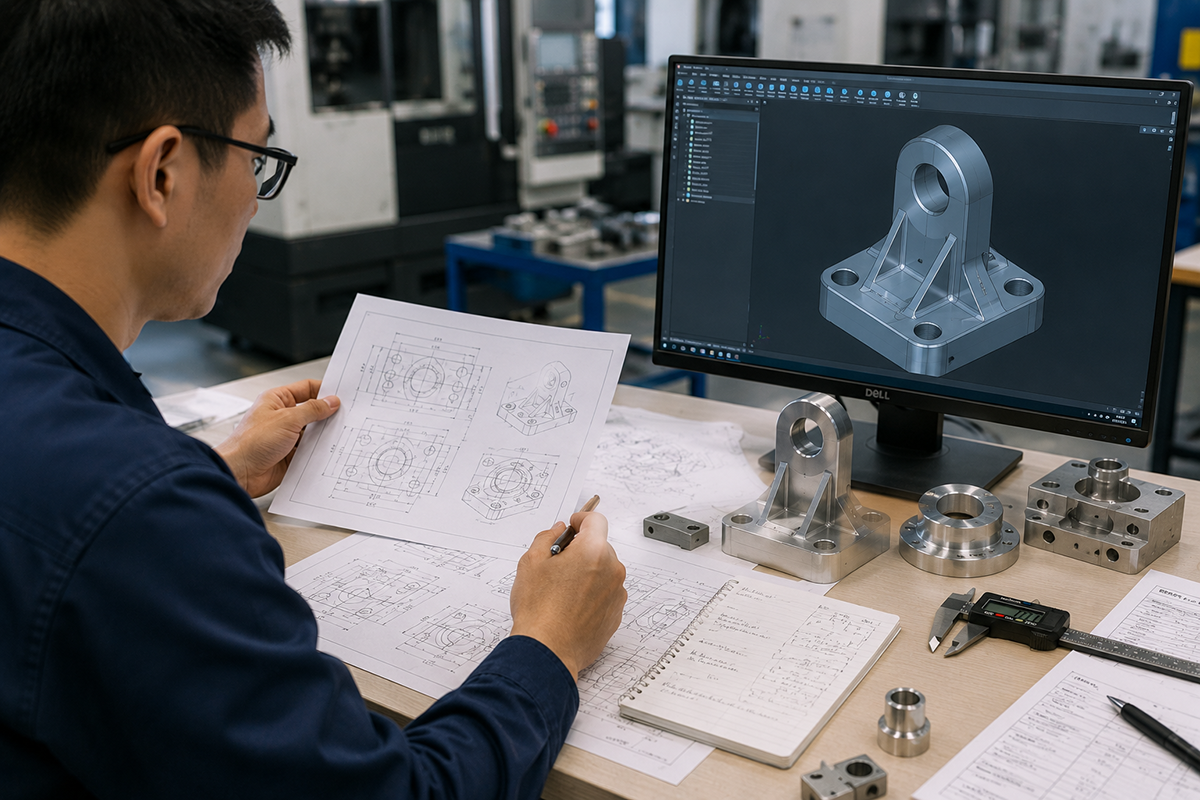
How to Decide When to Move from Prototype to Production
One of the most important questions in when to use CNC machining for prototypes vs production is knowing when a project is ready to move beyond prototype machining. A prototype may prove that the part can be manufactured, but production requires a more stable and repeatable process. Moving too early can create cost and quality problems. Waiting too long can delay delivery, increase development cost, and slow down market entry.
The transition from prototype to production should happen when the design, material, tolerance requirements, and performance expectations are clear enough to support repeat orders. For many B2B projects, this does not mean the part must move to tooling-based mass production. It may simply mean moving from one-off CNC prototypes to controlled small-batch or repeat CNC production.
Confirm That the Design Is Stable
The first sign that a part is ready for production is design stability. If hole positions, wall thickness, mounting features, material choice, and surface finish are still changing after each test, the part is still in the prototype stage. CNC machining is useful during this period because changes can be made without expensive tooling modifications.
Once the design has been tested in the real assembly and no major changes are expected, the project can move toward production planning. At this point, the drawing should clearly define critical dimensions, tolerances, surface finishes, material grade, and any inspection requirements.
Validate the Material and Surface Finish
Before production begins, the selected material should be confirmed under real use conditions. A part may fit correctly but still fail if the material is too soft, too heavy, too brittle, or insufficiently resistant to corrosion. Surface finish should also be validated if it affects appearance, assembly, sealing, friction, or coating performance.
For example, an aluminum prototype may be suitable for fit testing, but the production version may require anodizing for corrosion resistance. A stainless steel prototype may validate strength, but passivation or polishing requirements may need to be confirmed before repeat production. Reviewing CNC machining materials before production helps prevent material-related issues later.
Review Tolerances for Production Cost
Prototype drawings often include conservative tolerances because engineers want to ensure the first part works. Before production, those tolerances should be reviewed carefully. Some tight tolerances may be necessary for functional holes, bearing fits, sealing surfaces, or alignment features. Other tolerances may be relaxed without affecting performance.
This review can reduce production cost significantly. If every dimension is held tightly during production, machining time and inspection effort increase. A better approach is to identify critical features and apply precision only where it is needed.
Check Quantity and Demand Forecast
Production planning also depends on expected quantity. If demand is still uncertain, CNC machining can support small-batch or bridge production without requiring tooling investment. If the design is fully stable and expected volume becomes very high, other manufacturing methods may eventually be considered.
A practical production decision should consider:
- Whether the design is finalized
- Whether the material has been validated
- Whether tolerances are realistic for repeat production
- Whether surface finish requirements are confirmed
- Whether expected quantity justifies CNC production or another process
- Whether inspection requirements are clearly documented
For many custom metal and plastic components, CNC machining remains valuable after prototyping because it allows production to scale gradually. Buyers can order based on real demand, continue improving the design when necessary, and avoid tooling investment until volume truly supports it.
Practical Checklist for Choosing CNC Machining at Each Stage
For buyers and engineers, the clearest way to decide when to use CNC machining for prototypes vs production is to evaluate the project stage with a practical checklist. CNC machining can support early prototypes, engineering validation, bridge production, and repeat production, but the reason for using CNC changes at each stage. A prototype order focuses on learning and validation, while a production order focuses on repeatability, cost control, and stable quality.
Instead of treating CNC machining as either a prototype method or a production method, it is more useful to ask what the project needs right now. If the goal is to test a new design, CNC machining provides speed and flexibility. If the goal is to supply functional parts in small or medium batches, CNC machining provides precision and controlled repeatability. If the goal is millions of identical parts with a fully stable design, then tooling-based production may eventually become more economical.
Use CNC Machining for Prototypes When:
- The design is still being tested or adjusted
- The part needs to be made from real engineering material
- Fit, assembly, strength, or tolerance needs to be validated
- Only one or a few parts are required
- Fast turnaround is more important than lowest unit cost
- Tooling investment would be premature
At this stage, CNC machining helps reduce development risk. The buyer can test the part in real conditions, revise the design, and improve manufacturability before ordering a larger batch.
Use CNC Machining for Low-Volume Production When:
- The design is mostly stable but demand is not high enough for tooling
- The order quantity is small or moderate
- The part requires tight tolerances or precision features
- Material consistency is important
- Repeat orders may be needed, but quantities vary
- The project needs flexible production without large inventory
This stage is common for custom industrial parts, machinery components, robotics housings, automotive brackets, fixtures, and replacement components. CNC machining allows buyers to produce practical quantities while maintaining control over quality and design updates.
Use CNC Machining for Bridge Production When:
- The prototype is approved but mass production is not ready
- Parts are needed for pilot builds, field testing, or early deliveries
- Tooling lead time would delay the project
- The design may still require minor improvements
- Real production feedback is needed before scaling
Bridge production gives teams time to validate market demand, confirm assembly behavior, and refine the design before committing to tooling or larger production strategies.
Use CNC Machining for Repeat Production When:
- The annual volume remains low to medium
- The part requires precision and repeatability
- Tooling cost is not justified by quantity
- The buyer needs stable quality across batches
- Design flexibility remains valuable
- The supplier has already validated the machining process
Repeat CNC production is especially useful when parts must be ordered regularly but not in extremely high volumes. It allows buyers to maintain reliable supply without locking into large inventory or permanent tooling.
When to Consider Another Manufacturing Process
CNC machining may not be the best long-term option if the design is fully stable, annual volume is very high, tolerance requirements are moderate, and tooling cost can be spread across thousands of parts. In that case, casting, stamping, injection molding, or die casting may eventually reduce unit cost. However, even in those cases, CNC machining may still be used for prototypes, tooling support, fixture components, or secondary precision features.
The best decision is not based only on prototype or production labels. It depends on quantity, tolerance, material, design stability, cost target, and delivery timeline. When these factors are reviewed together, buyers can choose CNC machining at the stage where it provides the strongest practical value.
Conclusion
When to use CNC machining for prototypes vs production depends on the project stage, design stability, required quantity, tolerance needs, material choice, and long-term production plan. CNC machining is especially valuable during prototyping because it allows engineers to test real functional parts without investing in molds or dedicated tooling. It supports fast design changes, real material validation, assembly testing, and early manufacturability feedback.
As the project moves beyond prototype development, CNC machining can still remain the right production method. For low-volume production, bridge production, replacement parts, custom machinery components, robotics housings, automotive brackets, and precision fixtures, CNC machining offers a strong balance of flexibility, accuracy, and repeatable quality. It allows buyers to order practical quantities without committing to large inventory or expensive tooling before demand is fully confirmed.
The key difference between prototype CNC machining and production CNC machining is the goal. Prototype machining focuses on learning, testing, and improving the design. Production machining focuses on consistency, inspection, cost control, and repeatable delivery. A successful project should use CNC machining differently at each stage rather than treating it as only a prototype process.
For buyers and sourcing managers, the best approach is to review the part’s function, material, tolerance, surface finish, expected quantity, and design maturity before choosing a manufacturing route. If the design is still evolving, CNC machining helps reduce risk. If the design is stable but volume remains low to medium, CNC machining may continue to be the most practical production solution. If volume becomes very high and the design is fully locked, other manufacturing methods may eventually be evaluated for cost reduction.
If your project requires prototype parts, small-batch production, bridge production, or repeat custom components, our team can review your CAD files and drawings to help determine whether CNC machining is the right fit. A clear review of material, tolerance, quantity, and delivery requirements can help reduce unnecessary cost while supporting reliable part performance.