Introduction
Custom CNC machining for machinery components is used when a project requires parts made to specific drawings, materials, tolerances, surface finishes, and assembly requirements. Unlike standard off-the-shelf parts, custom machinery components are designed for a particular machine, production line, repair need, equipment upgrade, or OEM product. The finished part must not only match the drawing shape. It must fit correctly, perform reliably, and remain stable in real operating conditions.
For buyers in North America, Europe, and other overseas markets sourcing custom machined machinery parts, clear technical information is essential. A CNC supplier needs to understand the part function, material requirement, critical dimensions, surface finish, quantity, and inspection expectations before providing an accurate quote. Missing details can lead to price changes, production delays, or parts that require rework after machining.
CNC machining is widely used for machinery components because it can produce shafts, brackets, housings, mounting blocks, bushings, spacers, couplings, flanges, adapter plates, fixture parts, covers, and replacement parts without dedicated molds or tooling. This makes it suitable for prototypes, low-volume production, urgent repairs, equipment upgrades, and custom OEM machinery builds. Experienced custom CNC machining services can help review drawings, materials, tolerances, and production requirements before manufacturing.
Why Custom CNC Machining Is Used for Machinery Components
Machinery components often need to fit into existing assemblies, connect with other moving parts, support load, resist wear, or maintain alignment over time. Standard catalog parts may not always match the required dimensions, hole locations, material grade, or mounting conditions. Custom CNC machining solves this problem by producing components directly from CAD files and engineering drawings.
This is especially useful when a machine manufacturer needs a non-standard part, a replacement component is no longer available, or a product design requires a special geometry. CNC machining can also support design validation because parts can be made before expensive tooling decisions are made.
Flexible Production Without Dedicated Tooling
One reason buyers choose CNC machining is flexibility. A custom part can be produced from billet, plate, bar, tube, or engineering plastic stock without casting molds, stamping dies, or injection tools. This is valuable when the design may still change, when the required quantity is low, or when the part is too specialized for standard production methods.
Suitable for Functional Mechanical Parts
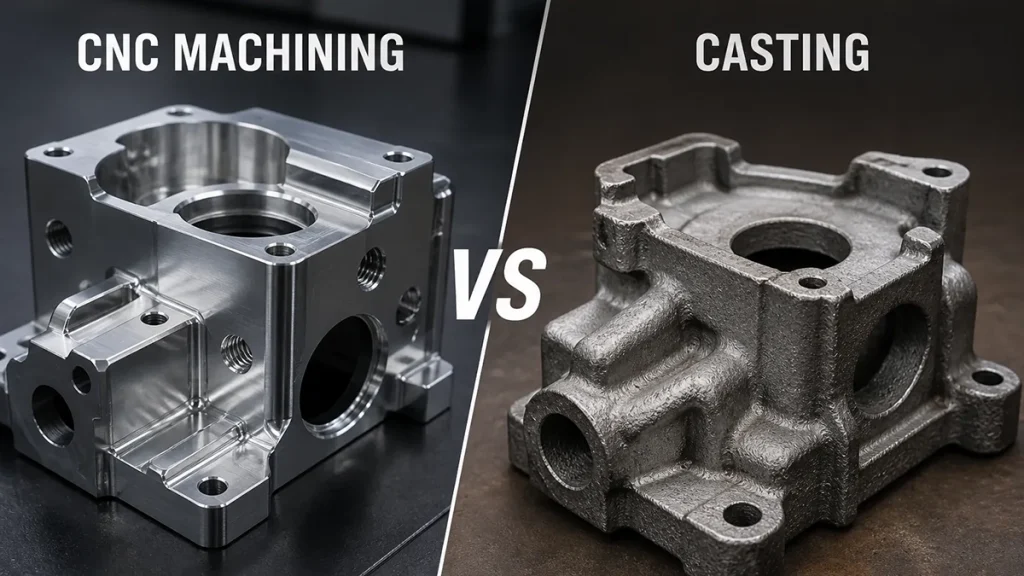
Machinery components are often functional rather than cosmetic. They may carry load, guide motion, hold bearings, align shafts, mount sensors, protect equipment, or support fixtures. CNC machining can create accurate holes, threads, pockets, shoulders, flat faces, slots, keyways, and mating surfaces that are difficult to achieve consistently with rougher processes.
Useful for Repair, Upgrade, and OEM Projects
Custom CNC machining is also practical for repair and upgrade work. Older equipment may require replacement parts based on worn samples, old drawings, or revised measurements. OEM manufacturers may need small or medium batches of machined mechanical components before moving into larger production. In both situations, CNC machining helps convert technical requirements into usable parts without long tooling delays.
Common Machinery Components Made by CNC Machining
Custom machinery components cover a wide range of part types. Some are simple blocks or plates with holes and threads. Others include complex housings, bearing seats, shafts, precision pockets, or multiple setup requirements. The best candidates for CNC machining are parts where geometry, material, and tolerance must be controlled more closely than standard fabrication can provide.
Shafts, Pins, and Rotating Components
Shafts, pins, rollers, spacers, and rotating parts often require accurate diameters, concentricity, roundness, and surface finish. If these features are not controlled, the machine may experience vibration, noise, uneven wear, or poor alignment. CNC turning and milling can be used together when a part includes both cylindrical features and milled flats, slots, or holes.
Brackets, Mounting Blocks, and Adapter Plates
Brackets, mounting blocks, adapter plates, and support components are common custom machine parts. These parts may look simple, but hole position, flatness, perpendicularity, and thread accuracy can affect assembly. When a bracket must align a motor, bearing, sensor, rail, or pneumatic component, dimensional accuracy becomes more important than appearance.
Housings, Covers, and Fixture Parts
Machined housings, covers, and fixture components may require pockets, mounting bosses, gasket grooves, alignment features, cable holes, or bearing seats. CNC machining is useful when these features must be integrated into one part. Fixture parts may also require repeatable positioning surfaces so the production or inspection process remains stable over time.
Bushings, Couplings, Flanges, and Replacement Parts
Bushings, couplings, flanges, sleeves, and replacement machinery parts are often made by CNC machining when off-the-shelf options do not match the required dimensions or material. For replacement work, buyers should provide the original drawing if available, but sample photos, worn part measurements, mating part details, and failure notes can also help the supplier evaluate the part more accurately.
Key Requirements for Custom Machined Machinery Parts
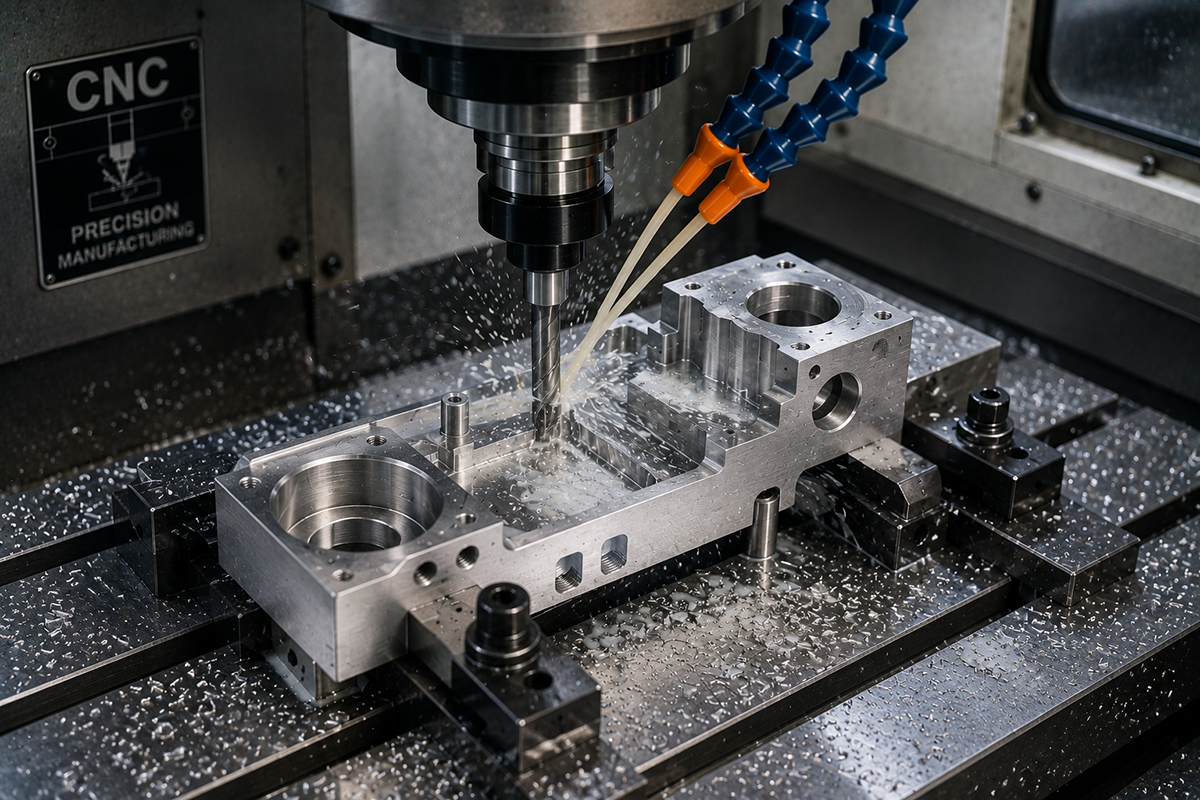
The most important requirements for custom machined machinery parts depend on how the component functions in the assembly. A protective cover may only need general dimensions and clean edges, while a bearing block may require tight bore size, flat mounting faces, perpendicularity, and accurate hole positions. Buyers should avoid applying the same tolerance level to every dimension unless the design truly requires it.
Dimensional Accuracy and Functional Tolerances
Functional dimensions should be clearly marked on the drawing. These may include shaft diameters, bearing seats, hole spacing, thread depth, mounting face location, slot width, or mating surface height. Non-critical surfaces can often use standard machining tolerances to control cost.
Hole Position, Threads, and Assembly Fit
Hole position and thread accuracy are critical when the part must align with another component. Misaligned holes can make assembly difficult or create stress after tightening. Threaded holes should define thread size, depth, tolerance class, and whether the thread is used for fastening, adjustment, sealing, or repeated assembly.
For complex drawings, geometric controls such as flatness, perpendicularity, parallelism, and concentricity may follow geometric dimensioning and tolerancing principles, especially when the component must align with bearings, shafts, mounting faces, or other precision assemblies.
Surface Roughness and Edge Quality
Surface roughness may affect sliding, sealing, bearing fit, and appearance. Sharp edges, burrs, or rough internal features can also affect assembly and safety. Buyers should identify where deburring, chamfering, polishing, or a specific surface roughness is required, instead of asking for unnecessary finishing across the entire part.
Material Selection for Machinery Components
Material selection has a direct effect on strength, cost, machinability, surface finish, corrosion resistance, wear behavior, and lead time. Buyers should choose materials based on the part function rather than habit. A material that works well for a light mounting plate may not be suitable for a shaft, wear pad, or chemical-exposed component. The broader CNC machining materials page can support early material review before quoting.
Aluminum for Lightweight and Fast-Machined Parts
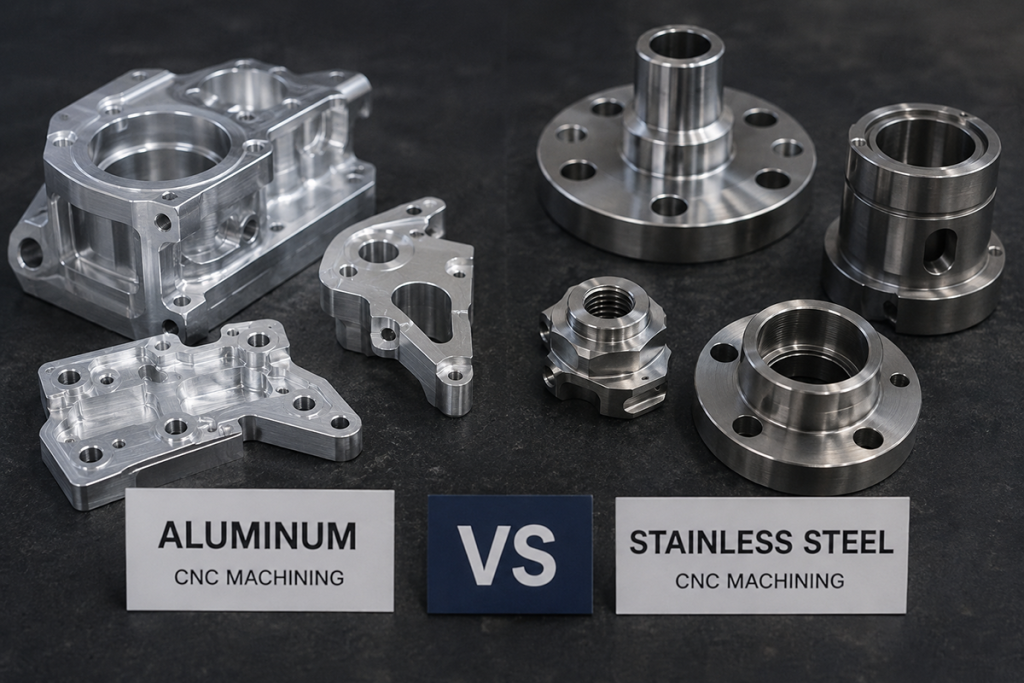
Aluminum is often used for brackets, housings, plates, covers, fixture parts, and prototype components. It is lightweight, easy to machine, and suitable for anodizing or other surface finishes. Aluminum can be a good choice when strength requirements are moderate and fast production is important.
Stainless Steel for Durability and Corrosion Resistance
Stainless steel is selected when the part requires corrosion resistance, cleanability, durability, or higher strength than aluminum. It is commonly used for equipment components exposed to moisture, chemicals, food-processing environments, or demanding industrial conditions. However, it usually costs more to machine than aluminum.
Carbon Steel and Alloy Steel for Load-Bearing Parts
Carbon steel and alloy steel may be better for shafts, structural supports, heavy-duty brackets, wear-related parts, and components that require higher strength or hardness. Some parts may also require heat treatment, black oxide, zinc plating, or other finishing to improve performance or corrosion protection.
Brass and Engineering Plastics for Specialized Functions
Brass can be useful for bushings, fittings, inserts, electrical hardware, and precision small parts. Engineering plastics can be used for low-friction guides, insulators, wear pads, spacers, and lightweight non-metallic components. If the material choice is uncertain, reviewing the best materials for CNC machining can help compare common options before finalizing the RFQ.
Prototype, Low-Volume, and Replacement Machinery Parts
Custom machinery projects often move through different production stages. A prototype may be used to test fit, strength, motion, or assembly. A low-volume batch may support pilot production, equipment upgrades, or spare parts. A replacement part may need to match an existing machine even when the original supplier or drawing is no longer available.
CNC machining is well suited to these situations because it does not require tooling investment before the design is proven. Buyers can produce one part, test it, revise the drawing, and then move into a small batch. For a broader process comparison, the article on CNC machining for prototypes vs production explains how requirements change between validation and repeat manufacturing.
Prototype Components
Prototype machinery components help engineers confirm whether a design works in real equipment. A prototype may reveal assembly interference, insufficient wall thickness, poor hole access, or material weakness before larger quantities are ordered.
Low-Volume Machinery Components
Low-volume machinery components are common for custom equipment, automation machines, test systems, and specialized OEM products. In these projects, consistency matters even if the quantity is not high. The supplier should control critical dimensions, tool wear, and inspection methods so every part in the batch fits the same way.
Replacement and Repair Parts
For replacement parts, the challenge is often incomplete information. Old drawings may not show the real worn condition of the part. A sample may have damage or deformation. Buyers should provide as much context as possible, including photos, mating part measurements, load conditions, material history, and known failure issues.
Surface Finish and Post-Processing Options
Surface finish is part of the functional design, not only a cosmetic decision. Machinery components may require finishing to improve corrosion resistance, wear resistance, surface appearance, electrical insulation, or cleaning performance. The finish should be selected according to the material and the application environment.
Common Finishing Options
Aluminum parts may use anodizing, hard anodizing, bead blasting, brushing, or powder coating. Steel parts may use black oxide, zinc plating, nickel plating, heat treatment, or painting. Stainless steel parts may use passivation, polishing, or bead blasting. Brass parts may be polished, plated, or left as-machined depending on function.
How Finishing Affects Dimensions
Finishing can affect dimensions, surface texture, color, and assembly fit. If a coating thickness matters, the drawing should state whether critical dimensions apply before or after finishing. For threaded holes, bearing seats, sealing faces, and sliding surfaces, finishing requirements should be reviewed carefully before production.
Quality Control for Custom Machinery Components
Quality control begins before machining starts. A supplier should review the drawing, material, tolerance notes, surface finish requirements, quantity, and application details before quoting. This helps identify missing information or features that may increase cost, risk, or lead time.
Drawing Review and Critical Dimension Inspection
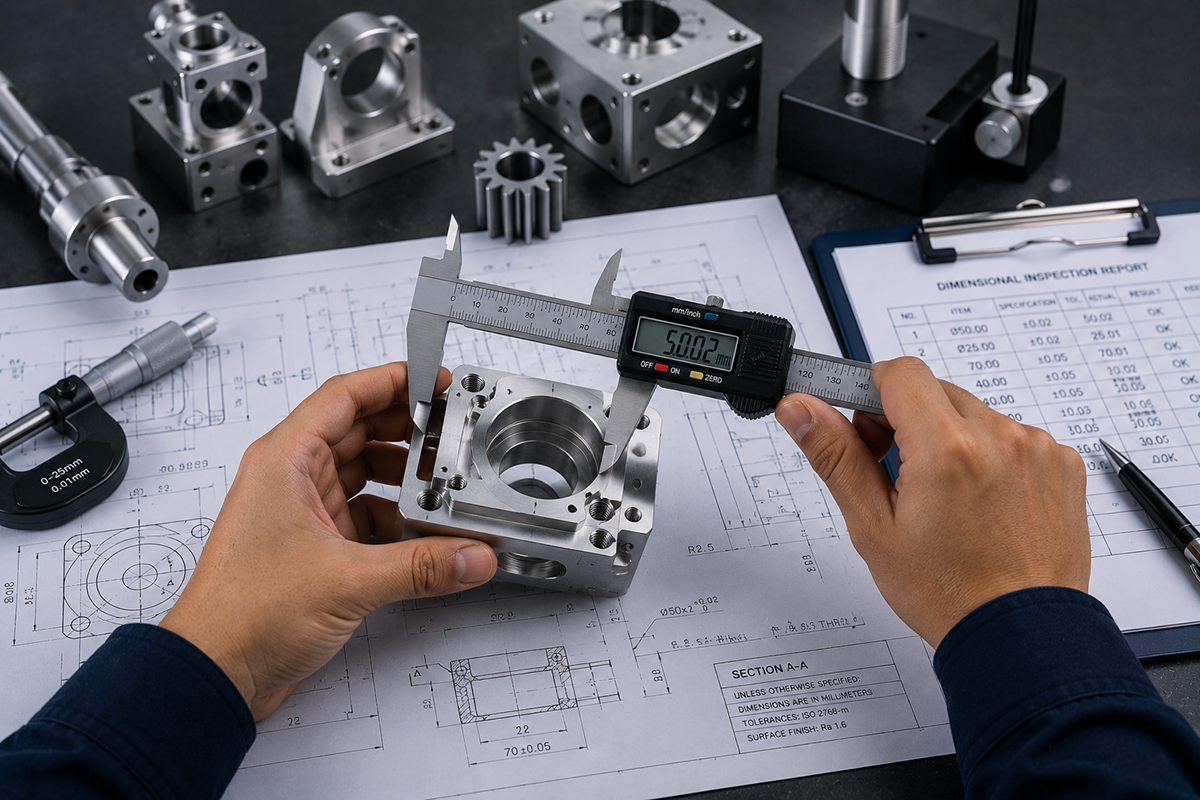
A complete drawing helps the supplier understand which features are critical. Critical dimensions may be checked with calipers, micrometers, pin gauges, thread gauges, height gauges, bore gauges, or CMM inspection depending on the part complexity. If a full dimensional report is required, it should be requested before quoting.
Material Verification and Batch Consistency
Material grade should match the drawing or customer requirement. For higher-risk projects, buyers may request material certificates or inspection reports. Batch consistency is also important for repeat orders because machinery components must assemble and perform the same way over time.
Fit-Related Checks for Replacement Parts
For replacement machinery parts, inspection may need to focus on features that contact the existing machine. Bearing seats, shaft diameters, mounting surfaces, keyways, slots, and threaded areas should be checked carefully. When possible, buyers should provide mating part information to reduce fit uncertainty.
Cost Factors in Custom CNC Machining
The cost of custom CNC machining depends on material, part size, geometry, tolerances, surface finishing, inspection requirements, quantity, and lead time. A simple plate with a few holes may be economical, while a complex housing with deep pockets, tight bores, multiple setups, and special finishing can cost much more. The article on CNC machining cost factors provides a broader explanation of how price is built.
Material and Machining Time
Material affects both raw stock cost and machining time. Aluminum is usually faster to machine than stainless steel, titanium, or hardened steel. Some engineering plastics may machine quickly but require careful clamping to avoid deformation. Large parts or high material removal can also increase cost.
Geometry and Setup Requirements
Complex parts may require multiple setups, special fixtures, long tools, tight access, or careful workholding. Deep cavities, thin walls, small internal radii, and multi-sided features can all add machining time. Simplifying non-critical features can often reduce cost without changing function.
Tolerance, Finish, and Inspection
Tight tolerances increase cost because they require slower machining, better process control, and more inspection. Surface finishing and documentation can also affect price. Buyers should define which dimensions, surfaces, and reports are necessary, instead of applying strict requirements to every part of the drawing.
How Buyers Can Improve RFQ Accuracy
A better RFQ helps the supplier quote more accurately and reduces unnecessary back-and-forth communication. Buyers should provide both 3D CAD files and 2D drawings whenever possible. The CAD file supports geometry and toolpath review, while the drawing defines tolerances, materials, surface finish, threads, and inspection requirements.
If no special tolerance is required, buyers can state a general tolerance standard such as ISO 2768, while marking only the critical dimensions with tighter requirements on the drawing. This keeps the RFQ clear and helps avoid unnecessary machining cost.
Information to Include in a Machinery Component RFQ
A complete RFQ should include material grade, quantity, production stage, surface finish, critical dimensions, thread details, inspection needs, and expected application. If the part is a replacement component, the RFQ should also include the old drawing, sample photos, worn part measurements, mating component information, and any known failure issues.
Allowing Material or Design Suggestions
If the design is still flexible, buyers should state whether material alternatives or DFM suggestions are acceptable. A supplier may recommend a different material, larger internal radius, adjusted tolerance, or simpler finishing method that improves cost or manufacturability. The guide on how to choose CNC machining materials can help buyers compare strength, wear, corrosion, weight, and cost priorities before quotation.
Conclusion
Custom CNC machining for machinery components is most effective when buyers treat the part as a functional mechanical component rather than only a shape to be copied. Material selection, tolerances, surface finish, inspection, quantity, and application environment all affect whether the finished part will perform correctly.
CNC machining is suitable for prototypes, low-volume production, OEM machinery parts, replacement components, equipment upgrades, and custom mechanical assemblies. It allows buyers to produce parts directly from CAD files and drawings without expensive tooling, while still controlling precision features such as holes, threads, bores, shafts, mounting faces, and mating surfaces.
The best results come from clear RFQ information. Buyers should provide CAD files, 2D drawings, material requirements, critical tolerances, finish expectations, quantity, inspection needs, and application context before requesting a quote. If a part is used for repair or replacement, sample photos and mating part details can also help reduce uncertainty.
When drawings, materials, tolerances, and inspection requirements are defined clearly, custom CNC machining can produce reliable machinery components that fit correctly, support equipment performance, and reduce unnecessary production delays. If your project requires custom machine parts, replacement components, or precision machinery components, our team can review your drawings and help evaluate manufacturability, material choice, cost, and production requirements.