Introduction
CNC machining for electronics enclosures is a practical manufacturing option when a device housing requires precise connector openings, stable assembly, clean surface finish, heat dissipation, and design flexibility without dedicated mold tooling. Electronics enclosures are not only protective covers. They often control how a device is mounted, cooled, sealed, accessed, connected, and assembled.
For buyers in North America, Europe, and other overseas markets sourcing custom electronics enclosures, CNC machining can be especially useful during prototype development, low-volume production, test equipment builds, industrial electronics projects, IoT device development, and custom sensor housing production. It allows engineers to test real enclosure geometry, connector placement, PCB mounting points, wall thickness, lid fit, and surface finish before committing to injection molding or other tooling-based processes.
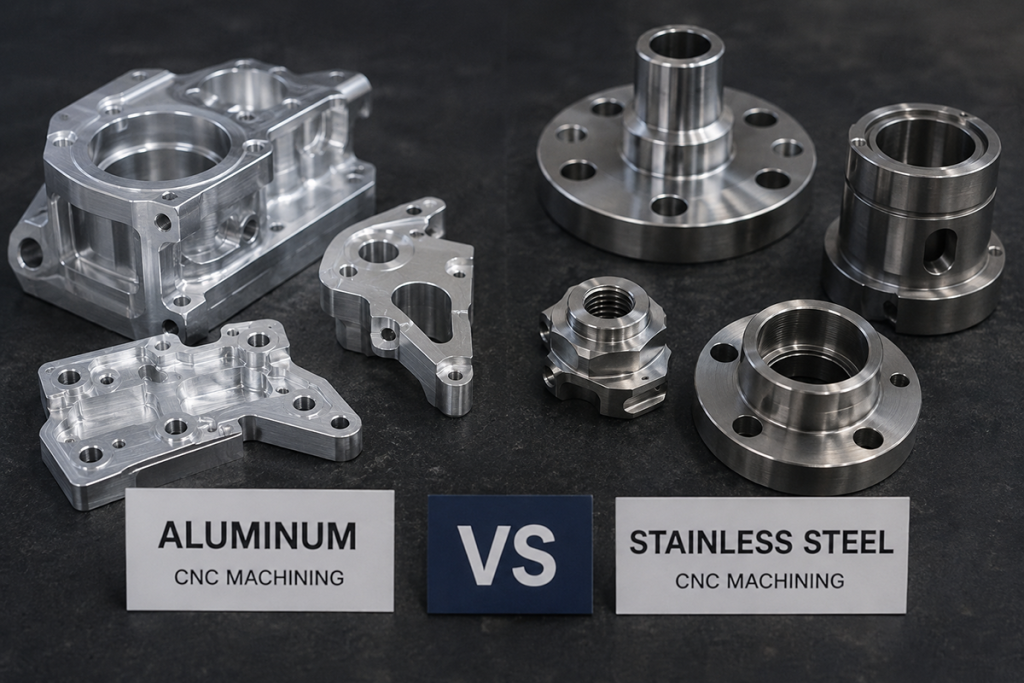
CNC machined electronics enclosures are commonly made from aluminum, engineering plastics, stainless steel, and sometimes brass or copper-related materials for specific functional features. Aluminum is often selected for heat dissipation, lightweight strength, and anodized appearance. Engineering plastics may be selected for electrical insulation, low weight, non-metallic performance, or prototype testing. Stainless steel may be used when durability, corrosion resistance, or stronger mechanical protection is required.
Successful electronics housing CNC machining depends on clear design requirements. Connector cutouts, button holes, display windows, cable ports, screw bosses, gasket grooves, threaded features, and PCB mounting locations must be defined accurately. If thermal performance, EMI shielding, sealing, or cosmetic appearance matters, those requirements should also be communicated before quotation.
This guide explains when CNC machining works for electronics enclosures, which materials are commonly used, how precision openings and assembly features should be planned, how thermal and EMI considerations affect design, what drives cost, and what buyers should prepare before requesting a quote. If your project requires a prototype device housing, custom sensor enclosure, industrial electronics case, or low-volume aluminum enclosure, experienced custom CNC machining services can help review the design before production.
Why CNC Machining Is Used for Electronics Enclosures
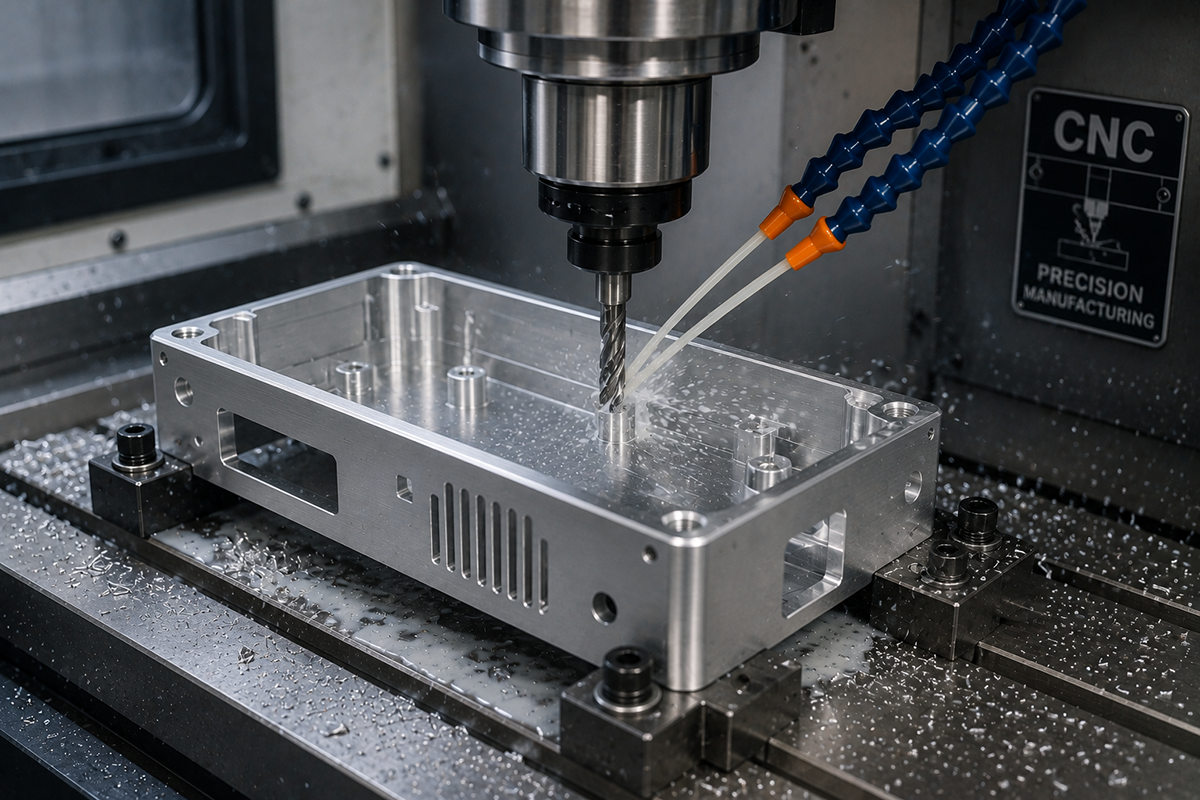
CNC machining is used for electronics enclosures when the design requires accuracy, flexibility, and real material performance. Unlike injection molding, CNC machining does not require a mold. Unlike simple sheet metal fabrication, it can create thicker walls, machined pockets, threaded bosses, complex cutouts, heat sink features, and precise internal mounting surfaces from solid material.
This makes CNC machining useful during early product development. Engineers can test the enclosure with the real circuit board, connectors, buttons, cables, seals, displays, sensors, and mounting hardware. If a port needs to move, a wall needs to become thicker, or a lid fit needs adjustment, the design can be updated without changing expensive tooling.
CNC machining also works well for low-volume electronics enclosures. Many industrial electronics, laboratory instruments, control modules, automation devices, robotics controllers, and test equipment housings do not require tens of thousands of molded units. For these projects, machining from aluminum or engineering plastic can be more practical than building a mold.
Another reason buyers choose CNC is functional precision. Enclosures often include interface areas that must align with other components. A USB port, circular connector, display window, membrane button, cable gland, PCB standoff, threaded insert, or gasket groove may need accurate positioning. If those features are not stable, assembly becomes difficult and the finished product may not function correctly.
CNC machining can also support premium product appearance. Bead-blasted and anodized aluminum, polished edges, brushed surfaces, clean chamfers, and precision-machined seams can create a professional enclosure for high-value devices. For buyers developing industrial electronics or specialized equipment, the enclosure can influence both performance and customer perception.
Common Electronics Enclosures Made by CNC Machining
CNC machining can be used for many types of electronic device housings, especially when the enclosure is customized, low-volume, or still evolving. The best candidates are usually parts with precise openings, mechanical interfaces, heat requirements, or internal mounting features that cannot be handled easily by a generic off-the-shelf box.
Sensor Housings and IoT Device Enclosures
Custom sensor housings often require precise holes for lenses, cables, connectors, mounting screws, and sealing features. In IoT devices, the enclosure may also need antenna clearance, battery access, PCB mounting points, and compact internal geometry. CNC machining is useful because the housing can be adjusted quickly during testing and validation.
Industrial Electronics Cases
Industrial electronics cases may protect control boards, communication modules, monitoring devices, or power electronics in factories and machines. These enclosures often require durable materials, accurate panel openings, threaded features, and surface finishes that can resist handling or moderate environmental exposure. Aluminum and stainless steel are common choices when mechanical protection is important.
Test Equipment and Instrument Enclosures
Test equipment housings usually require clean panel layouts, display windows, button openings, connector arrays, cable ports, and internal component mounts. CNC machining allows these features to be produced accurately without custom mold tooling. It is also useful for engineering teams that expect the layout to change during product development.
Robotics and Automation Control Housings
Robotics and automation systems often use control modules, sensor housings, drive enclosures, and compact equipment covers. These parts may need to fit into tight machine spaces while maintaining reliable mounting and cable routing. CNC machining helps produce custom housings that match the mechanical layout of the machine or robot system.
Medical, Laboratory, and Specialty Equipment Housings
Medical and laboratory equipment housings may require clean surfaces, stable mounting, corrosion-resistant materials, or precise openings for displays, cables, sensors, and fluid-related components. CNC machining is useful for prototypes, test equipment, fixtures, and low-volume device housings where material, finish, and dimensional accuracy matter.
Material Selection for Electronics Enclosures
Material choice affects enclosure performance, appearance, cost, weight, heat transfer, shielding behavior, and machining difficulty. Buyers should select the material based on the enclosure function rather than choosing aluminum or plastic by habit. For a broader material comparison, review CNC machining materials before finalizing a drawing.
Aluminum Enclosures
Aluminum is one of the most common choices for CNC machined electronics enclosures. It is lightweight, easy to machine, visually clean, and good for heat dissipation. Aluminum can also be bead blasted, anodized, painted, or powder coated for appearance and corrosion resistance. Many industrial electronics housings, sensor cases, amplifier housings, and control module enclosures use aluminum because it balances function and manufacturability.
For buyers considering aluminum electronics enclosure CNC machining, grades such as 6061 are often a practical starting point because of availability, machinability, and finishing compatibility. More detailed material guidance can be found in the article on aluminum CNC machining.
Engineering Plastic Enclosures
Engineering plastics are useful when electrical insulation, low weight, chemical resistance, or non-metallic performance is required. ABS, POM, polycarbonate, PTFE, PEEK, and other plastics may be used depending on the application. Plastic electronics enclosure machining is especially useful for prototypes, fixtures, covers, insulators, and parts where metal is unnecessary or undesirable.
Plastic parts must be designed carefully because they can be more sensitive to heat, clamping pressure, thin walls, and long-term load than metal parts. If the project requires engineering plastic components, the article on plastic CNC machining can help compare materials and design considerations.
Stainless Steel and Other Metals
Stainless steel may be selected when the enclosure requires higher durability, corrosion resistance, or mechanical protection. It is more difficult and expensive to machine than aluminum, but it can be useful for harsh environments, food-related equipment, laboratory devices, or ruggedized housings. Brass or copper-related parts may be used for electrical contacts, grounding features, connectors, or shielding details, but they are less common as full enclosure materials.
Precision Requirements for CNC Machined Electronics Housings
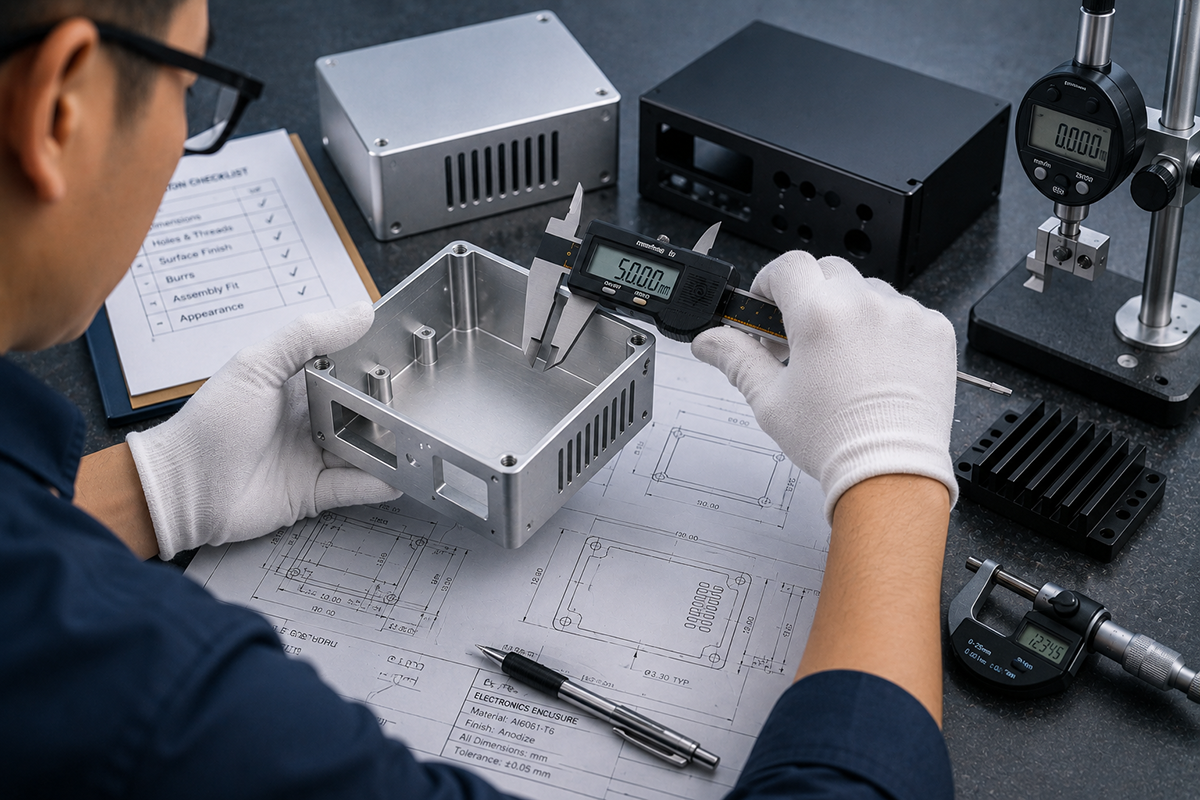
Precision is one of the biggest reasons buyers choose CNC machining for electronics enclosures. A housing may look simple, but it often includes many functional features that must align with internal electronics and external interfaces. If these features are not accurate, the enclosure may be difficult to assemble or may fail during testing.
Connector Openings and Cable Ports
Connector openings must match the size and position of the connector hardware. USB ports, circular connectors, Ethernet ports, power jacks, antenna connectors, cable glands, and custom interface openings all need enough clearance without leaving excessive gaps. If the opening is too small, assembly becomes difficult. If it is too large, appearance, sealing, and alignment may suffer.
PCB Mounting Bosses and Standoffs
PCB mounting features must align with the circuit board hole pattern. Boss height, screw size, thread depth, spacing, and flatness can affect board installation. A small hole position error may create stress on the board or prevent proper assembly. Buyers should provide PCB drawings, mounting hole locations, board thickness, and clearance requirements when these features are critical.
Lid Fit, Gasket Grooves, and Sealing Features
Many enclosures include covers, lids, grooves, or sealing surfaces. Lid fit requires controlled flatness, screw positions, and mating surfaces. If a gasket is used, groove width, depth, and surface condition should be defined clearly. CNC machining can create accurate grooves and mating faces, but the drawing must identify which features control sealing or alignment.
Display Windows, Buttons, and User Interfaces
Display cutouts, button holes, membrane switch areas, light pipe holes, and viewing windows need clean positioning and edge quality. These features affect both usability and appearance. If the enclosure is visible to customers, cosmetic requirements should be separated from functional tolerance requirements so the supplier can quote accurately.
Threaded Features and Inserts
CNC machined aluminum enclosure designs often include tapped holes for lids, mounting brackets, PCB standoffs, hinges, or cable clamps. Thread depth, thread standard, and edge distance should be practical. For plastic housings, threaded inserts or metal hardware may be needed if repeated assembly is expected.
Thermal Management and Heat Dissipation
Thermal management is important for many electronics enclosures because heat can affect circuit performance, component life, and user safety. CNC machining allows the housing itself to become part of the thermal design. Aluminum is especially useful because it conducts heat better than most plastics and can help move heat away from internal components.
A CNC machined aluminum enclosure can include thicker contact areas, flat heat transfer surfaces, integrated fins, internal pockets, or mounting areas for thermal pads. These features should be planned during the design stage. If heat dissipation is important, buyers should identify power components, heat sources, contact surfaces, and expected operating conditions before requesting a quote.
Wall thickness also matters. Thin walls reduce weight but may not transfer heat as effectively or may deform during machining. Thick walls improve rigidity and heat transfer but increase material removal and machining time. The best design depends on enclosure size, internal layout, heat load, and weight target.
Surface finish can also affect thermal and assembly behavior. Anodizing improves corrosion resistance and appearance, but it may change surface characteristics. Powder coating adds a thicker layer and can affect fit. Contact surfaces that transfer heat may need to remain flat, clean, or mask-free depending on the design.
For high-power electronics, buyers should not rely only on material choice. They should communicate thermal requirements clearly and provide assembly details such as heat sink contact areas, thermal pads, airflow direction, component layout, and operating temperature expectations.
EMI Shielding and Functional Design Considerations
Electronics enclosures may also need to reduce electromagnetic interference. Metal housings can help provide shielding, but shielding performance depends on material, wall continuity, lid contact, seams, grounding, openings, coatings, and assembly design. CNC machining can support these requirements by creating accurate mating surfaces and reliable grounding features.
For EMI shielding enclosure machining, buyers should identify whether the housing needs conductive contact between the lid and base, grounding points, conductive gasket grooves, or special surface treatment. If anodizing is used, some contact areas may need masking or post-processing because anodized surfaces are not always suitable for electrical continuity.
Plastic housings can also be used in electronic devices, but they may require conductive coatings, metal inserts, internal shielding components, or separate grounding features if EMI control is required. These requirements should be reviewed early because they may affect material selection, surface finish, and assembly design.
Openings are another consideration. Connector holes, ventilation slots, display cutouts, cable ports, and seams can affect shielding and sealing. A design that looks fine mechanically may need additional features if EMI performance is important. Buyers should provide test requirements or performance expectations if shielding is part of the project.
For general background, this electromagnetic interference reference explains the broader concept. In a CNC enclosure project, the practical requirement is to translate shielding needs into clear design, material, finish, and assembly instructions.
CNC Machining vs Injection Molding and Sheet Metal Enclosures
Buyers often compare CNC machining with injection molding and sheet metal fabrication when developing electronics enclosures. Each process has advantages. The right choice depends on quantity, design maturity, material requirements, wall thickness, appearance, strength, and cost target.
CNC Machining
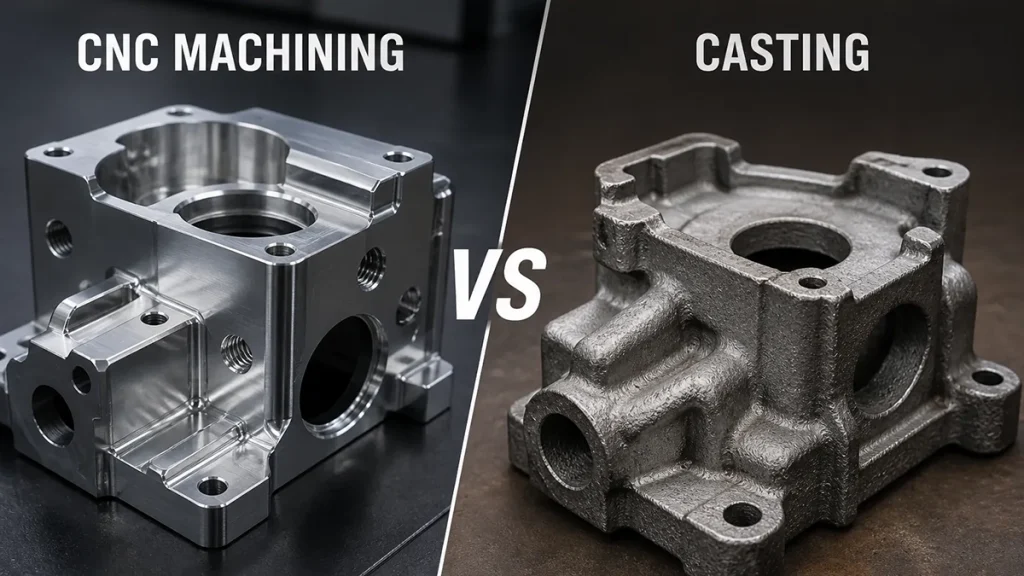
CNC machining is usually best for prototypes, low-volume electronics enclosures, high-value device housings, and designs that may still change. It allows accurate openings, thick walls, machined pockets, threaded features, heat sink details, and precise mounting surfaces without mold tooling. It can produce real functional parts in aluminum, plastic, or stainless steel.
Injection Molding
Injection molding is usually better for high-volume plastic enclosures after the design is stable. The mold cost is high, but the unit cost can become low when production quantity is large. Before committing to tooling, many teams use a CNC enclosure prototype to validate fit, layout, and function. The comparison between CNC machining vs injection molding is especially relevant when buyers are deciding whether the project is ready for mold investment.
Sheet Metal Fabrication
Sheet metal enclosures can be cost-effective for simple boxes, panels, covers, and folded cases. They are often suitable for electrical cabinets, simple instrument housings, and larger industrial covers. However, sheet metal may be less suitable when the design needs thick machined walls, deep pockets, complex internal features, precise bosses, or a premium machined appearance.
In practice, many product teams use more than one process. A device may use a CNC machined aluminum front panel, a sheet metal cover, and plastic internal mounts. The best approach depends on enclosure function rather than a single process preference.
Surface Finish and Post-Processing Options
Surface finish affects appearance, corrosion resistance, tactile feel, durability, electrical contact, thermal behavior, and assembly fit. Buyers should define finish requirements early because finishing can affect both cost and final dimensions.
Anodizing and Hard Anodizing
Anodizing is common for aluminum electronics enclosures. It improves appearance, surface protection, and corrosion resistance. Black, clear, and colored anodized finishes are often used for industrial electronics, test equipment, and premium product housings. Hard anodizing may be used when stronger surface wear resistance is required.
Bead Blasting and Brushing
Bead blasting can create a uniform matte surface before anodizing or as a standalone appearance finish. Brushing can create a directional surface texture for visible panels or covers. Cosmetic finishes should be specified by surface, not assumed for the entire part.
Powder Coating and Painting
Powder coating and painting can provide color and protection, especially for larger enclosures or ruggedized products. These coatings add thickness and may affect fit around lids, holes, grooves, and threaded features. Critical surfaces may need masking.
Passivation and Polishing
Stainless steel enclosures or parts may require passivation, polishing, or brushing depending on corrosion resistance, appearance, or cleanability. Buyers should specify whether the finish is cosmetic, functional, or both.
For all finishes, dimensions that matter after finishing should be defined clearly. If a connector opening, lid fit, or gasket groove has a tight requirement, the supplier needs to know whether the tolerance applies before or after finishing.
Cost Factors in Electronics Enclosure CNC Machining
The cost of electronics enclosure CNC machining depends on material, size, geometry, machining time, surface finish, quantity, inspection, and design complexity. A simple rectangular housing may be relatively straightforward, while a deep-pocket aluminum enclosure with many ports, bosses, grooves, and cosmetic surfaces may require significantly more machining time.
Material is a major factor. Aluminum is often efficient and balanced for many enclosures. Engineering plastics may be economical for prototypes or insulation-focused parts, but high-performance plastics such as PEEK can be expensive. Stainless steel increases machining difficulty and cost but may be necessary for demanding environments.
Geometry also drives cost. Deep cavities, thin walls, small internal radii, multiple connector openings, threaded holes, gasket grooves, display windows, and tight lid fits can increase machining time. Some features require multiple setups or special tools.
Tolerance requirements should be practical. Tight tolerances are important for connector alignment, PCB mounting, sealing surfaces, and mating features. However, applying tight tolerances to every surface increases cost without improving function. Buyers should mark critical dimensions clearly and allow standard tolerances where possible.
Surface finish can add cost and lead time. Anodizing, bead blasting, polishing, powder coating, painting, and masking all require additional processing. If only visible surfaces require cosmetic finish, that should be stated clearly.
Quantity affects unit price. One prototype enclosure may carry higher programming and setup cost. A small batch can reduce unit cost if the design is stable. For broader pricing guidance, the article on CNC machining cost factors explains how material, geometry, tolerance, finish, and quantity influence quotes.
What Buyers Should Prepare Before Requesting a Quote
A complete RFQ helps the supplier review manufacturability and quote accurately. For electronics enclosures, buyers should provide both 3D CAD files and 2D drawings whenever possible. The CAD file helps with geometry and toolpath review, while the drawing defines tolerances, material, finish, threads, and inspection requirements.
Buyers should also provide connector layouts, PCB mounting details, board size, component clearance, cable routing, lid design, gasket requirements, screw specifications, and any display or button positions. If an enclosure must fit an existing board or connector set, those reference dimensions should be included.
Material and finish requirements should be clearly stated. If the material is flexible, the supplier may be able to recommend a more practical option. If the enclosure needs anodizing, painting, powder coating, polishing, or masking, those requirements should be specified before quoting.
Thermal and EMI requirements should also be communicated. If the housing needs to dissipate heat, buyers should identify heat sources, contact areas, and operating conditions. If shielding is important, grounding points, lid contact surfaces, conductive areas, and coating limitations should be reviewed early.
Buyers should identify critical tolerances, including connector openings, PCB mounting holes, lid fit, gasket grooves, flat contact surfaces, display windows, and threaded features. Non-critical surfaces can usually use standard machining tolerances to control cost.
If material selection is still uncertain, reviewing how to choose CNC machining materials can help define priorities such as strength, weight, insulation, heat transfer, corrosion resistance, and cost before quotation.
Common Design Mistakes to Avoid
Several enclosure design mistakes can increase cost or create assembly problems. One common mistake is placing connector openings too close to internal walls, screw bosses, or ribs. This can limit tool access and make deburring difficult. Another mistake is applying tight tolerances to every surface instead of marking only the features that control connector fit, PCB position, lid alignment, or sealing performance.
Thin walls can also be a problem. They may reduce weight, but they can vibrate during machining, deform under clamping pressure, or feel weak during assembly. Deep pockets with sharp internal corners can require small tools and longer machining time. If the design allows larger internal radii, more uniform wall thickness, and better tool access, the enclosure is usually easier and more economical to machine.
Buyers should also avoid vague finish notes. A requirement such as “black finish” is not enough if the enclosure needs black anodizing, powder coating, paint, or a cosmetic surface standard. Clear notes about visible surfaces, masked areas, contact surfaces, and final dimensions after finishing help prevent rework and quotation changes.
Conclusion
CNC machining for electronics enclosures is most useful when a housing requires precise openings, stable assembly features, real material performance, attractive finish, and design flexibility. It is especially suitable for prototypes, low-volume production, industrial electronics, test equipment, custom sensor housings, IoT devices, robotics controllers, and high-value equipment enclosures.
The best enclosure design starts with function. Buyers should define connector placement, PCB mounting, lid fit, gasket grooves, display windows, cable ports, heat dissipation needs, EMI considerations, surface finish, and operating environment before production begins. These details influence material choice, machining strategy, tolerance planning, finishing, cost, and lead time.
Aluminum is often the most practical material for machined electronics housings because it balances machinability, heat dissipation, strength, weight, and appearance. Engineering plastics can be useful for insulation, lightweight prototypes, and non-metallic components. Stainless steel may be selected for durability or corrosion resistance. The right choice depends on the device function and environment.
CNC machining is not always the final production method for every enclosure. For high-volume plastic products, injection molding may be more economical after the design is stable. For simple folded boxes, sheet metal may be more practical. But when the project needs low-volume flexibility, accurate interfaces, thick walls, machined features, or a premium enclosure, CNC machining can be the better choice.
If your project requires a custom electronics enclosure, aluminum housing, sensor case, control module enclosure, or prototype device housing, our team can review your drawings and help evaluate material selection, tolerance feasibility, surface finish, thermal requirements, and production cost before machining.