Introduction
Medical device CNC machining is used when equipment parts, prototype components, surgical instrument parts, laboratory fixtures, and diagnostic device components require accurate dimensions, clean surface quality, stable material performance, and clear inspection expectations. In medical-related projects, a machined part is not only judged by shape. It may need to fit accurately, assemble consistently, resist corrosion, avoid burrs, support cleaning, and meet customer-defined documentation requirements.
For buyers in North America, Europe, and other overseas markets sourcing custom CNC machined medical components, accuracy and communication are especially important. Material grade, tolerance requirements, surface finish, edge quality, inspection reports, and documentation expectations should be defined clearly before quotation. A small error in a hole position, threaded feature, sealing surface, or mating dimension can affect assembly, device function, or test reliability.
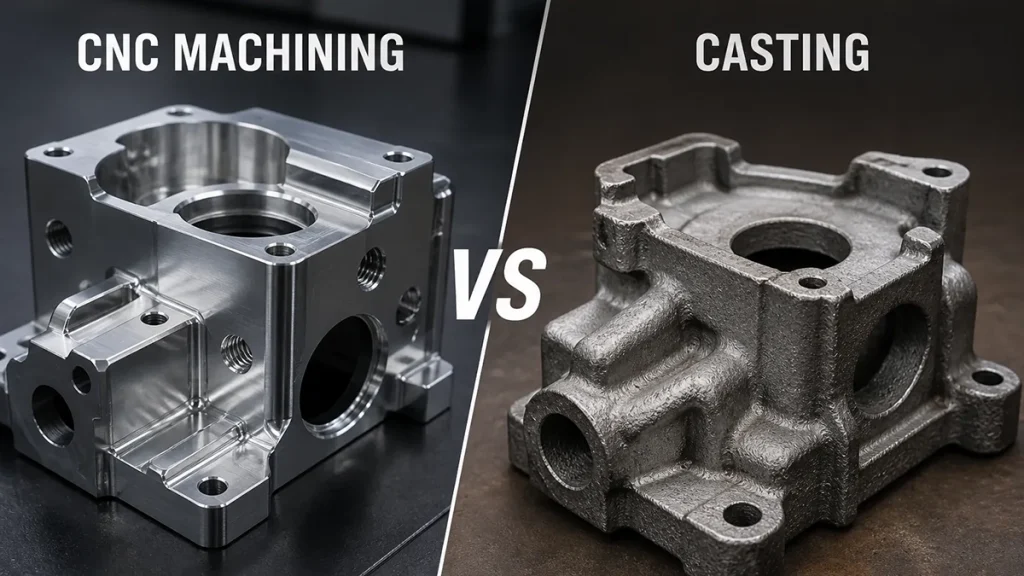
CNC machining can support medical device development because it allows prototypes, low-volume parts, test fixtures, equipment housings, brackets, stainless steel components, titanium components, and engineering plastic parts to be produced without dedicated mold tooling. This is useful when designs are still changing, when functional testing is required, or when production quantities do not justify injection molding, casting, or stamping tools.
However, medical device projects require careful communication about compliance boundaries. Applicable standards, regulatory requirements, documentation needs, and validation responsibilities depend on the device type, market, intended use, and buyer’s quality system. CNC suppliers should not assume requirements that are not stated, and buyers should not rely on generic machining capability as a substitute for defined inspection, material, and documentation requirements.
This guide explains key accuracy and compliance considerations in medical device CNC machining, including part types, material selection, tolerances, surface finishes, inspection planning, documentation, cost factors, and RFQ preparation. If your project requires precision medical equipment components, test fixtures, housings, brackets, or custom prototype parts, experienced custom CNC machining services can help review manufacturability, materials, tolerances, and documentation needs before production.
Why Accuracy Matters in Medical Device CNC Machining
Accuracy matters because many medical equipment components are used in assemblies where small dimensional errors can create larger functional problems. A bracket may need to align a sensor. A housing may need to protect electronics. A fixture may need to hold a sample or tool in a repeatable position. A surgical instrument component may need clean edges, consistent dimensions, and reliable mating surfaces.
Medical device machining tolerances should be based on the part function, not applied uniformly across the entire drawing. Critical dimensions may include hole position, thread depth, flatness, perpendicularity, sealing surfaces, bearing or pin fits, and features that control assembly alignment. Non-critical surfaces can often use standard tolerances to reduce cost and avoid unnecessary machining complexity.
Accuracy is also important during prototyping. A prototype part that does not match the intended fit or assembly condition may lead to incorrect test results. If a design team is validating a diagnostic device housing, laboratory fixture, instrument handle, or sensor mount, the machined prototype should reflect the real geometry and material behavior as closely as practical.
For repeat batches, accuracy becomes part of consistency. Buyers may need multiple parts to assemble the same way from one batch to the next. In these cases, inspection planning, drawing clarity, and stable machining processes are as important as the material itself.
Common CNC Machined Medical Components
CNC machining medical parts can support a wide range of non-consumer-facing and equipment-related components, depending on the buyer’s requirements and the supplier’s confirmed capabilities. These parts may be used in device development, laboratory equipment, diagnostic systems, surgical tools, positioning fixtures, fluid control assemblies, or custom equipment.
Common CNC machined medical components include diagnostic equipment housings, laboratory fixtures, surgical instrument components, brackets, sensor mounts, fluid control parts, test fixtures, prototype components, stainless steel blocks, titanium components, plastic insulators, and precision adapters. Some parts require high cosmetic quality, while others are mostly functional and hidden inside a device or equipment assembly.
For medical equipment components, the important question is not only what the part looks like, but how it will be used. A stainless steel component may need corrosion resistance and cleanability. A titanium component may be selected for strength, weight, or application-specific material requirements. A plastic part may need insulation, low friction, or chemical resistance.
The buyer should identify whether the component is used for testing, positioning, fastening, sealing, motion, electrical insulation, fluid control, or structural support. This application context helps the supplier understand which dimensions are critical and which features can be machined with standard requirements.
Material Selection for Medical Device Parts
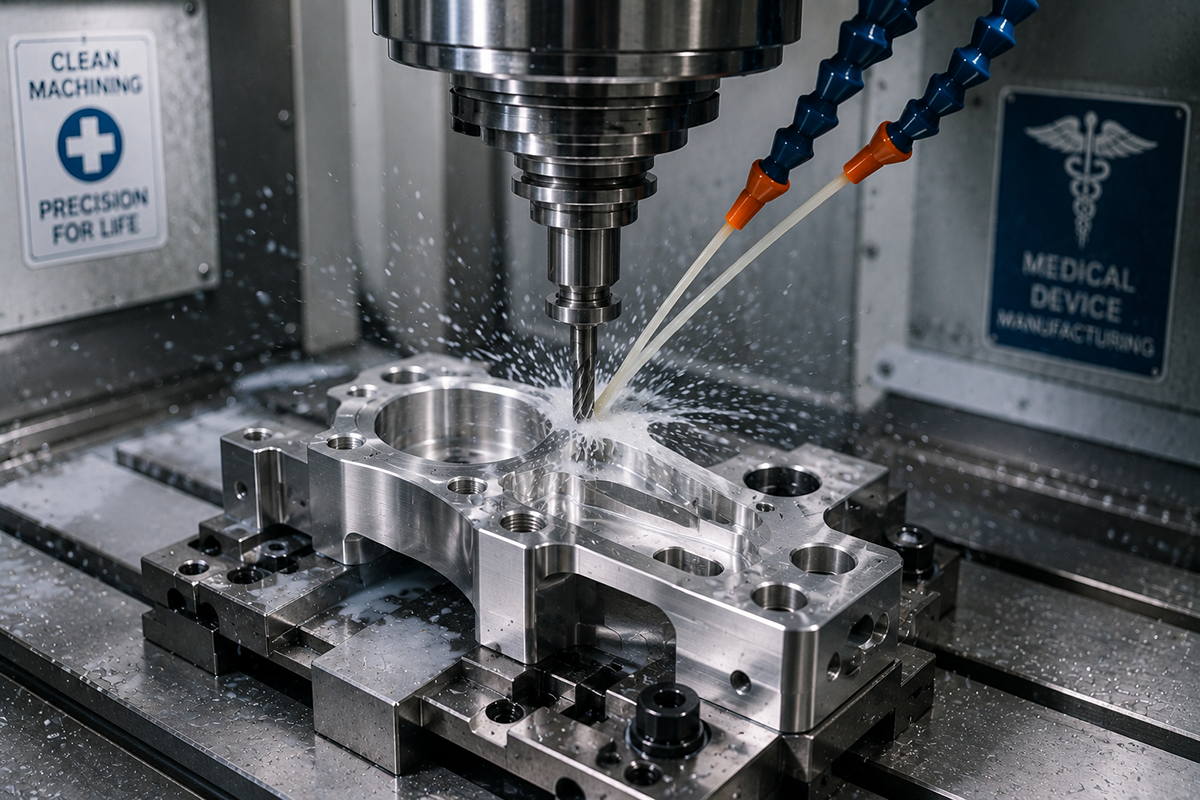
Medical CNC machining materials should be chosen based on the part’s function, environment, finish requirements, and documentation needs. The best material is not always the strongest or most expensive option. It is the material that matches the application while supporting manufacturability, inspection, and cost control.
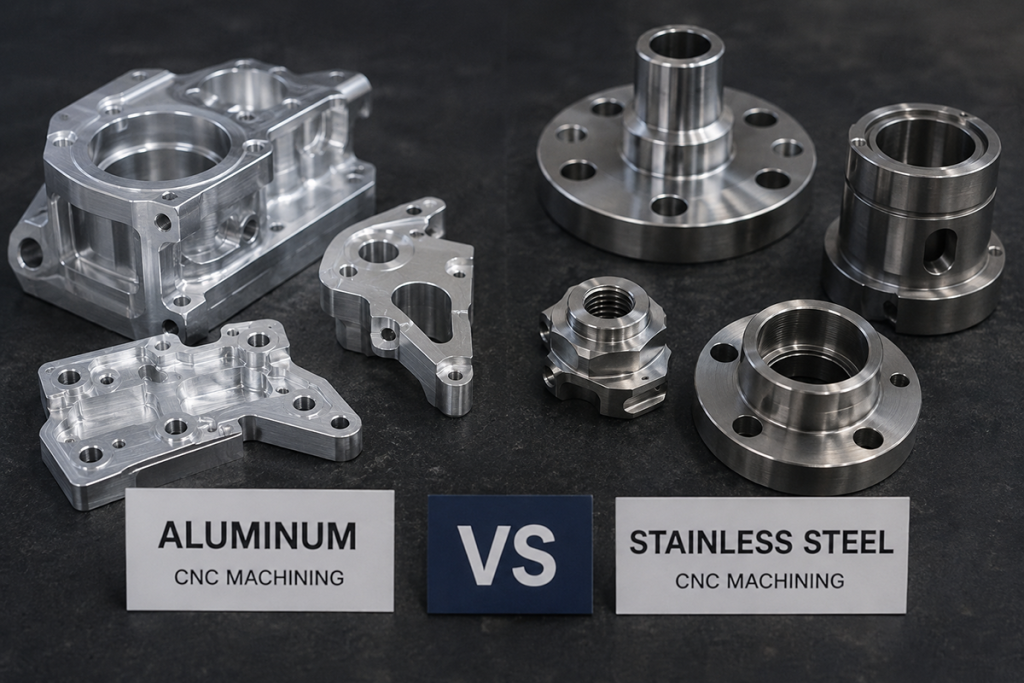
Stainless steel is common for parts requiring corrosion resistance, durability, cleanability, and strength. It may be used for equipment components, surgical instrument parts, laboratory fixtures, and device hardware. Buyers evaluating corrosion-resistant metal parts can review stainless steel CNC machining when comparing grades, machining challenges, and finishing options.
Titanium may be considered for high-value projects where strength, lower weight, corrosion resistance, or application-specific material performance is required. Titanium is more difficult and expensive to machine than aluminum or many stainless steels, so it should be selected for a clear functional reason. For grade and cost considerations, buyers can review titanium CNC machining before specifying titanium for a medical-related component.
Engineering plastics such as POM, Delrin, PTFE, PEEK, nylon, and polycarbonate may be used for insulation, low friction, chemical resistance, lightweight fixtures, prototype housings, or non-metallic device parts. Plastic materials behave differently from metals, especially with heat, clamping, moisture, and long-term load. When plastic is being considered, plastic CNC machining can help buyers compare prototype and low-volume options.
Aluminum may be suitable for housings, brackets, covers, and fixtures where low weight and fast machining are important. However, buyers should consider surface finish, corrosion exposure, and cleaning requirements before choosing aluminum for a medical-related part. Material selection should always be confirmed against the intended use and any applicable customer requirements.
Precision Requirements and Inspection Planning
Precision requirements should be defined before the quote stage. A supplier can machine accurate parts, but the drawing must communicate which dimensions are critical. Without clear tolerances, the supplier may either quote too conservatively or miss details that the buyer assumes are obvious.
Critical features may include hole diameter, hole position, thread accuracy, sealing surfaces, mating faces, flatness, parallelism, perpendicularity, slot width, pin fits, and surface roughness. In precision medical components, even small geometry changes may affect assembly, alignment, or repeatable testing.
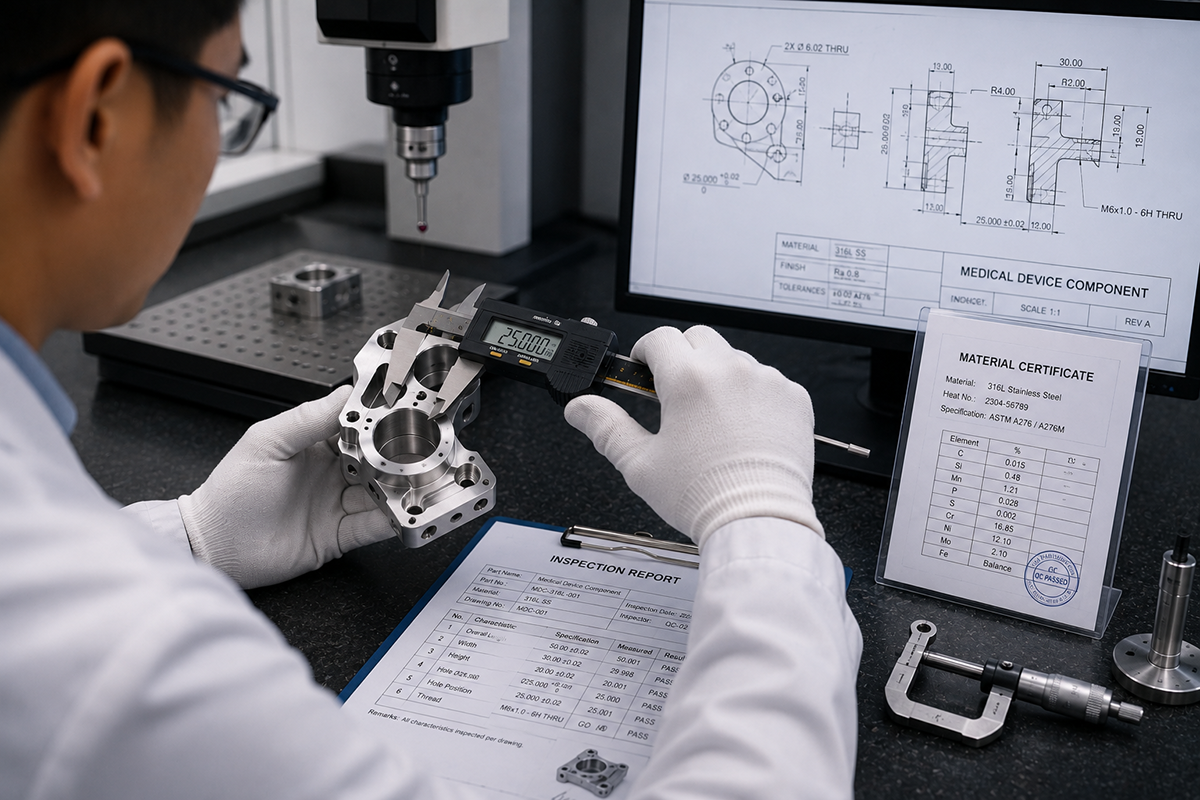
Inspection planning should match the part function. Simple parts may require standard dimensional checks with calipers, micrometers, pin gauges, or thread gauges. More complex parts may require CMM inspection, surface roughness checks, first article inspection, or full dimensional reports. If inspection reports are required, the buyer should state this before quotation.
It is also important to define whether dimensions apply before or after surface finishing. Polishing, passivation, anodizing, coating, or cleaning processes may affect edges, surfaces, or final dimensions. For tightly fitted parts, finish requirements and tolerance requirements should be reviewed together.
Surface Finish, Cleanability, and Edge Quality
Surface finish is important in medical device parts because it can affect cleaning, handling, assembly, sealing, appearance, and long-term performance. A raw machined surface may be acceptable for some internal fixtures, but other components may require polishing, passivation, bead blasting, anodizing, or a specified surface roughness.
Edge quality also matters. Burrs, sharp corners, loose chips, and rough internal passages can create assembly problems or cleaning issues. Parts with holes, threads, grooves, and internal passages should define deburring and cleaning expectations clearly. For fluid-related or instrument-related parts, internal burrs may be more important than visible external edges.
Stainless steel components may require passivation or polishing depending on corrosion and cleanability needs. Aluminum equipment components may require anodizing or conversion coating. Plastic parts may require smooth machined surfaces, deburring, or stress-sensitive machining strategies. The correct finish depends on the material, function, and customer-defined requirements.
Buyers should specify which surfaces are functional, cosmetic, or non-critical. This prevents unnecessary processing of hidden surfaces while ensuring that critical areas receive the required finish. Clear finish notes help the supplier quote accurately and avoid later changes after production begins.
Documentation and Compliance Considerations
Compliance considerations should be handled carefully. A CNC machining supplier should not claim that a part is compliant simply because it was machined accurately. Medical device compliance depends on the final device, intended use, market, risk classification, buyer quality system, validation process, documentation, and applicable standards.
For quality system background, buyers may refer to ISO 13485, which defines quality management system requirements for medical devices. In the United States, the FDA Quality Management System Regulation is also relevant for device manufacturers and has incorporated ISO 13485:2016 into its framework. Buyers can review the FDA QMSR for regulatory background.
For machined components, documentation needs may include material certificates, dimensional inspection reports, surface finish reports, first article inspection, material traceability, batch records, or special customer forms. Not every project requires all of these documents. The buyer should define which records are required before quotation so the supplier can confirm what can be provided.
The safest approach is to define compliance-related requirements in the RFQ instead of assuming them. If a buyer requires a specific quality system, traceability level, surface requirement, inspection method, packaging method, or documentation format, those requirements should be stated clearly before production.
Prototype and Low-Volume Medical CNC Machining
CNC machining is useful for medical prototype machining because it does not require mold tooling and can produce parts from real engineering materials. This allows product teams to test fit, ergonomics, assembly, strength, surface quality, and functional geometry before committing to tooling or larger production.
Prototype and low-volume machining may be used for laboratory fixtures, diagnostic device parts, housings, test adapters, instrument components, brackets, and custom equipment parts. Design changes are common during development, and CNC machining allows faster iteration than injection molding, casting, or stamping.
However, prototype success does not automatically mean a design is ready for regulated production. If the part is part of a medical device, the buyer must define validation, documentation, inspection, material, and quality requirements according to the intended use and regulatory pathway. CNC machining can support development, but compliance responsibilities must be clearly assigned.
For buyers deciding between development parts and repeat production, CNC machining for prototypes vs production can help clarify how process planning, inspection, and cost change as quantity and design maturity increase.
Cost Factors in Medical Device CNC Machining
Cost in medical device CNC machining is affected by material, geometry, tolerance level, surface finish, inspection, documentation, and quantity. A simple aluminum fixture may be economical, while a stainless steel or titanium component with tight tolerances, polishing, inspection reports, and material certification can cost significantly more.
Material selection is a major cost driver. Stainless steel and titanium generally require more careful machining than aluminum. PEEK and other high-performance plastics can also be expensive as raw material. If the part does not need a premium material, buyers may be able to reduce cost by selecting a more practical option.
Tight tolerances also increase cost when applied too broadly. Buyers should mark critical dimensions clearly and allow standard tolerances on non-critical features. Surface finish and deburring requirements should be specific, because polishing or special finishing on all surfaces can add cost without improving function.
Inspection and documentation can add time and cost, but they may be necessary for medical-related projects. Material certificates, CMM reports, first article inspection, or full dimensional reports should be requested only when they are needed. For a broader pricing framework, buyers can review CNC machining cost factors before submitting an RFQ.
What Buyers Should Prepare Before Requesting a Quote
A complete RFQ helps the supplier quote accurately and reduces back-and-forth communication. Buyers should provide 3D CAD files and 2D drawings whenever possible. The CAD file helps with geometry and toolpath review, while the drawing defines tolerances, material, finish, threads, critical features, and inspection requirements.
The RFQ should include material grade, surface finish, quantity, production stage, application environment, and any special documentation requirements. If the part requires material certificates, inspection reports, traceability, special cleaning, or customer-specific forms, these expectations should be stated before quotation.
Buyers should identify critical features, including sealing surfaces, precision holes, thread features, flat mounting faces, alignment pins, mating diameters, and dimensions that affect assembly or testing. Non-critical dimensions can often use standard tolerances to control cost.
Application details are also useful. The supplier should know whether the part is used in diagnostic equipment, laboratory fixtures, surgical instrument assemblies, test equipment, fluid control, device housings, or prototype validation. Load, temperature, cleaning exposure, corrosion environment, and expected service life can all affect material and finish recommendations.
If material choice is uncertain, reviewing CNC machining materials can help buyers compare stainless steel, titanium, aluminum, plastics, and other options before quotation. Buyers can also state whether material alternatives are acceptable so the supplier can recommend a practical balance of performance, manufacturability, and cost.
Conclusion
Medical device CNC machining requires more than accurate cutting. Successful projects depend on clear drawings, suitable materials, realistic tolerances, controlled surface finish, proper inspection planning, and well-defined documentation expectations. The more clearly the buyer communicates requirements, the easier it is for the supplier to quote and manufacture the part correctly.
Stainless steel, titanium, engineering plastics, and aluminum can all be useful in medical-related components, but each material should be selected for a specific function. Surface finish, cleanability, edge quality, and documentation may be just as important as dimensional accuracy, depending on the part’s role in the device or equipment assembly.
Compliance should be handled with care. The buyer should define applicable standards, inspection records, material documentation, traceability, and regulatory expectations before production. The supplier should confirm which machining, inspection, and documentation capabilities can be provided, without implying certifications or compliance that are not part of the actual manufacturing system.
When requirements are clear, CNC machining can support prototypes, low-volume parts, test fixtures, housings, brackets, surgical instrument components, laboratory equipment parts, and precision medical equipment components. If you are preparing a medical-related CNC machining project, our team can review your drawings and help evaluate material selection, tolerance feasibility, surface finish, inspection needs, and cost before manufacturing.