Introduction
Titanium CNC machining is used when a project requires high strength, low weight, corrosion resistance, and long-term performance in demanding conditions. Compared with aluminum, stainless steel, brass, or engineering plastics, titanium is usually selected for higher-value parts where material performance matters more than the lowest possible machining cost.
For buyers in North America, Europe, and other overseas markets sourcing custom titanium CNC parts, the main question is not simply whether titanium can be machined. The more important question is whether titanium is the right material for the part’s function, tolerance requirements, surface finish, production quantity, and operating environment. Titanium can deliver excellent performance, but it also requires more careful machining strategy, tooling, cooling, inspection, and cost planning.
Titanium is commonly used in aerospace, medical devices, robotics, marine equipment, chemical processing, motorsport, and other applications where strength-to-weight ratio, corrosion resistance, or biocompatibility may be important. However, it is not the best choice for every CNC machined part. If a component does not require titanium’s specific advantages, aluminum, stainless steel, or another material may provide a more economical solution.
This guide explains the key precision and cost considerations involved in titanium machining. It covers why titanium is used, which grades are common, why it is more difficult to machine, what affects tolerance control, what drives cost, and what buyers should prepare before requesting a quote. If you are evaluating titanium for a custom part, working with experienced custom CNC machining services can help determine whether the material, geometry, tolerance, and finish requirements are realistic for your project.
Why Titanium Is Used for CNC Machined Parts
Titanium is used for CNC machined parts when a project needs a combination of strength, low weight, corrosion resistance, and long-term reliability. It is not usually selected as a low-cost general-purpose material. Instead, titanium is chosen when aluminum may not provide enough strength or corrosion resistance, and stainless steel may add too much weight for the application.
This makes titanium especially valuable for high-performance parts where material failure would be costly, dangerous, or difficult to replace. In many projects, the higher material and machining cost is justified because the final part must perform reliably under demanding conditions.
High Strength-to-Weight Ratio
One of the main reasons titanium is used is its strong strength-to-weight ratio. Titanium is much lighter than many steels while still offering excellent mechanical strength. This makes it useful for parts where reducing weight matters, but the component still needs to handle load, vibration, or stress.
For example, a titanium bracket, connector, fixture, or structural component may be used when aluminum is too weak for the requirement and stainless steel is too heavy. This is common in aerospace-related projects, robotics, motorsport, medical devices, and high-performance mechanical assemblies.
Corrosion Resistance in Demanding Environments
Titanium also provides strong corrosion resistance, especially in environments where moisture, salt, chemicals, or harsh operating conditions are present. This makes it suitable for marine components, chemical processing parts, medical equipment, and outdoor or high-humidity applications.
In some projects, titanium may be selected because corrosion resistance is more important than machining cost. If a part is difficult to access, expensive to replace, or exposed to aggressive conditions, using a more durable material can reduce long-term risk.
Biocompatibility for Medical and Specialized Parts
Titanium is widely used in medical and life-science applications because certain grades offer good biocompatibility and corrosion resistance. CNC machined titanium parts may be used for surgical instruments, medical device components, laboratory fixtures, and specialized equipment parts.
For medical-related projects, material certification, surface finish, traceability, and inspection requirements can be more important than basic machining cost. Buyers should clearly define grade, documentation, finish, and tolerance requirements during the RFQ stage.
Thermal and Long-Term Stability
Titanium can also be useful when a part needs to maintain performance under heat, vibration, or long-term mechanical stress. While titanium is not the easiest material to machine, it can provide stable performance in demanding assemblies where lower-cost materials may deform, corrode, or wear too quickly.
When Titanium Is Worth Considering
Titanium is usually worth considering when the project requires at least one of the following:
- High strength with reduced weight
- Corrosion resistance in harsh environments
- Medical or biocompatible material performance
- Long-term durability in high-value equipment
- Reliable performance where replacement is difficult
- High-performance parts for aerospace, robotics, marine, or motorsport applications
If the part is a simple indoor bracket, standard housing, general fixture, or low-cost component, titanium may be unnecessary. In those cases, buyers should compare other CNC machining materials before choosing titanium. The best material is not always the highest-performance material; it is the one that matches the part’s real function without adding unnecessary cost or machining difficulty.
Common Titanium Grades for CNC Machining
Choosing the right titanium grade is one of the most important decisions in a titanium CNC machining project. Different titanium grades offer different balances of strength, corrosion resistance, machinability, cost, and application suitability. For buyers, the goal is not simply to request “titanium.” The grade should match the part’s real performance requirements.
The two most common categories buyers encounter are commercially pure titanium grades and titanium alloys. In CNC machining, Grade 2 titanium and Grade 5 titanium are especially common. Grade 2 is often selected for corrosion resistance and formability, while Grade 5 is selected for higher strength and demanding mechanical applications.
Grade 2 Titanium Machining
Grade 2 titanium is a commercially pure titanium grade. It is known for good corrosion resistance, moderate strength, and relatively better machinability compared with some stronger titanium alloys. It is often used when corrosion resistance is more important than maximum mechanical strength.
Grade 2 titanium machining may be suitable for:
- Marine components
- Chemical processing parts
- Medical and laboratory fixtures
- Corrosion-resistant housings
- Light-duty brackets and fittings
- Parts exposed to moisture or aggressive environments
Grade 2 can be a practical option when the part does not require the high strength of Grade 5 but still needs titanium’s corrosion resistance and long-term material stability. It may also be selected for parts where formability, corrosion resistance, or non-magnetic performance are important.
Grade 5 Titanium Machining
Grade 5 titanium, also known as Ti-6Al-4V, is one of the most widely used titanium alloys for high-performance CNC machined parts. It offers much higher strength than commercially pure titanium while maintaining a relatively low weight and good corrosion resistance.
Grade 5 titanium machining is commonly used for parts that need strength, fatigue resistance, and lightweight performance. It is often found in aerospace-related components, medical devices, motorsport parts, robotics components, and high-performance mechanical assemblies.
Typical Grade 5 titanium applications include:
- Lightweight structural brackets
- Medical device components
- Aerospace and drone parts
- High-strength fastener-related components
- Motorsport and performance vehicle parts
- Robotics and automation components
Grade 5 titanium is stronger than Grade 2, but it is also more demanding to machine. Tool wear, heat control, cutting parameters, and workholding become more important. For complex parts or tight tolerances, buyers should expect higher machining cost than with aluminum or many stainless steel grades.
Ti-6Al-4V CNC Machining
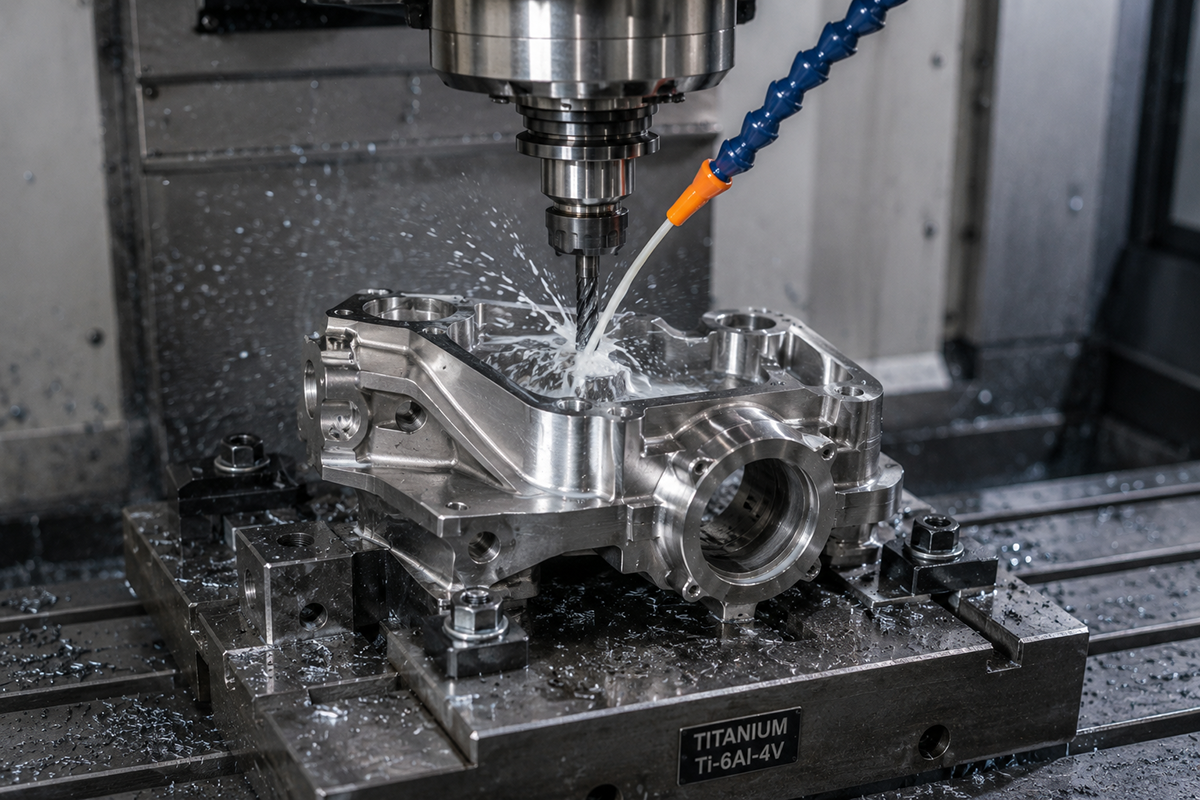
Ti-6Al-4V CNC machining requires careful process control because this alloy combines high strength with low thermal conductivity. Cutting heat can stay near the tool edge, which increases tool wear and affects dimensional stability if the process is not controlled properly.
For buyers, Ti-6Al-4V is often worth considering when the part needs a strong but lightweight material. However, it should not be selected only because it is considered a premium material. If the application does not require high strength or weight reduction, another material may reduce cost and lead time.
How Buyers Should Choose a Titanium Grade
A practical selection rule is simple: choose Grade 2 when corrosion resistance is the main requirement and high strength is not critical. Choose Grade 5 when the part needs higher strength, fatigue resistance, or lightweight structural performance.
Before requesting a quote, buyers should confirm whether the drawing requires a specific titanium grade or whether equivalent alternatives are acceptable. If the material grade is flexible, the supplier may be able to recommend a grade that balances performance, availability, machining cost, and lead time more effectively.
Why Titanium CNC Machining Is More Difficult
Titanium CNC machining is more difficult than machining aluminum, brass, many plastics, and even some stainless steel grades. The challenge does not come from one single factor. It comes from the combination of low thermal conductivity, high strength, elastic behavior, tool wear, vibration risk, and the need for controlled cutting conditions.
For buyers, this matters because titanium machining difficulty directly affects cost, lead time, tolerance control, and part consistency. A titanium part may look simple on a drawing, but if it includes deep pockets, thin walls, tight holes, fine threads, or strict surface requirements, the machining process can become much more demanding.
Low Thermal Conductivity
One of the biggest challenges in titanium machining is heat control. Titanium does not conduct heat away from the cutting area as efficiently as aluminum or steel. As a result, heat tends to stay near the tool edge during cutting.
This concentrated heat can increase tool wear, reduce tool life, affect surface finish, and make dimensional control more difficult. Proper coolant, tool selection, cutting speed, and machining strategy are important for keeping the process stable.
Higher Tool Wear
Titanium can wear cutting tools faster than easier-to-machine materials. When the cutting edge becomes dull, the part may show poor surface finish, dimensional variation, burrs, or increased cutting heat. Tool wear is one reason titanium machined parts usually cost more than aluminum parts with similar geometry.
For repeat production, tool wear must be monitored carefully. If the part has critical dimensions, tool changes and inspection planning may need to be built into the process rather than treated as an afterthought.
Elasticity and Springback
Titanium has elastic behavior that can create springback during machining. This can be especially important for thin walls, slots, flexible features, and parts with large material removal. If the workpiece deflects under cutting force and then springs back after machining, the final dimension may shift.
This does not mean tight tolerance titanium parts are impossible. It means toolpath planning, roughing and finishing strategy, workholding, and inspection must be carefully controlled.
Vibration and Chatter Risk
Titanium parts can be sensitive to vibration, especially when the design includes long tools, deep cavities, thin sections, or weak workholding areas. Chatter can damage surface finish, reduce tool life, and make tolerance control less stable.
Good machining strategy may include shorter tool overhang, rigid fixturing, optimized cutting parameters, staged material removal, and proper finishing passes. These steps add process planning time, but they help reduce scrap risk and improve part consistency.
Workholding and Coolant Control
Stable workholding is important for all CNC machining, but it becomes more critical with titanium. The material can require higher cutting force than aluminum, and poor clamping can lead to movement, vibration, or dimensional error.
Coolant control is also important. Proper cooling helps manage cutting heat, protect tool life, and improve surface finish. For complex titanium CNC parts, coolant access to deep pockets or internal features should be considered during manufacturing review.
Why This Matters for Buyers
The main buyer takeaway is that titanium machining should not be quoted like a simple aluminum part. Material cost, machining time, tooling, setup strategy, inspection, and risk control all affect the final price. If a drawing has unnecessary tight tolerances, sharp internal corners, very thin walls, or difficult deep features, the cost can increase quickly.
When titanium is required for performance reasons, these machining challenges are manageable. But when titanium is selected only because it seems premium, the project may become more expensive without adding real functional value.
Precision Considerations for Titanium Machined Parts
Precision in titanium CNC machining depends on more than machine accuracy. Titanium can be machined to tight tolerances, but the final result is affected by heat, tool wear, workholding, part geometry, wall thickness, machining sequence, and inspection planning. For buyers, this means tolerance requirements should be based on real functional needs rather than applying tight tolerances across the entire drawing.
A well-designed titanium part can achieve stable precision, but unnecessary complexity can increase cost and risk. Features such as thin walls, deep pockets, small holes, internal threads, narrow slots, and critical mating surfaces should be reviewed carefully before production begins.
Heat Control and Dimensional Stability
Because titanium does not conduct heat away from the cutting zone efficiently, heat can build up near the tool and workpiece. This can affect tool life, surface finish, and dimensional stability. If the part has tight tolerance areas, heat control becomes an important part of the machining strategy.
Proper coolant use, controlled cutting parameters, toolpath planning, and staged machining can help reduce heat-related variation. For critical parts, roughing and finishing may be separated so the material has time to stabilize before final dimensions are cut.
Tool Wear and Tolerance Control
Tool wear is another major factor in titanium machining tolerances. As the cutting tool wears, dimensions can gradually shift. This is especially important for repeat parts, precision holes, threads, slots, and mating surfaces.
For titanium machined parts with strict dimensional requirements, the supplier may need to control tool life, replace tools at planned intervals, and inspect critical dimensions during production. This increases reliability, but it can also increase machining cost compared with easier materials.
Thin Walls and Flexible Features
Thin-wall titanium parts require careful design and process planning. Titanium’s elasticity can cause deflection during cutting, especially when the wall is unsupported or when a large amount of material is removed. After machining, the feature may spring back slightly, affecting final dimensions.
To improve manufacturability, buyers should avoid unnecessarily thin walls where possible. If thin walls are required, the drawing should clearly identify which features are functional and which dimensions can allow more flexibility.
Deep Pockets, Small Holes, and Internal Threads
Deep pockets and small internal features can be challenging in titanium because they may require longer tools, reduced cutting speed, and better chip evacuation. Long tools increase vibration risk, while poor chip removal can damage surface finish or increase heat.
Internal threads should also be reviewed carefully. Titanium threads may require controlled cutting or forming methods depending on size, depth, and application requirements. If thread strength or surface quality is important, buyers should specify the thread standard and inspection expectations clearly.
Only Tighten Critical Tolerances
One of the most effective ways to control titanium machining cost is to apply tight tolerances only where they are necessary. A drawing that uses very tight general tolerances can make the part more expensive without improving function.
Buyers should identify:
- Critical mating surfaces
- Precision holes
- Threaded features
- Bearing or shaft interfaces
- Flatness or perpendicularity requirements
- Dimensions that affect assembly
Non-critical surfaces can often use standard machining tolerances. This allows the supplier to focus process control and inspection effort where it actually matters.
Inspection Requirements
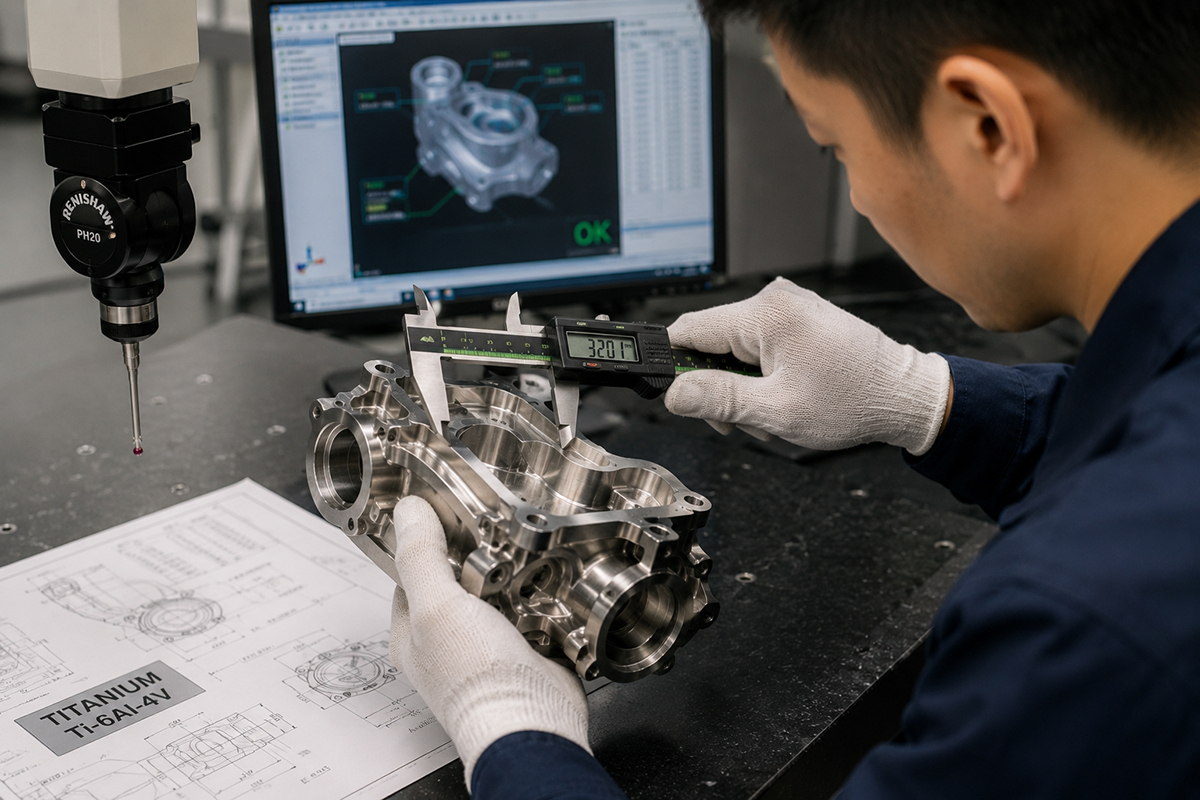
Precision titanium CNC machining often requires clear inspection planning. Depending on the application, inspection may include calipers, micrometers, height gauges, thread gauges, CMM inspection, surface roughness checks, or material certification review.
If the part is used in aerospace, medical, robotics, or other high-value applications, buyers should define inspection requirements before quoting. This helps avoid misunderstandings about what is included in the price and what documentation is required after production.
Cost Factors in Titanium CNC Machining
Cost is one of the biggest concerns in titanium CNC machining. Titanium parts usually cost more than similar aluminum or stainless steel parts, not only because the raw material is expensive, but also because the machining process is slower, more demanding, and more sensitive to tool wear and heat control.
For buyers, it is important to understand that titanium machining cost is not determined by material grade alone. The final price depends on part geometry, tolerance requirements, surface finish, production quantity, inspection needs, and the level of machining risk. A simple titanium plate may be relatively straightforward, while a thin-wall titanium housing with deep pockets and tight tolerances can become much more expensive.
Raw Material Cost
Titanium is generally more expensive than aluminum, carbon steel, and many stainless steel grades. Grade 5 titanium is usually more costly than Grade 2 because it is a higher-strength alloy and is widely used in demanding applications. Material availability can also affect price and lead time, especially if the project requires a specific certified grade, special stock size, or traceable material documentation.
For small parts, the material cost may be only one part of the total quote. For larger parts or parts with high material removal, titanium stock cost and waste can become a major cost driver.
Slower Machining Speed
Titanium usually requires slower machining speeds than aluminum. Because cutting heat stays near the tool edge, the machining process must be controlled carefully to protect tool life and maintain surface quality. Slower cutting speeds increase machine time, which directly increases cost.
This is why a titanium part with the same size and shape as an aluminum part can cost much more to produce. The machine may need more time for roughing, finishing, coolant control, and tool changes.
Tool Wear and Tooling Cost
Tool wear is another major factor in titanium machining cost. Titanium can wear cutting tools faster, especially when the part has deep pockets, interrupted cuts, small features, hard-to-reach areas, or strict surface finish requirements.
When tool wear increases, the supplier may need to use higher-quality cutting tools, replace tools more frequently, reduce cutting speed, or add inspection steps. These requirements help maintain quality, but they also increase the final part price.
Complex Geometry
Part geometry can have a major impact on titanium machining cost. Simple shapes are easier to machine, but complex designs may require more setups, special tools, longer machining time, and more careful process planning.
Cost can increase when the design includes:
- Deep pockets
- Thin walls
- Small internal radii
- Long narrow slots
- Fine internal threads
- Multiple tight-positioned holes
- Complex 3D contours
- Hard-to-access surfaces
Some of these features may be necessary for the part function. However, if they are not critical, simplifying the design can reduce machining time and cost.
Tolerance and Inspection Requirements
Tight tolerances increase the cost of titanium machined parts because they require more controlled machining and more inspection effort. If every dimension on the drawing is tightly controlled, the supplier must treat the entire part as critical, even if only a few features affect assembly or performance.
Buyers can often reduce cost by marking only the truly critical dimensions with tight tolerances and allowing standard tolerances on non-critical surfaces. This approach helps the supplier focus precision control where it matters most.
Inspection requirements also affect cost. CMM reports, material certificates, surface roughness checks, thread inspection, and full dimensional reports may be necessary for aerospace, medical, or high-value industrial parts. These requirements should be stated clearly before quoting.
Surface Finish and Post-Processing
Titanium parts may require bead blasting, polishing, passivation, anodizing, cleaning, or other post-processing depending on the application. Surface finish requirements can affect both cost and lead time, especially when the part has cosmetic surfaces, medical-related cleanliness requirements, or corrosion-sensitive applications.
If the finish is important, buyers should specify whether the required surface is functional, cosmetic, or both. This helps avoid over-processing non-critical surfaces and keeps the quote more accurate.
Production Quantity
Quantity also affects titanium machining cost. A one-off titanium prototype may have a high unit price because setup, programming, tooling, and inspection are spread across only one part. A small batch can reduce the unit cost if the parts share the same setup and process.
However, titanium repeat production still requires tool wear control and quality monitoring. Unlike easy-to-machine materials, increasing quantity does not automatically reduce cost as dramatically if tool life and inspection requirements remain demanding.
How Buyers Should Evaluate Cost
When reviewing titanium quotes, buyers should compare total value rather than only unit price. A lower quote may not include the same inspection, material certification, finish quality, or process control. For critical parts, the cheapest quote may carry higher risk if the supplier does not fully understand titanium machining requirements.
For a broader understanding of how machining price is calculated, buyers can review CNC machining cost factors. In titanium projects, cost control is best achieved by choosing the right grade, simplifying non-critical features, defining realistic tolerances, and providing complete RFQ information from the beginning.
How to Reduce Titanium Machining Cost Without Sacrificing Performance
Titanium is a high-performance material, so the goal is usually not to make it as cheap as aluminum. The better goal is to avoid unnecessary machining cost while keeping the part’s required performance. Many titanium parts become expensive because of over-tight tolerances, complex features, poor material selection, unclear finish requirements, or RFQ information that forces the supplier to make conservative assumptions.
Cost control starts during design and quoting, not after production begins. When buyers understand what drives titanium machining cost, they can adjust non-critical features, define tolerances more clearly, and give the supplier enough information to choose a stable machining strategy.
Use Tight Tolerances Only Where They Matter
One of the most effective ways to reduce titanium machining cost is to avoid applying tight tolerances to every surface. Tight tolerances require slower machining, more finishing passes, more inspection, and sometimes additional setup control. This is especially true for titanium because heat, tool wear, and material deflection must be managed carefully.
Buyers should separate critical and non-critical dimensions. Critical mating surfaces, precision holes, shaft fits, threaded features, and assembly interfaces may need strict tolerance control. Non-critical outer profiles, clearance areas, and cosmetic surfaces may not need the same precision.
A drawing with realistic tolerance zones helps the supplier focus machining and inspection effort where it actually affects part performance.
Avoid Unnecessary Thin Walls and Deep Pockets
Thin walls and deep pockets can make titanium parts more expensive because they increase vibration risk, deflection, tool overhang, and machining time. Thin features may move during cutting, while deep cavities may require longer tools and slower cutting conditions.
If the part design allows it, thicker walls, wider pockets, larger radii, and better tool access can reduce machining difficulty. Even small design adjustments can improve stability and reduce cost without changing the part’s main function.
Increase Internal Corner Radii Where Possible
Sharp internal corners are difficult to machine because CNC cutting tools are round. A very small internal radius may require a small tool, which increases machining time and tool wear. In titanium, this problem becomes more important because small tools are more sensitive to heat and breakage.
When possible, buyers should allow larger internal radii. This helps the supplier use stronger tools, remove material more efficiently, and improve surface consistency. If a sharp corner is required for assembly, it should be marked as critical. If not, a larger radius is usually more cost-effective.
Choose the Right Titanium Grade
Using the wrong titanium grade can increase cost unnecessarily. Grade 5 titanium offers high strength, but it is not always required. If the part mainly needs corrosion resistance and moderate strength, Grade 2 may be more practical. If the part needs high strength, fatigue resistance, or lightweight structural performance, Grade 5 may be justified.
Buyers should avoid specifying a premium grade only because it seems stronger. The selected grade should match load, environment, regulatory needs, and service conditions. If the grade is flexible, suppliers may be able to recommend a more practical option based on stock availability and machinability.
Clarify Surface Finish Requirements
Surface finish can add significant cost if it is not clearly defined. Some titanium parts require polishing, bead blasting, passivation, cleaning, or special surface treatment. Others may only need a standard machined finish.
To control cost, buyers should specify which surfaces require special finish and which areas are non-cosmetic or non-critical. For example, a visible external surface may need a smoother appearance, while hidden mounting surfaces may not require the same level of finishing.
Combine Orders When Possible
For titanium parts, setup, programming, tooling, and inspection can represent a large share of the unit cost, especially for prototypes or small batches. If the buyer expects repeat demand, combining quantities or planning a small production batch may reduce unit price.
However, buyers should balance quantity with design maturity. If the design may still change, it may be safer to machine a smaller prototype batch first, then move to larger production after validation.
Allow Supplier DFM Feedback
Design for manufacturability feedback is especially valuable for titanium projects. A supplier may identify features that add cost without improving function, such as unnecessarily tight tolerances, hard-to-reach surfaces, deep narrow slots, or overly complex finishing requirements.
Buyers should allow the supplier to suggest alternatives when the material, tolerance, radius, finish, or geometry is not fixed. Even if the final design does not change, early DFM review can prevent costly production issues later.
For buyers comparing titanium with other high-performance options, reviewing the best materials for CNC machining can help determine whether titanium is truly required or whether aluminum, stainless steel, or another material can meet the same function at lower cost.
Typical Applications of Titanium CNC Machined Parts
Titanium CNC machined parts are usually selected for applications where ordinary materials cannot provide the required balance of strength, weight, corrosion resistance, and long-term reliability. Titanium is rarely the lowest-cost material option, so it is most valuable when the final part must perform in a demanding environment or support a high-value product.
For buyers, the key is to confirm whether titanium’s advantages are truly needed for the application. If the part only needs a simple shape, moderate strength, and indoor use, aluminum or stainless steel may be more practical. If the part needs lightweight strength, corrosion resistance, biocompatibility, or stable performance in harsh conditions, titanium becomes much easier to justify.
Aerospace, Drone, and Lightweight Structural Components
Titanium is commonly used in aerospace-related and drone applications because it provides high strength with lower weight than many steels. CNC machined titanium brackets, connectors, mounts, and structural fittings may be used when aluminum is not strong enough and stainless steel is too heavy.
In these applications, weight reduction can affect performance, payload, vibration, and system efficiency. The higher machining cost may be acceptable because the part contributes directly to product reliability and performance.
Medical Device and Laboratory Components
Titanium is also widely used for medical device components, surgical instruments, laboratory fixtures, and specialized equipment parts. In these projects, biocompatibility, corrosion resistance, cleaning compatibility, and material traceability may be important.
Medical-related titanium parts may require strict inspection, clean surface finish, certification, and controlled documentation. Buyers should specify material grade, surface finish, tolerance, and inspection requirements clearly before production begins.
Marine and Corrosion-Resistant Parts
Marine and salt-exposed environments are another common reason to choose titanium. Titanium offers strong corrosion resistance in environments where many other materials may degrade over time. CNC machined titanium parts can be used for marine hardware, sensor housings, underwater equipment, and corrosion-resistant fittings.
Although stainless steel is also used in marine applications, titanium may be selected when weight reduction, long service life, or stronger corrosion resistance is required.
Chemical Processing and Harsh Environment Components
In chemical processing, titanium may be used for components exposed to corrosive fluids, aggressive environments, or demanding service conditions. Parts such as fittings, valve-related components, fixtures, and specialized housings may benefit from titanium’s corrosion resistance and long-term stability.
For these applications, the operating environment should be clearly described during the RFQ stage. The supplier needs to know whether the part will contact chemicals, moisture, heat, pressure, or cleaning agents.
Robotics and Automation Parts
Robotics and automation systems may use titanium when lightweight strength is required. A titanium part can reduce mass while providing better strength than aluminum in certain high-load or high-stress locations. This may be useful for robotic joints, end-effectors, compact brackets, precision mounts, and moving assemblies.
However, titanium is not always necessary for every automation part. Many brackets, housings, and fixtures can be made from aluminum more economically. Titanium should be selected when weight, strength, fatigue resistance, or corrosion resistance creates a clear performance advantage.
Motorsport and High-Performance Automotive Parts
Motorsport and high-performance automotive projects may use titanium for lightweight fastener-related parts, brackets, connectors, or custom components where strength and weight reduction are both important. In these cases, titanium can help reduce mass while maintaining mechanical performance.
For standard vehicle components, aluminum or stainless steel may often be more cost-effective. Titanium is better reserved for high-value applications where performance requirements justify the added machining cost. Buyers comparing material options for vehicle-related components can also review automotive CNC parts to understand where CNC machining fits custom automotive development and production needs.
Custom Fixtures and High-Value Industrial Components
Titanium may also be used for custom fixtures, test equipment, precision holders, and specialized industrial components. These parts are not always mass-produced, but they may support important production, testing, or inspection processes.
If a custom fixture must resist corrosion, reduce weight, or maintain long-term dimensional stability, titanium may be a practical option. If the fixture is used in a dry, low-stress environment, a lower-cost material may be sufficient.
Application-Based Selection Rule
A practical rule is to choose titanium when the part needs at least two of the following: high strength, low weight, corrosion resistance, biocompatibility, heat resistance, or long service life in a demanding environment. If the part only needs one basic requirement, another material may provide better cost efficiency.
Titanium delivers the most value when its material advantages directly support the performance of the final product. When those advantages are not required, titanium can add unnecessary cost, longer lead time, and higher machining complexity.
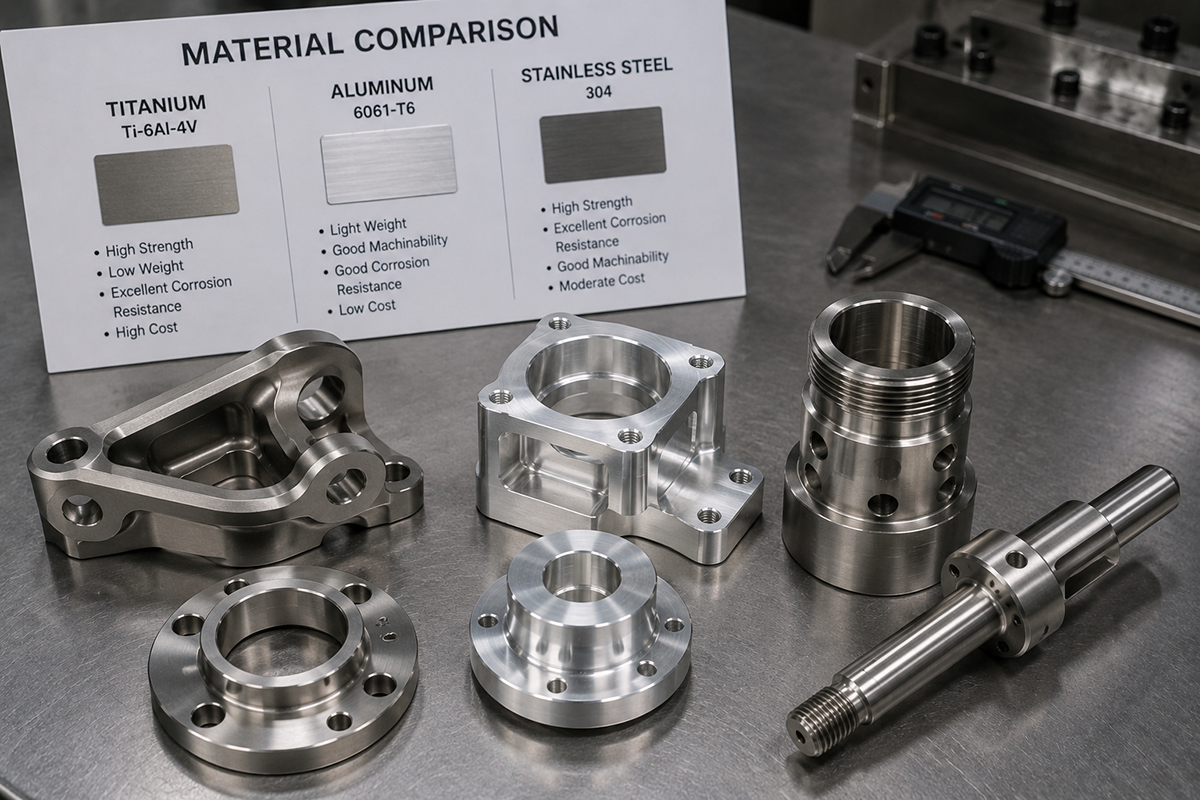
Titanium vs Aluminum and Stainless Steel: When Is Titanium Worth It?
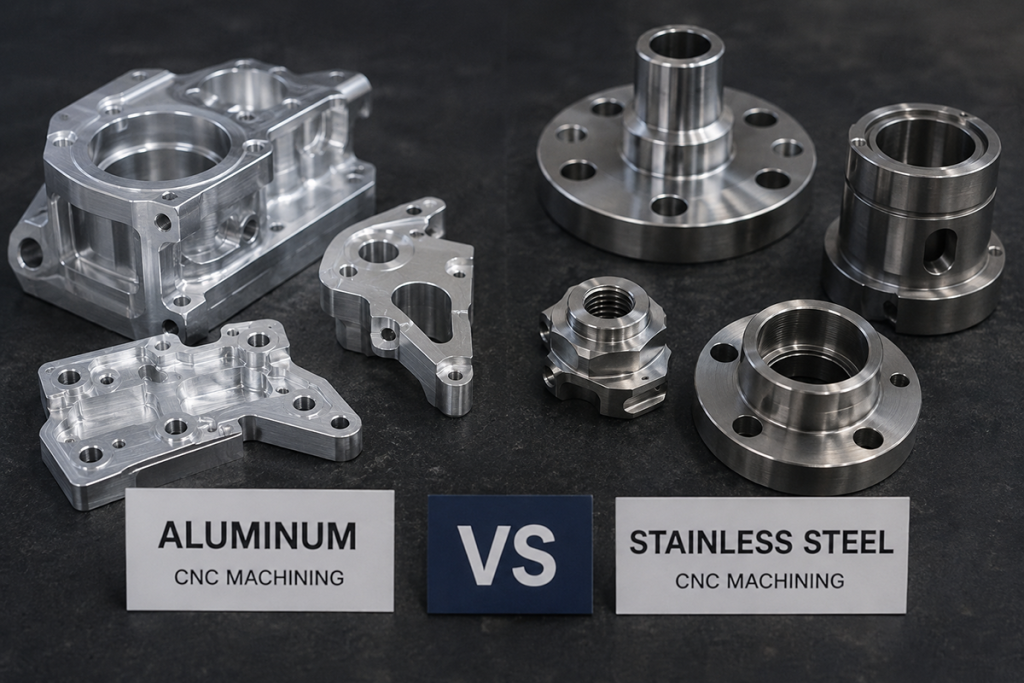
Titanium is often compared with aluminum and stainless steel because all three materials can be used for functional CNC machined parts. However, they serve different priorities. Aluminum is usually selected for lightweight and cost-efficient machining. Stainless steel is selected for strength, durability, and corrosion resistance. Titanium is selected when a part needs a stronger combination of lightweight performance, corrosion resistance, and long-term reliability.
The question is not whether titanium is “better” than aluminum or stainless steel in every situation. The more useful question is whether titanium’s performance advantages justify the higher machining cost, slower production speed, and more demanding manufacturing process.
Titanium vs Aluminum
Aluminum is easier and faster to machine than titanium. It is usually more cost-effective, easier to source, and suitable for many brackets, housings, enclosures, prototypes, fixtures, and lightweight structural parts. If the part only needs moderate strength and good machinability, aluminum is often the better choice.
Titanium becomes more attractive when aluminum cannot provide enough strength, fatigue resistance, corrosion resistance, or service life. A titanium component can offer higher strength while keeping weight lower than many steel options. This makes titanium useful for high-performance parts where weight reduction matters but aluminum may not be strong enough.
For example, an aluminum bracket may be suitable for a dry indoor automation system. A titanium bracket may be more appropriate if the same part must handle higher stress, harsh exposure, or long-term performance requirements in a demanding assembly.
Titanium vs Stainless Steel
Stainless steel is commonly used when corrosion resistance, strength, durability, and cleanability are required. It is widely used for food equipment, medical fixtures, marine parts, chemical equipment, and industrial components. Stainless steel is usually easier to source and often more economical than titanium.
Titanium may be worth choosing over stainless steel when weight reduction is critical or when the environment requires stronger corrosion resistance with lower part mass. Titanium is much lighter than stainless steel, which can be important for aerospace, robotics, medical devices, marine equipment, and performance applications.
However, if the part is stationary, weight is not important, and stainless steel provides enough corrosion resistance, stainless steel may be the more practical option. Titanium should not be used only because it sounds premium. It should be selected because it solves a specific performance problem.
When Titanium Is Worth the Cost
Titanium is usually worth considering when the part requires more than one high-performance property at the same time. A project that only needs corrosion resistance may be suitable for stainless steel. A project that only needs lightweight performance may be suitable for aluminum. But a project that needs high strength, low weight, corrosion resistance, and long service life may justify titanium.
Titanium is often worth the cost when:
- Aluminum is too weak for the application
- Stainless steel is too heavy for the design
- The part is exposed to corrosion, salt, chemicals, or harsh environments
- The component is used in aerospace, medical, marine, robotics, or high-performance equipment
- Failure or replacement would be expensive
- The part requires both lightweight performance and long-term durability
When Titanium May Not Be Necessary
Titanium may not be necessary for simple brackets, basic covers, standard housings, low-cost fixtures, or parts used in mild indoor environments. In these cases, aluminum or stainless steel may provide enough performance at a much lower cost.
If buyers are still deciding between common metal options, the article on aluminum vs stainless steel machining can help compare two more economical material choices before moving to titanium. For broader material selection, how to choose CNC machining materials can also support early-stage project decisions.
Practical Material Selection Rule
A simple rule is to start with the lowest-cost material that can safely meet the part’s functional requirements. Use aluminum when lightweight and machinability are the main priorities. Use stainless steel when strength, corrosion resistance, and durability are needed at a more practical cost. Use titanium when the part requires lightweight strength, corrosion resistance, and high-value performance that aluminum or stainless steel cannot provide effectively.
What Buyers Should Prepare Before Requesting a Titanium CNC Quote
Before requesting a titanium CNC quote, buyers should prepare more than a 3D model. Titanium parts are more sensitive to material grade, tolerance control, surface finish, inspection requirements, and application environment than many general CNC machined parts. Clear RFQ information helps the supplier understand the project correctly and avoid quoting based on assumptions.
A complete RFQ can also help control cost. If the supplier understands which dimensions are critical, which surfaces need finishing, and whether the material grade is fixed, they can recommend a more practical machining approach. This is especially important for titanium because unnecessary tight tolerances, unclear finish requirements, or uncertain material specifications can increase price quickly.
CAD Files and 2D Drawings
Buyers should provide both 3D CAD files and 2D drawings when possible. The 3D model helps the supplier understand geometry, machining access, and toolpath planning. The 2D drawing defines tolerances, surface finish, threads, material grade, inspection notes, and any special requirements.
For titanium parts, the 2D drawing is especially important because it shows which features are critical. If all dimensions are treated as equally tight, the quote may become more expensive than necessary.
Material Grade and Certification Requirements
The RFQ should clearly state the required titanium grade, such as Grade 2, Grade 5, or Ti-6Al-4V. If the grade is flexible, buyers should mention that alternatives are acceptable. This allows the supplier to recommend a grade based on performance, availability, cost, and machinability.
If the project requires material certification, traceability, or specific documentation, this should also be stated before quoting. Medical, aerospace, marine, and high-value industrial projects may require more documentation than standard commercial parts.
Critical Tolerances and Functional Features
Buyers should identify the features that truly affect assembly or performance. These may include precision holes, bearing fits, threaded features, sealing surfaces, flatness requirements, parallelism, perpendicularity, or mating faces.
Not every surface needs strict tolerance control. By marking only the critical areas, buyers help the supplier focus machining and inspection effort where it matters most. This can reduce cost without reducing part performance.
Surface Finish and Post-Processing
The RFQ should define whether the titanium part needs a raw machined finish, bead blasting, polishing, passivation, anodizing, cleaning, or other post-processing. If only certain surfaces are cosmetic or functional, those surfaces should be clearly marked.
Surface finish can affect cost, lead time, and inspection. It can also affect final dimensions if the finish changes the surface slightly. For precision titanium parts, finish requirements should be reviewed together with tolerance requirements.
Quantity and Production Plan
Quantity is important because setup, programming, tooling, and inspection can represent a large share of the cost for titanium parts. A one-piece prototype may have a high unit price, while a small batch may reduce the average cost if the design is stable.
Buyers should also mention whether the order is for prototype testing, low-volume production, or repeat production. This helps the supplier plan tooling, inspection, and process control more appropriately.
Application Environment
The working environment should be included when material selection is not fully confirmed. Buyers should explain whether the part will be exposed to salt, chemicals, moisture, temperature, vibration, load, cleaning fluids, or outdoor conditions.
This information helps the supplier confirm whether titanium is necessary or whether another material could meet the same requirement at lower cost. It also helps identify whether special surface treatment or inspection may be needed.
Inspection and Documentation Requirements
If the part requires CMM reports, material certificates, surface roughness reports, thread inspection, first article inspection, or full dimensional reports, these requirements should be included in the RFQ. Inspection and documentation can add cost, but they may be necessary for critical applications.
For high-value titanium parts, a clear inspection plan is part of risk control. It helps ensure that the finished parts match the drawing and that critical dimensions are verified before shipment.
Allowing Supplier Review
Finally, buyers should tell the supplier whether design or material adjustments are allowed. If the drawing is fixed, the supplier will quote based on the exact requirements. If the design is still flexible, the supplier may suggest cost-saving changes such as larger internal radii, adjusted tolerances, alternative material grades, or improved machining access.
For titanium parts, early supplier review can prevent unnecessary cost and reduce production risk. Buyers preparing a high-performance titanium project can request support through custom CNC machining services and provide drawings, material requirements, tolerance notes, finish expectations, and application details for review.
Conclusion
Titanium CNC machining is best suited for projects where high strength, low weight, corrosion resistance, and long-term reliability are more important than achieving the lowest possible machining cost. Titanium is not a general replacement for aluminum or stainless steel. It is a high-performance material that should be selected when its specific advantages solve a real engineering requirement.
For lightweight and cost-sensitive parts, aluminum is often more practical. For durable and corrosion-resistant parts where weight is less important, stainless steel may be the better choice. Titanium becomes valuable when the part needs both lightweight performance and high strength, or when corrosion resistance, biocompatibility, fatigue resistance, or harsh environment performance are critical to the application.
The main challenge with titanium is that it is more difficult and expensive to machine. Low thermal conductivity, tool wear, cutting heat, springback, vibration risk, and strict inspection requirements can all affect precision and cost. For this reason, titanium parts require careful design review, stable workholding, suitable tooling, proper coolant control, realistic tolerances, and clear inspection planning.
Buyers can reduce unnecessary cost by choosing the right titanium grade, avoiding over-tight tolerances, simplifying deep pockets and thin walls where possible, defining surface finish requirements clearly, and preparing complete RFQ information. CAD files, 2D drawings, material grade, quantity, tolerance notes, finish requirements, application environment, and documentation needs should all be provided before quoting.
When titanium is required for the right reasons, it can deliver excellent performance in aerospace, medical, robotics, marine, chemical processing, motorsport, and high-value industrial applications. When it is selected without a clear performance need, it can add unnecessary cost and lead time. The best decision is to match the material to the part’s actual function, environment, and production requirements.
If you are developing a titanium CNC machined part and are unsure about grade selection, tolerance feasibility, surface finish, or cost control, our team can review your drawings and help recommend a practical machining approach based on your application, quantity, and performance requirements.