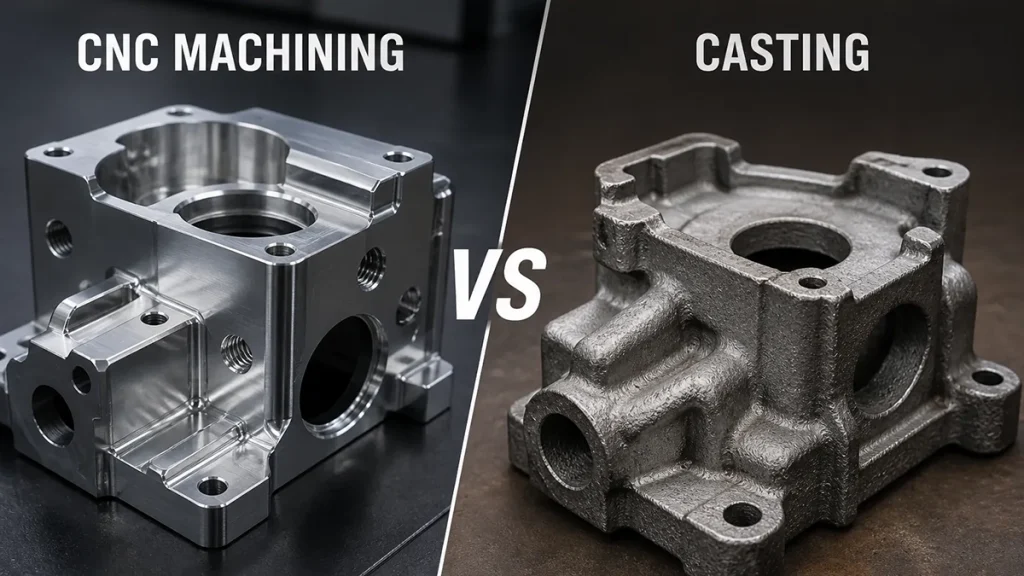
Introduction
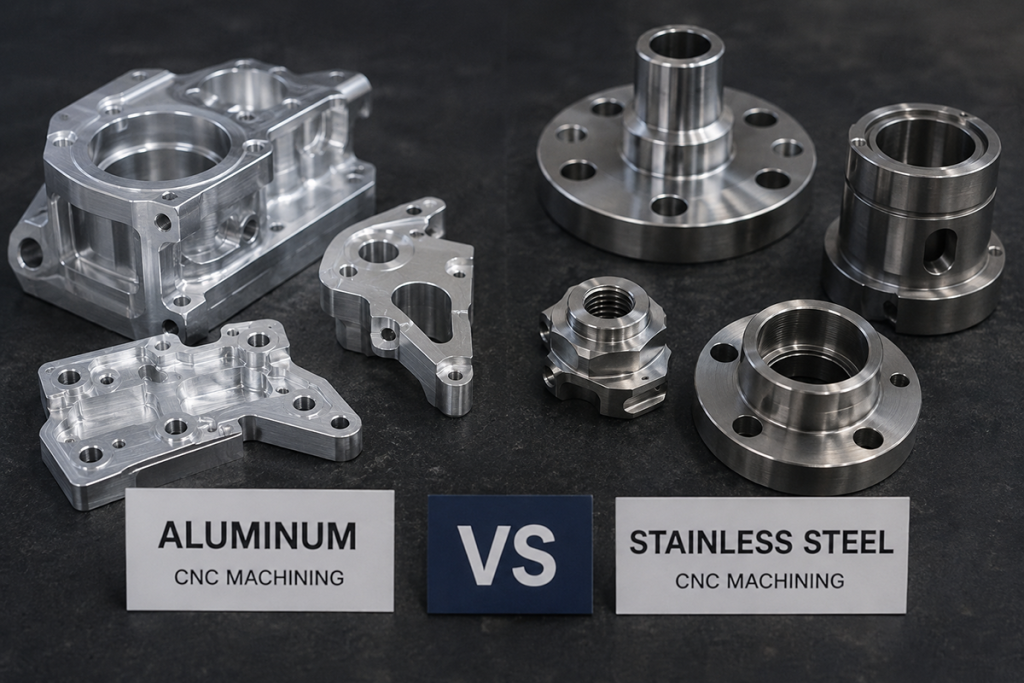
Aluminum vs stainless steel machining is a common decision for engineers, product developers, and sourcing managers who need custom CNC parts but are not sure which material is more suitable for the project. Both aluminum and stainless steel are widely used in CNC machining, but they are not interchangeable. The right choice depends on part function, weight target, corrosion exposure, strength requirements, surface finish, tolerance needs, cost, and lead time.
Aluminum is usually selected when lightweight performance, fast machining, lower production cost, and good surface finish are important. It is often used for brackets, housings, enclosures, prototype parts, robotics components, and automotive lightweight parts. Stainless steel is usually selected when corrosion resistance, higher strength, durability, or long-term performance in harsh environments matters more than weight reduction or machining speed.
For buyers in North America, Europe, and other overseas markets sourcing custom CNC machined parts, this material decision can affect much more than the final part price. It can influence production schedule, tool wear, inspection requirements, finishing options, shipping weight, and long-term reliability. Choosing aluminum when stainless steel is required may create corrosion or durability issues. Choosing stainless steel when aluminum is sufficient may increase cost and lead time unnecessarily.
This guide focuses on how to choose between aluminum and stainless steel for real CNC machining projects. Instead of only comparing material properties, it explains when aluminum is the better option, when stainless steel makes more sense, how cost and strength differ, and what information buyers should prepare before requesting a quote. If you are evaluating material options for a new part, reviewing precision CNC machining services can help determine whether the selected material fits the geometry, tolerance, finish, and production quantity of your project.
Quick Comparison: Aluminum vs Stainless Steel Machining
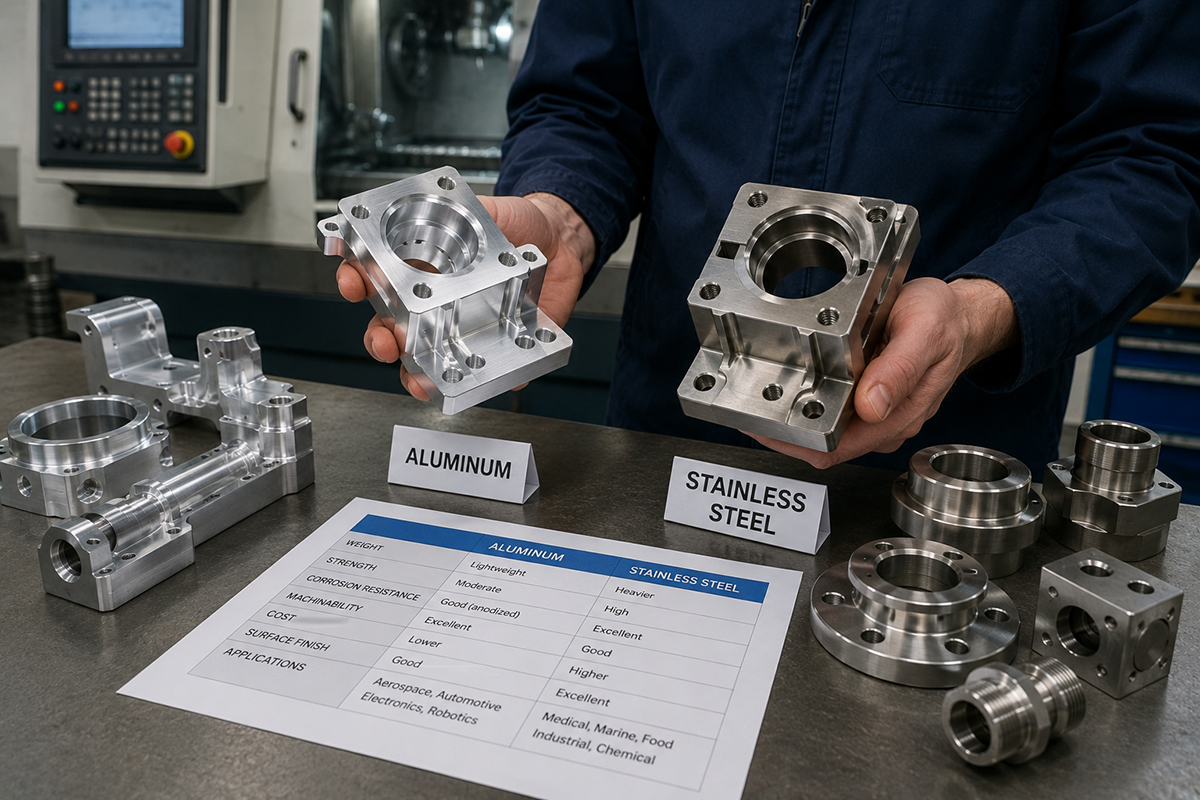
When comparing aluminum vs stainless steel machining, the easiest way to think about the decision is this: aluminum is usually better for lightweight, fast-machined, cost-efficient parts, while stainless steel is usually better for stronger, more durable, corrosion-resistant parts. However, the final decision should always depend on the part’s real operating conditions.
For many CNC projects, both materials can technically be machined into the same shape. The difference is how each material affects manufacturing difficulty and long-term part performance. Aluminum may reduce machining time and weight, but it may not provide enough durability for harsh environments. Stainless steel may provide better strength and corrosion resistance, but it increases machining cost, tool wear, and lead time.
Basic Material Decision Overview
- Choose aluminum when weight reduction, fast machining, lower cost, and clean surface finish are the main priorities.
- Choose stainless steel when corrosion resistance, strength, durability, and harsh environment performance are more important.
- Compare both when the part is functional but not highly loaded, and the operating environment is not yet fully defined.
- Ask for supplier input when the drawing is ready but material selection is still flexible.
Weight Difference
Aluminum is much lighter than stainless steel, which makes it a better choice for moving parts, portable equipment, robotics, automation systems, and lightweight automotive components. If reducing mass improves product performance, aluminum should usually be evaluated first.
Stainless steel is much heavier, but the added weight may be acceptable when strength, stiffness, or corrosion resistance is more important than weight reduction. For stationary industrial equipment or heavy-duty parts, weight may not be the deciding factor.
Machining Difficulty
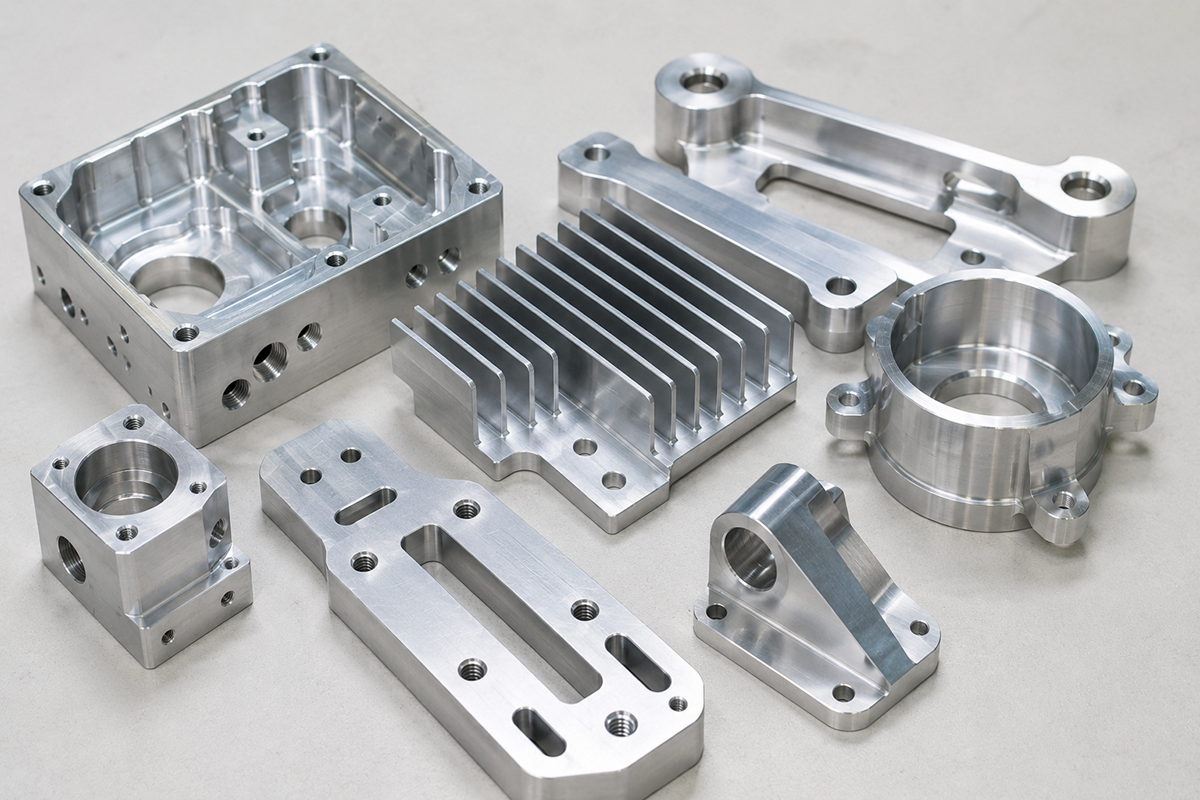
Aluminum is easier and faster to machine. It usually allows higher cutting speeds, lower tool wear, and shorter cycle times. This can reduce cost and support faster delivery, especially for prototypes and low-volume parts.
Stainless steel is more difficult to machine because it creates higher cutting resistance, generates more heat, and can increase tool wear. It often requires slower machining speeds, stronger tooling, better coolant control, and more careful workholding.
Strength and Durability
Stainless steel generally provides better strength, rigidity, and long-term durability than aluminum. It is often preferred for parts exposed to load, impact, wear, moisture, chemicals, or cleaning fluids.
Aluminum can still provide reliable strength for many CNC machined parts, especially when the correct grade is selected. Aluminum 6061 is suitable for many general-purpose parts, while 7075 can be used for higher-strength lightweight applications.
Corrosion Resistance
Aluminum has good general corrosion resistance and can be improved with anodizing or coating. It works well for many indoor, lightweight, and visible components.
Stainless steel provides stronger corrosion resistance in demanding environments. 304 stainless steel is common for general corrosion resistance, while 316 stainless steel is often selected for salt, chemicals, marine exposure, cleaning fluids, or harsher outdoor conditions.
Cost and Lead Time
Aluminum is usually more cost-efficient because it machines faster and causes less tool wear. Stainless steel usually costs more to machine because it requires more time, more controlled cutting conditions, and often more inspection effort.
For buyers, the practical decision is not simply “which material is cheaper.” The better question is whether the performance benefit of stainless steel justifies the added machining cost. If the part does not need stainless steel’s durability or corrosion resistance, aluminum may be the more efficient choice.
When Aluminum Is the Better Choice
In the decision between aluminum vs stainless steel machining, aluminum is usually the better choice when the project needs lightweight performance, fast production, good machinability, and controlled cost. Aluminum is not selected because it is the strongest metal available. It is selected because it provides enough strength for many functional parts while reducing weight, machining time, tool wear, and lead time.
For many prototype, low-volume, and custom CNC projects, aluminum is the most practical starting material. It allows engineers to test real metal parts quickly without overcommitting to a heavier or more expensive material. This is especially useful when the design is still evolving or when the buyer wants to validate fit, assembly, finish, or function before moving into repeat production.
Choose Aluminum for Lightweight Parts
Aluminum is much lighter than stainless steel, which makes it useful for parts where weight affects performance. This includes moving assemblies, robotic arms, automation components, lightweight brackets, vehicle parts, and portable equipment. Reducing weight can lower motor load, improve handling, reduce vibration, and make assembly easier.
For example, a machined aluminum bracket in a robotics system may provide enough rigidity while reducing the load on actuators. A stainless steel version may be stronger, but if the added weight reduces motion efficiency, aluminum may be the better engineering choice.
Choose Aluminum for Faster Machining and Lower Cost
Aluminum generally machines faster than stainless steel. It creates less cutting resistance, produces more manageable chips, and causes less tool wear. This makes it suitable for projects where cost, lead time, and machining efficiency are important.
Aluminum is often preferred for:
- Functional prototypes
- Low-volume custom parts
- Machined housings and enclosures
- Mounting brackets and plates
- Fixtures and adapter components
- Robotics and automation parts
If the part does not require stainless steel’s corrosion resistance or higher strength, aluminum can often provide a better balance of performance and manufacturing efficiency.
Choose Aluminum for Clean Surface Finish and Anodizing
Aluminum is also a strong choice when surface appearance matters. It can be machined to clean surfaces and finished with anodizing, bead blasting, powder coating, or chemical conversion coating. Anodizing is especially common for aluminum CNC parts because it improves appearance, surface durability, and corrosion resistance.
This makes aluminum suitable for electronics enclosures, visible brackets, instrument housings, and industrial components where both function and appearance are important.
Best Aluminum Grades for CNC Machining
Aluminum 6061 is usually the best general-purpose choice for CNC machined parts. It offers good machinability, availability, corrosion resistance, and finishing compatibility. Aluminum 7075 is better when higher strength is needed while keeping the part lightweight, but it usually costs more and may not be necessary for standard applications.
For a deeper breakdown of grades and applications, the article on aluminum CNC machining can support buyers who want to compare 6061, 7075, finishing options, and typical use cases before choosing a material.
When Stainless Steel Is the Better Choice
Stainless steel becomes the better option when the part must provide corrosion resistance, higher strength, durability, and long-term stability in demanding environments. In the comparison of aluminum vs stainless steel machining, stainless steel usually costs more to machine, but the added cost can be justified when part failure, corrosion, deformation, or premature wear would create greater risk than the machining expense.
For buyers, the key question is whether the application truly requires stainless steel’s performance advantages. If the part will be exposed to moisture, chemicals, cleaning fluids, outdoor conditions, heavy load, repeated impact, or high mechanical stress, stainless steel may be the safer material choice. If those conditions are not present, aluminum may still be more efficient.
Choose Stainless Steel for Corrosion Resistance
Stainless steel is often selected when corrosion resistance is a primary requirement. Compared with aluminum, stainless steel generally performs better in wet, chemical, marine, food-processing, and outdoor environments. Grades such as 304 and 316 stainless steel are widely used because they offer reliable corrosion resistance and long-term durability.
304 stainless steel is suitable for many general industrial applications where moderate corrosion resistance is required. 316 stainless steel is usually preferred when the part may be exposed to salt, chemicals, cleaning fluids, marine conditions, or more aggressive environments.
This makes stainless steel a strong choice for:
- Food-processing equipment parts
- Marine and outdoor components
- Chemical handling parts
- Medical and laboratory fixtures
- Washdown industrial equipment
- Parts exposed to moisture or cleaning fluids
Choose Stainless Steel for Strength and Durability
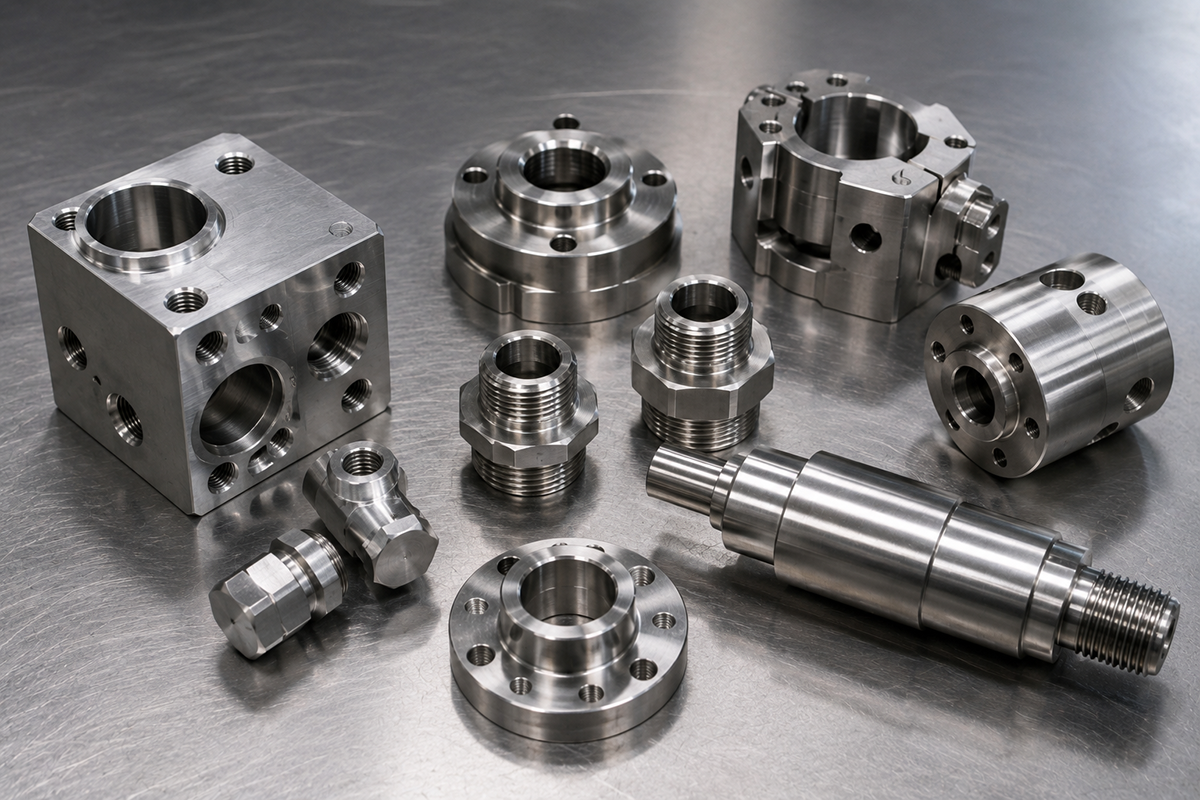
Stainless steel is also preferred when the part must handle higher load, impact, vibration, or long-term mechanical stress. It is heavier than aluminum, but it usually provides better rigidity, wear resistance, and structural durability.
For example, a stainless steel shaft, fitting, mounting block, or load-bearing component may perform more reliably than aluminum if the part is exposed to repeated force or harsh working conditions. In these applications, reducing machining cost should not be the only priority. Long-term reliability and failure prevention are more important.
Choose Stainless Steel for Cleanability and Hygiene
Stainless steel is widely used in food, medical, and laboratory applications because it can support cleanable surfaces and resist corrosion from repeated washing or cleaning chemicals. Surface finishing options such as passivation, polishing, brushing, and electropolishing can improve corrosion resistance, cleanliness, or appearance depending on the application.
However, these finishing steps should be specified clearly before quoting because they can affect cost and lead time.
Machining Trade-Offs Buyers Should Expect
Stainless steel is more difficult to machine than aluminum. It creates more heat, increases tool wear, and usually requires slower cutting speeds. Some grades can also work-harden if machining conditions are not controlled properly. As a result, stainless steel CNC parts often cost more and may require longer production time.
This does not make stainless steel a poor choice. It simply means the material should be selected for a clear performance reason. If corrosion resistance, strength, hygiene, or durability matters, stainless steel may be worth the added machining cost.
For buyers who need a more detailed breakdown of grade selection and machining challenges, the article on stainless steel CNC machining explains common grades, tooling issues, finishing options, and practical cost-control methods.
Cost, Strength, and Weight Trade-Offs
Cost is one of the main reasons buyers compare aluminum vs stainless steel machining, but the decision should not be based on material price alone. The total cost of a CNC machined part depends on raw material cost, machining speed, tool wear, part geometry, tolerance requirements, finishing, inspection, and lead time. Aluminum and stainless steel behave very differently in these areas, so the cheapest option depends on the application.
Aluminum Usually Reduces Machining Cost
Aluminum is generally more cost-efficient to machine because it cuts faster and causes less tool wear. Common grades such as 6061 are widely available, easy to machine, and suitable for many custom parts. This often makes aluminum the better option for prototypes, small batches, lightweight brackets, housings, fixtures, and general industrial components.
Aluminum can reduce cost in several ways:
- Faster cutting speeds
- Shorter cycle times
- Lower tool wear
- Easier chip evacuation
- Lower part weight
- Good surface finish with less machining effort
For buyers working with tight development schedules, aluminum can also help shorten lead time because common stock is usually easier to source and machining is faster. If the part does not require stainless steel’s higher corrosion resistance or strength, aluminum is often the more efficient choice.
Stainless Steel Costs More but Provides Greater Durability
Stainless steel usually increases machining cost because it is harder and tougher to cut. It generates more heat, requires slower cutting speeds, and wears tools faster. A stainless steel part may also require more careful coolant control, stronger workholding, and additional finishing or inspection.
However, the higher machining cost can be justified when the application requires:
- Higher mechanical strength
- Better corrosion resistance
- Longer service life
- Improved durability under load
- Reliable performance in wet or chemical environments
For example, a stainless steel fitting used in a washdown environment may cost more to machine than an aluminum version, but it may last longer and reduce replacement risk. In that case, stainless steel can be more economical over the full service life of the part.
Weight vs Strength Decision
The weight difference between aluminum and stainless steel is significant. Aluminum is much lighter, which makes it attractive for moving assemblies, automotive parts, robotics, aerospace-related prototypes, and portable equipment. If lower weight improves system performance, aluminum should usually be considered first.
Stainless steel is heavier, but it offers better strength and rigidity. This makes it more suitable for components where durability and stiffness matter more than weight reduction. Industrial fixtures, shafts, supports, fittings, and heavy-duty mounting components may benefit from stainless steel when the application requires higher load capacity.
How to Think About Total Cost
A practical cost comparison should include both manufacturing cost and long-term performance. Aluminum may be cheaper to machine, but it may not be the best choice if the part fails early due to corrosion, wear, or insufficient strength. Stainless steel may be more expensive upfront, but it may reduce maintenance or replacement cost in harsh environments.
For buyers comparing material pricing, the article on CNC machining cost factors explains how material choice, tolerance, geometry, surface finish, quantity, and lead time affect the final quote. The most practical material is the one that meets the functional requirement without adding unnecessary cost or risk.
Corrosion Resistance and Operating Environment
Operating environment is one of the most important factors in the decision between aluminum vs stainless steel machining. A part that works well in a clean indoor assembly may not perform reliably in outdoor, wet, chemical, marine, or washdown conditions. For buyers, material selection should always consider where the part will be used, what it will contact, and how long it is expected to remain stable in service.
Aluminum and stainless steel both offer corrosion resistance, but they behave differently. Aluminum naturally forms a thin oxide layer that provides basic protection in many environments. Stainless steel forms a chromium-rich passive layer that generally provides stronger corrosion resistance, especially in harsher or more demanding conditions. The right choice depends on whether the part needs general environmental resistance or stronger long-term protection.
When Aluminum Corrosion Resistance Is Enough
Aluminum performs well in many indoor, controlled, and lightly exposed environments. For machine housings, robotics brackets, electronics enclosures, lightweight panels, and general industrial components, aluminum often provides enough corrosion resistance, especially when combined with anodizing or powder coating.
Anodizing is a common finish for aluminum CNC machined parts because it improves surface durability, appearance, and corrosion resistance. This makes aluminum suitable for visible components and parts exposed to moderate handling or environmental exposure.
Aluminum is often suitable when:
- The part is used indoors or in a controlled environment
- Weight reduction is important
- The part needs a clean anodized finish
- Exposure to chemicals or salt is limited
- Cost and lead time are important
However, untreated aluminum may not be the best choice for saltwater, strong chemicals, or highly abrasive environments. In those cases, surface treatment or another material should be evaluated.
When Stainless Steel Is Safer
Stainless steel is usually the better choice when corrosion resistance is critical to part performance. If the component will be exposed to moisture, cleaning agents, salt, chemicals, outdoor weather, or frequent washdown, stainless steel provides stronger long-term protection than aluminum in many applications.
304 stainless steel is often suitable for general industrial corrosion resistance. 316 stainless steel is preferred when the part faces saltwater, marine exposure, chemical contact, food-processing environments, or harsher cleaning conditions.
Stainless steel is commonly selected for:
- Outdoor equipment components
- Marine and salt-exposed parts
- Food-processing machinery
- Medical and laboratory fixtures
- Chemical handling components
- Washdown industrial equipment
Avoid Over-Specifying Corrosion Resistance
A common mistake is choosing stainless steel automatically when the application does not require it. For example, a dry indoor mounting plate may not need 316 stainless steel. Aluminum or 304 stainless steel may be sufficient depending on strength and environment. Over-specifying corrosion resistance can increase machining cost, material cost, and lead time without improving real performance.
On the other hand, choosing aluminum only to reduce cost can create long-term problems if the part operates in a wet, chemical, or outdoor environment. Corrosion-related failure can cost more than the initial material savings.
Practical Environment-Based Decision
A simple decision rule is to choose aluminum when the environment is controlled and weight or cost matters. Choose stainless steel when the environment is corrosive and durability matters more than machining efficiency. If the environment is uncertain, buyers should provide application details during the RFQ stage so the supplier can recommend the most practical material and finish combination.
For broader selection guidance, the article on how to choose CNC machining materials can help compare material performance based on environment, strength, cost, and application requirements.
Surface Finish and Post-Processing Options
Surface finish is another important factor when choosing between aluminum and stainless steel. The material affects not only machining performance, but also the appearance, corrosion resistance, wear behavior, and final usability of the part. For many custom CNC projects, the finish is not just cosmetic. It can influence assembly, cleaning, durability, and how the part performs in its final environment.
Aluminum and stainless steel both support multiple finishing options, but the best finish depends on the material and application. Aluminum is often chosen when anodizing, color finish, or lightweight visual parts are needed. Stainless steel is often chosen when polishing, passivation, brushing, or clean corrosion-resistant surfaces are required.
Common Surface Finishes for Aluminum
Aluminum is widely used for machined parts that require a clean, attractive, and protective finish. Because aluminum machines well, it can often achieve a smooth surface directly from CNC machining. Additional finishing can improve appearance, corrosion resistance, and surface durability.
Common aluminum finishing options include:
- Anodizing: improves corrosion resistance, surface hardness, and appearance. It is commonly used for brackets, housings, enclosures, and visible components.
- Bead blasting: creates a uniform matte texture before anodizing or as a standalone visual finish.
- Powder coating: provides thicker color coating and surface protection for industrial or outdoor parts.
- Chemical conversion coating: helps improve corrosion resistance while maintaining electrical conductivity in some applications.
- Polishing: used when a smoother or more reflective surface is required.
Aluminum is a strong choice when the part needs a clean appearance, color options, or a lightweight finished surface. However, buyers should confirm whether tight tolerances apply before or after finishing, because anodizing and coating can slightly affect final dimensions.
Common Surface Finishes for Stainless Steel
Stainless steel is usually selected when durability, corrosion resistance, and cleanability matter. Its surface finish options are often chosen for functional performance rather than color appearance.
Common stainless steel finishing options include:
- Passivation: improves corrosion resistance by removing surface contamination and supporting the passive protective layer.
- Polishing: creates smoother surfaces for visual, hygienic, or cleaning requirements.
- Brushing: provides a consistent directional surface texture for visible stainless components.
- Bead blasting: creates a uniform matte finish and can reduce visible machining marks.
- Electropolishing: improves surface smoothness and is often used for high-cleanliness or corrosion-sensitive applications.
For food, medical, laboratory, marine, or washdown applications, stainless steel finishing requirements should be clearly defined in the drawing or RFQ. A simple “stainless steel part” description may not be enough if the final surface must meet corrosion, cleaning, or appearance expectations.
How Finish Affects Cost and Lead Time
Finishing can significantly affect the final price and delivery schedule. A raw machined aluminum part may be fast and economical, but anodizing, blasting, polishing, or coating can add processing time. Stainless steel parts may require passivation or polishing after machining, which can also increase cost and lead time.
Buyers should also consider how finishing interacts with part geometry. Deep pockets, sharp corners, threaded holes, blind holes, thin walls, and tight-fitting surfaces may require extra planning before finishing. Some finishes may build up on the surface, while others may slightly remove material. This matters when the part has precise assembly dimensions.
Choosing Finish Based on Real Use
The best finish is the one that supports the part’s function. If the goal is lightweight appearance and moderate protection, anodized aluminum may be the best choice. If the goal is corrosion resistance, cleaning, and long-term durability, passivated or polished stainless steel may be more suitable.
For sourcing teams, finish requirements should be included early in the RFQ. This helps the supplier quote the correct process, confirm tolerance impact, and avoid delays caused by unclear post-processing expectations.
Application Examples: Which Material Fits Which Part?
The best way to decide between aluminum and stainless steel is to connect the material choice to the actual part function. A general material comparison is useful, but real projects usually depend on load, environment, weight, finish, cost, and production timing. The same drawing can often be machined from either material, but the better material is the one that supports the part’s real working conditions without unnecessary cost.
Automotive Brackets and Lightweight Mounts
For many automotive brackets, sensor mounts, adapter plates, and lightweight structural components, aluminum is often the better choice. It reduces weight, machines efficiently, and supports anodizing or coating when surface protection is needed. In automotive and mobility-related projects, weight reduction can directly affect performance, fuel efficiency, handling, or assembly convenience.
However, stainless steel may be more suitable if the part is exposed to road salt, moisture, vibration, heavy load, or long-term outdoor conditions. For example, a small aluminum bracket may be cost-effective for an interior assembly, while a stainless steel mounting component may be safer for an exposed underbody or corrosive environment. Buyers working on similar projects can also review automotive CNC parts to understand how CNC machining supports custom brackets, housings, and functional vehicle components.
Machine Shafts, Pins, and Load-Bearing Components
For shafts, pins, bushings, fittings, and load-bearing components, stainless steel is often the stronger choice. These parts may need to resist wear, bending, vibration, impact, or repeated mechanical stress. Aluminum can work for lightweight shafts or positioning parts, but it is not always suitable for heavy-duty mechanical contact.
If the part transfers force, supports load, or operates in a wet or abrasive environment, stainless steel should usually be evaluated first. In some cases, carbon steel or alloy steel may also be better than both aluminum and stainless steel, depending on the strength and wear requirements.
Electronics Enclosures and Instrument Housings
Aluminum is commonly used for electronics enclosures, sensor housings, control boxes, and instrument cases. It is lightweight, easy to machine, visually clean, and suitable for anodizing. Aluminum also provides good thermal conductivity, which can help with heat dissipation in some electronic or equipment applications.
Stainless steel may be used for enclosures when the part needs stronger corrosion resistance, higher durability, or better protection in harsh environments. For indoor or lightweight equipment, aluminum is usually more efficient. For washdown, marine, or chemical exposure, stainless steel may be safer.
Food Equipment, Medical Fixtures, and Laboratory Parts
Stainless steel is usually the better choice for food-processing equipment, medical fixtures, laboratory parts, and cleanable components. These applications often require corrosion resistance, smooth surfaces, cleaning compatibility, and long-term durability. 304 stainless steel is common for many general clean environments, while 316 stainless steel may be selected for stronger corrosion resistance.
Aluminum may still be used for non-contact fixtures, lightweight covers, or equipment frames, but it should be evaluated carefully if cleaning chemicals, moisture, or hygiene requirements are involved.
Robotics, Automation, and Motion Components
Aluminum is often preferred in robotics and automation because weight reduction matters. Lighter parts can reduce motor load, improve movement speed, and make assembly easier. Brackets, plates, grippers, end-effector parts, sensor mounts, and machine vision housings are often good candidates for aluminum machining.
Stainless steel may be used when the part needs higher wear resistance, corrosion resistance, or long-term durability. For example, a lightweight robot arm bracket may work well in aluminum, while a guide component exposed to moisture or repeated contact may perform better in stainless steel.
Outdoor and Marine Components
For outdoor and marine parts, stainless steel is often the safer option, especially when the component is exposed to moisture, salt, cleaning fluids, or changing weather conditions. 316 stainless steel is commonly considered when corrosion resistance is more important than weight or machining cost.
Aluminum can still be used outdoors when properly anodized, coated, or protected, but buyers should confirm whether the environment is mild or aggressive. If the part will be exposed to salt or chemicals, stainless steel may reduce long-term corrosion risk.
Practical Application-Based Rule
As a practical rule, choose aluminum for lightweight, fast-machined, cost-sensitive, and visually finished parts. Choose stainless steel for corrosion-resistant, high-strength, cleanable, and long-life parts. If the application is unclear, the buyer should provide working environment details, load conditions, finishing requirements, and expected quantity during the quote stage so the supplier can recommend the most suitable material.
How to Decide Before Sending an RFQ
Before sending a drawing for quotation, buyers should make the material decision as specific as possible. A CNC supplier can help review manufacturability, but the buyer usually understands the application environment better than anyone else. Clear material information helps the supplier quote accurately, avoid assumptions, and recommend practical alternatives when needed.
When comparing aluminum and stainless steel, the RFQ should not simply say “quote in metal” or “quote in aluminum or stainless steel.” That type of request may lead to a wide price range or incomplete feedback. Instead, the buyer should explain how the part will be used, what performance is required, and whether material selection is fixed or flexible.
Start with the Part Function
The first question is what the part actually needs to do. If the part is a lightweight cover, enclosure, bracket, fixture, or prototype, aluminum may be enough. If the part supports load, contacts fluids, operates outdoors, or needs long service life, stainless steel may be more suitable.
Buyers should define whether the part is mainly used for:
- Mounting or positioning
- Structural support
- Load transfer
- Wear resistance
- Corrosion resistance
- Appearance and surface finish
- Thermal or electrical performance
- Prototype testing or final production
This functional information is often more useful than only providing a drawing. Two parts may look similar but require different materials because they operate in different conditions.
Clarify the Working Environment
The next step is to describe where the part will be used. Indoor equipment, dry assemblies, clean automation systems, outdoor machines, marine exposure, washdown environments, and chemical contact all create different material requirements.
If the part is used indoors with limited exposure, aluminum may be practical and cost-efficient. If the part is exposed to moisture, cleaning chemicals, salt, or outdoor conditions, stainless steel should be considered more seriously.
Useful environment details include:
- Indoor or outdoor use
- Moisture or washdown exposure
- Salt, chemical, or cleaning fluid contact
- Operating temperature
- Vibration or impact
- Expected service life
- Whether the part is visible or hidden after assembly
Confirm Weight and Strength Priorities
If weight matters, aluminum usually has a clear advantage. This is important for robotics, automation, automotive components, portable devices, moving assemblies, and parts installed by hand. Reducing weight may improve performance, reduce stress on other components, and simplify assembly.
If strength, rigidity, or durability is the main priority, stainless steel may be the better option. This is especially true for load-bearing parts, shafts, fittings, clamps, supports, and components exposed to repeated stress.
Buyers should avoid selecting stainless steel only because it sounds stronger. If the part does not need the additional strength, aluminum may reduce cost and lead time without reducing real performance.
Define Surface Finish Requirements
Surface finish should be included in the RFQ because it can affect both cost and manufacturability. Aluminum may require anodizing, bead blasting, powder coating, or conversion coating. Stainless steel may require passivation, polishing, brushing, or electropolishing.
Buyers should specify:
- Raw machined or finished surface
- Color requirements
- Cosmetic surface expectations
- Corrosion protection needs
- Passivation, anodizing, polishing, or coating requirements
- Whether dimensions apply before or after finishing
If the finish is not clearly defined, the supplier may quote only raw machined parts, which can create later price or delivery changes.
Check Tolerance and Geometry
Material selection also affects tolerance control. Aluminum is generally easier to machine and can be efficient for complex shapes, pockets, thin walls, and precision prototypes. Stainless steel can hold tight tolerances as well, but it may require more controlled machining due to heat, cutting resistance, and tool wear.
If the part has thin walls, deep pockets, tight threads, small holes, or critical mating surfaces, the buyer should highlight those features in the drawing. The supplier can then review whether the selected material is practical or whether design adjustments are needed.
Tell the Supplier If Material Is Flexible
One of the most useful RFQ notes is whether the material is fixed or open to suggestion. If the drawing specifies aluminum 6061 but the application needs higher strength, the supplier may recommend 7075 or stainless steel. If the drawing specifies stainless steel but the part is only a dry indoor bracket, aluminum may reduce cost and lead time.
A simple note can help:
- “Material is fixed due to application requirements.”
- “Material can be changed if performance is similar.”
- “Please quote aluminum and stainless steel options.”
- “Please recommend the most cost-effective material for this application.”
For broader RFQ preparation and material comparison, buyers can review CNC machining materials before submitting drawings. Clear material requirements help the supplier quote more accurately and reduce unnecessary back-and-forth communication.
Conclusion
Aluminum vs stainless steel machining is not a decision based only on which material is stronger or cheaper. The right choice depends on how the part will be used, what environment it will face, how much weight matters, what surface finish is required, and whether long-term durability is more important than machining efficiency.
Aluminum is usually the better choice when the project needs lightweight performance, fast machining, lower cost, clean appearance, and flexible finishing options. It is especially suitable for prototypes, brackets, housings, electronics enclosures, robotics parts, automation components, and many low-volume custom parts. When the working environment is controlled and the load requirement is moderate, aluminum can often provide the best balance of cost, speed, and performance.
Stainless steel is usually the better choice when corrosion resistance, strength, durability, hygiene, or harsh environment performance is required. It is more difficult and expensive to machine than aluminum, but it can be the safer material for outdoor components, marine parts, food-processing equipment, medical fixtures, washdown machinery, fittings, shafts, and load-bearing parts.
The best decision starts with the application, not the material name. Buyers should consider whether the part needs weight reduction, corrosion resistance, high strength, cleanability, surface finish, tight tolerances, or long service life. They should also provide drawings, CAD files, material requirements, finish expectations, quantities, and working environment details when requesting a quote.
If the material choice is still uncertain, it is often useful to compare both options during the RFQ stage. A supplier can review geometry, tolerance, finish, quantity, and application requirements to recommend whether aluminum or stainless steel is the more practical option. For custom parts, the most suitable material is the one that meets the performance requirement without adding unnecessary machining cost, weight, or lead time.
If you are preparing a new CNC machining project and need help choosing between aluminum and stainless steel, our team can review your drawings and recommend a practical material option based on part function, operating environment, production quantity, surface finish, and cost target.