Introduction
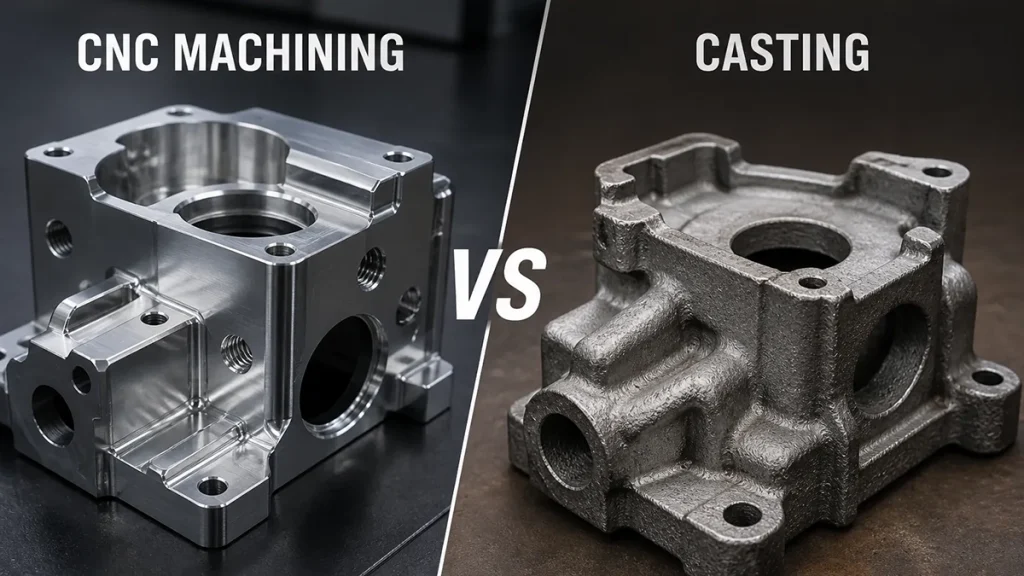
CNC machining vs forging is an important comparison for engineers, sourcing managers, and manufacturers who need metal parts with reliable strength, dimensional accuracy, and long-term performance. Both processes are widely used in industrial manufacturing, but they solve different problems. CNC machining creates finished parts by removing material from solid stock, while forging shapes metal under high pressure to improve strength and material structure before final machining or finishing.
The decision between CNC machining and forging is rarely based on one factor alone. A forged part may provide excellent strength and fatigue resistance, especially for load-bearing components, but it often requires tooling, dies, and secondary machining to achieve final precision. CNC machining, on the other hand, offers strong dimensional control, design flexibility, and faster turnaround for prototypes, low-volume parts, and precision components that do not require forged grain flow.
For functional metal parts, the real question is not simply which process is stronger. The better question is which process fits the part’s application, production volume, geometry, tolerance requirements, material choice, and cost target. A heavy-duty shaft, connecting rod, or structural load-bearing component may benefit from forging. A precision bracket, fixture, housing, adapter, or custom industrial part may be more practical to produce through CNC machining, especially when quantities are low or design changes are still possible.
In many manufacturing workflows, CNC machining and forging are not direct competitors. They are often used together. Forging can create a strong near-net-shape blank, while CNC machining finishes the critical surfaces, holes, threads, flatness, and assembly features. This combination is common when a part requires both improved mechanical strength and precise final dimensions.
This guide compares CNC machining and forging from a practical engineering perspective, focusing on strength, precision, cost, production volume, and real-world use cases. If your project requires custom machined metal parts, reviewing precision CNC machining services can help determine whether direct CNC machining is sufficient or whether a forged blank with secondary machining should be considered.
How CNC Machining and Forging Work
To understand CNC machining vs forging, it is important to first understand how each process forms or finishes a metal part. CNC machining is a subtractive process. Forging is a deformation process. This difference affects material strength, dimensional accuracy, tooling cost, production volume, and how much secondary processing may be required before the part is ready for use.
CNC Machining: Removing Material from Solid Stock
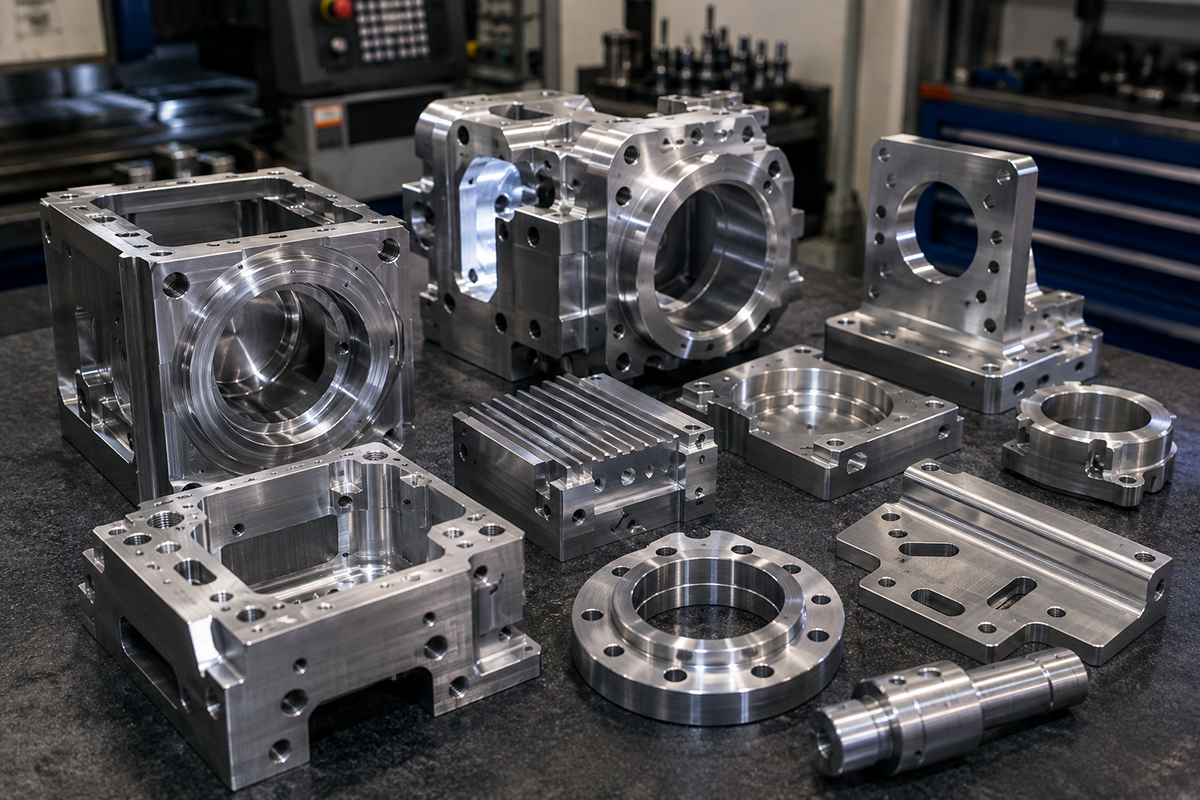
CNC machining starts with a solid piece of material, such as aluminum, stainless steel, carbon steel, alloy steel, brass, copper, or titanium. The material may be supplied as bar stock, plate, billet, or sometimes a pre-formed blank. Computer-controlled cutting tools then remove material to create the final geometry.
This process is highly useful when the part requires precise dimensions, accurate holes, threads, flat surfaces, pockets, slots, or mating features. Because CNC machining is driven by digital toolpaths, it can produce complex features with strong repeatability, especially for prototypes, small batches, and custom components.
Typical CNC machining operations include:
- Milling for pockets, slots, profiles, and flat surfaces
- Turning for shafts, bushings, cylindrical parts, and threaded components
- Drilling, boring, tapping, and reaming for holes and precision features
- Finishing passes for improved surface finish and tolerance control
The main advantage of CNC machining is precision and flexibility. A design can be changed by updating the CAD model and machining program, without creating new forging dies or dedicated forming tools. This makes CNC machining especially practical for custom parts, engineering prototypes, replacement components, low-volume production, and precision industrial parts.
Forging: Shaping Metal Under Pressure
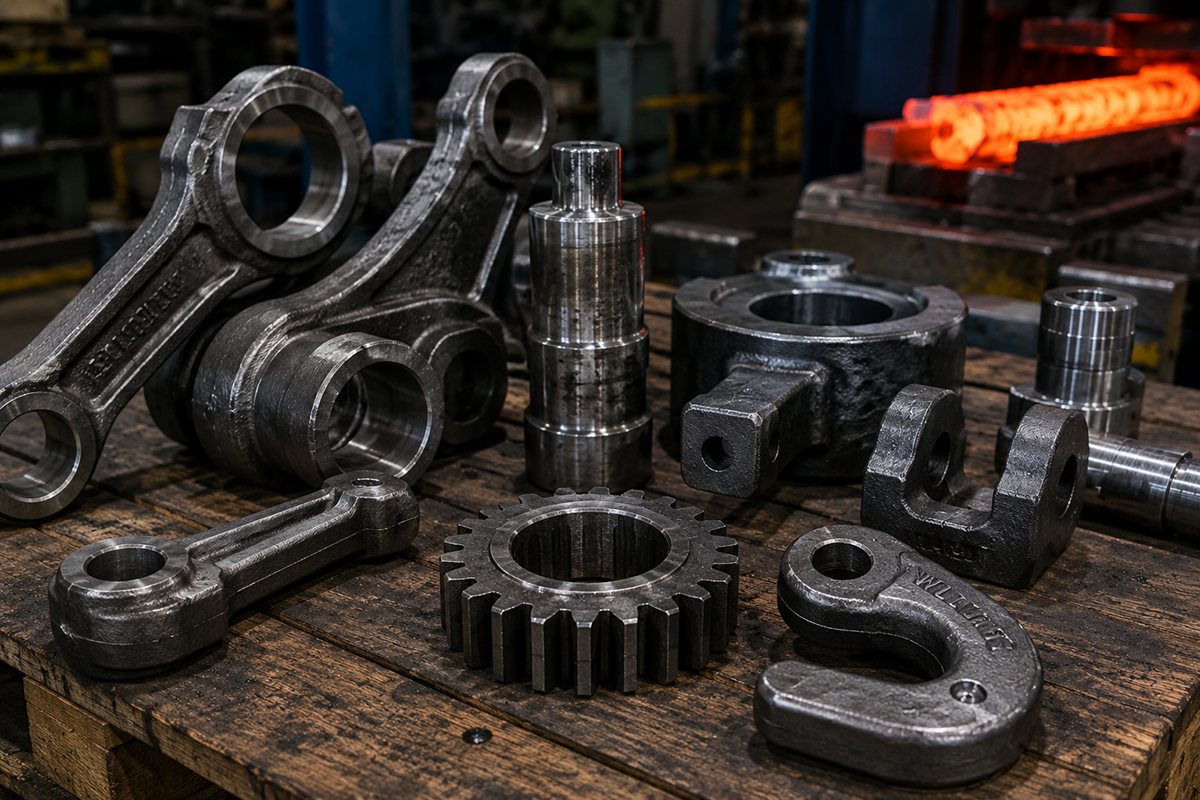
Forging works differently. Instead of cutting material away from a block, forging shapes metal through compressive force. The metal is pressed, hammered, or squeezed into shape, often while heated. This process changes the internal grain structure of the material, which can improve strength, toughness, and fatigue resistance.
Common forging methods include:
- Open-die forging: Metal is shaped between flat or simple dies, often used for large or simple forms.
- Closed-die forging: Metal is pressed into shaped dies to create a more defined near-net shape.
- Cold forging: Metal is formed at or near room temperature, often used for smaller high-strength parts.
- Hot forging: Metal is heated before forming, allowing easier deformation and improved flow.
Forging is widely used when parts must handle heavy loads, impact, vibration, or repeated stress. Examples include crankshafts, connecting rods, gears, shafts, hooks, aircraft fittings, and structural automotive components. These parts benefit from forged grain flow because the material structure can follow the shape of the part more effectively than a simple machined block.
Why Forged Parts Often Still Need CNC Machining
Although forging improves strength, it does not usually produce a finished precision part by itself. Forged parts often require secondary CNC machining to create final dimensions, holes, threads, bearing seats, sealing faces, and smooth surfaces. This is why many high-performance parts are forged first, then machined afterward.
For buyers, the key difference is that CNC machining can often produce finished parts directly, while forging usually creates a strong blank that still needs finishing. The best option depends on whether the project prioritizes strength improvement, dimensional precision, production volume, or design flexibility.
Strength and Material Performance Comparison
Strength is usually the first factor buyers consider when comparing CNC machining vs forging. Forging is often associated with superior mechanical performance because the process reshapes the metal grain structure through compression. CNC machining, by contrast, removes material from existing stock and does not improve the internal grain structure in the same way. However, the practical decision is more nuanced. The best process depends on the required load capacity, fatigue resistance, material grade, geometry, and production volume.
Why Forging Can Improve Strength
During forging, metal is deformed under pressure, causing the grain structure to flow along the shape of the part. This directional grain flow can improve strength, toughness, and fatigue resistance, especially in components exposed to repeated stress, shock loads, or heavy mechanical force.
This is why forging is commonly used for parts such as:
- Crankshafts
- Connecting rods
- Gears and gear blanks
- High-load shafts
- Hooks and lifting components
- Structural automotive and aerospace parts
For these applications, strength is not only about the material grade. It is also about how the internal structure of the material responds to stress. A forged component may perform better under fatigue loading than a part machined directly from standard stock, especially when the forged grain flow is properly aligned with the load path.
Strength of CNC Machined Parts
CNC machined parts can still be very strong when the right material is selected. Machining from aluminum 7075, stainless steel, alloy steel, carbon steel, or titanium can produce reliable components for many industrial applications. The part retains the properties of the original stock material, which may be plate, bar, billet, or forged stock depending on the sourcing route.
For many custom parts, CNC machining provides more than enough strength. Brackets, fixtures, housings, adapters, mounting plates, spacers, and machine components often do not require forged grain flow. Instead, they require accurate dimensions, good material selection, and appropriate tolerance control.
This is where material planning becomes important. A CNC machined part made from the correct alloy may outperform a poorly specified forged part in real use. For buyers comparing material options, reviewing how to choose CNC machining materials can help determine whether the application truly requires forging or whether machined stock is sufficient.
Fatigue Resistance and Load Direction
Forging becomes more valuable when fatigue resistance and load direction are critical. Parts that experience repeated bending, torsion, impact, or cyclic loading may benefit from forged grain flow. This is common in rotating machinery, automotive drivetrain parts, heavy equipment, and aerospace structural applications.
CNC machining is often more suitable when strength requirements are moderate or when precision and geometry matter more than optimized grain flow. If the part is mainly used for positioning, mounting, enclosing, supporting light loads, or connecting components, direct CNC machining may be more practical and cost-effective.
Practical Strength Decision
A useful way to compare strength is to ask whether the part’s failure risk is mainly related to material load capacity or dimensional function. If the part must survive high cyclic stress, forging may be worth considering. If the part must fit accurately, hold threads, align assemblies, or provide precise mounting surfaces, CNC machining may be the more important process.
- Choose forging when grain flow, fatigue resistance, and high-load durability are essential.
- Choose CNC machining when precision, design flexibility, and low-to-medium production volume are more important.
- Use both when a forged blank needs final machining for holes, threads, bearing seats, and mating surfaces.
In many real projects, the strongest solution is not choosing one process over the other. It is selecting the right material route first, then using CNC machining to achieve the final precision required for assembly and function.
Precision, Tolerances, and Surface Finish
Precision is where the comparison of CNC machining vs forging becomes especially important. Forging can create strong metal parts, but it does not usually deliver final precision by itself. CNC machining, on the other hand, is designed to produce controlled dimensions, accurate features, and smoother functional surfaces. For many industrial components, the final performance depends not only on strength, but also on whether the part fits, aligns, seals, rotates, or assembles correctly.
Why CNC Machining Provides Better Dimensional Control
CNC machining uses programmed cutting tools to remove material in a controlled way. This allows the supplier to create accurate holes, threads, flat faces, pockets, slots, bearing seats, and mating surfaces based on drawing requirements. For parts that need reliable assembly fit, CNC machining is often essential.
Depending on material, geometry, machine capability, fixturing, and inspection requirements, CNC machining can achieve tight tolerances suitable for functional industrial parts. This is why the process is widely used for components such as brackets, fixtures, housings, adapters, spacers, shafts, and precision interfaces.
Examples of CNC-controlled features include:
- Threaded holes for assembly
- Bearing seats and shaft fits
- Flat mounting surfaces
- Sealing faces
- Datum surfaces for alignment
- Precisely located holes and slots
These features are difficult to achieve through forging alone. Even when a part begins as a forged blank, CNC machining is commonly used afterward to finish the surfaces and features that determine real functionality.
Forging Tolerance Limitations
Forging is primarily a forming process. Its main value is improving material structure and producing a strong near-net shape, not achieving final dimensional accuracy. Forged parts may have dimensional variation due to die wear, thermal expansion, material flow, cooling behavior, flash formation, and trimming operations.
Closed-die forging can produce parts closer to final shape than open-die forging, but most forged components still require secondary machining for critical areas. Without machining, holes, threads, bearing surfaces, sealing faces, and precision interfaces may not meet the requirements of a finished functional part.
Surface Finish Differences
Surface finish is another key difference. Forged surfaces are usually rougher and may show scale, die marks, flash lines, or surface irregularities. These surfaces may be acceptable for non-critical areas, but they are usually not suitable for sealing, sliding contact, bearing fits, or precise assembly surfaces.
CNC machining provides much better surface finish control because the final surface is created by cutting tools and finishing passes. Tool selection, cutting parameters, coolant, and final machining strategy can be adjusted to meet functional or cosmetic requirements.
When Precision Matters More Than Forged Strength
Not every part needs forged strength, but many functional parts need precision. A machined aluminum fixture, stainless steel adapter, or industrial mounting plate may not experience extreme cyclic stress, but it may require accurate hole locations and flatness. In these cases, CNC machining can be more practical and cost-effective than forging.
If the part’s main challenge is accurate geometry rather than maximum fatigue strength, direct CNC machining is often the better route. If the part needs both high mechanical strength and tight precision, a forged blank followed by CNC machining may be the correct manufacturing strategy.
For buyers evaluating tolerance and cost trade-offs, the article on CNC machining cost factors can help explain how tighter tolerances, surface finish, material choice, and inspection requirements affect final pricing.
Cost, Tooling, and Production Volume
Cost is one of the most practical factors when comparing CNC machining vs forging. Both processes can be cost-effective, but their cost structures are very different. CNC machining usually has lower upfront cost and greater flexibility, while forging often requires tooling, dies, and higher initial preparation before production can begin. The better option depends on quantity, design stability, material requirements, and whether the part truly benefits from forged strength.
CNC Machining Cost Structure
CNC machining cost is mainly driven by material, programming, setup, machine time, tooling, tolerance requirements, surface finish, and inspection. For prototypes, custom parts, and low-to-medium production runs, CNC machining is often more practical because it does not require forging dies or forming tools. Once the CAD file, drawing, material, and tolerance requirements are confirmed, the supplier can begin machining from standard stock or prepared material.
This makes CNC machining useful when buyers need:
- One-off prototypes
- Engineering samples
- Low-volume custom parts
- Replacement components
- Precision brackets, housings, and fixtures
- Designs that may still change
The main limitation is that CNC machining remains a machine-time-driven process. Every part must be cut, handled, inspected, and finished. As production volume increases, unit cost can decrease because setup and programming are spread across more parts, but CNC machining usually does not reach the lowest unit cost for very high-volume simple parts.
Forging Cost Structure
Forging cost includes material, heating, forming, die design, die manufacturing, trimming, heat treatment, inspection, and usually secondary CNC machining. Closed-die forging in particular requires dedicated tooling. This tooling cost can be significant, especially for complex shapes or high-strength materials.
Because of this upfront cost, forging is usually less attractive for very small quantities unless the part’s strength requirements are critical. However, once the forging dies are made and production volume is high enough, the cost per forged blank can become efficient. This is why forging is common for high-volume or high-performance components such as automotive drivetrain parts, industrial shafts, connecting rods, and load-bearing structural parts.
Tooling Risk and Design Stability
Tooling risk is an important consideration. If the design changes after forging dies are made, modifications can be expensive and time-consuming. CNC machining is more flexible because design changes can often be handled by updating the CAD file and machining program.
This makes CNC machining better when the project is still in development, when quantities are uncertain, or when buyers need a practical production route before committing to tooling. Forging becomes more practical when the design is stable, expected volume is high, and the mechanical performance benefit is clear.
How Production Volume Affects the Decision
A practical volume comparison usually follows this logic:
- Prototype or one-off parts: CNC machining is usually more practical because tooling is not required.
- Low-to-medium volume custom parts: CNC machining often remains more flexible and cost-effective.
- High-volume strength-critical parts: Forging may become more economical if the design is stable and tooling cost can be spread across many parts.
- Forged precision parts: Forging may create the blank, but CNC machining is usually needed for final dimensions.
For buyers, the key is to compare total project cost, not only unit cost. A forged blank may seem efficient at volume, but tooling, lead time, design risk, and secondary machining must be included. A CNC machined part may cost more per unit at scale, but it offers greater flexibility and lower upfront risk for custom or lower-volume projects.
If your project is still in prototype, bridge production, or low-volume repeat production, the article on CNC machining for prototypes vs production can help clarify when direct machining remains the better route before tooling-based manufacturing is considered.

Real-World Applications: When CNC Machining or Forging Fits Better
Real application context is essential when comparing CNC machining vs forging. A process that works well for one metal part may be inefficient or unnecessary for another. Forging is valuable when material strength, fatigue resistance, and grain flow are critical. CNC machining is often better when the part requires precision, lower quantity, design flexibility, or custom geometry that does not justify forging dies.
High-Load Mechanical Components
Forging is commonly used for parts that must handle high mechanical load, shock, or repeated stress. Examples include crankshafts, connecting rods, heavy-duty shafts, lifting hooks, gears, and structural automotive or aerospace components. These parts benefit from forged grain structure because the material flow can improve toughness and fatigue resistance.
However, even these forged parts often require CNC machining after forming. Bearing journals, threaded areas, mounting holes, flat faces, and precision interfaces must be machined to final dimensions. In these cases, forging provides the strength foundation, while CNC machining provides the final functional accuracy.
Precision Brackets, Fixtures, and Housings
CNC machining is usually more practical for precision brackets, fixtures, housings, adapters, spacers, and custom industrial components. These parts may need tight hole locations, flat mounting surfaces, threaded features, or clean assembly interfaces, but they may not experience the kind of extreme cyclic loads that require forging.
For example, a machined aluminum or stainless steel bracket used in industrial equipment may need accurate dimensions and stable material performance, but not forged grain flow. CNC machining can produce these parts directly from suitable stock material without tooling investment. This makes the process useful for prototypes, low-volume production, replacement parts, and repeat custom orders.
Automotive and Machinery Applications
Automotive and machinery projects often use both processes depending on the component. Forging may be used for drivetrain parts, suspension components, and high-load structural items. CNC machining may be used for custom brackets, housings, adapters, fixture plates, and precision mounts.
For parts where dimensional fit and assembly accuracy matter more than maximum forged strength, CNC machining may be the more cost-effective choice. This is especially true for low-volume or custom automotive parts. If the part is related to automotive custom manufacturing, linking to automotive CNC parts can help support the application context naturally.
Industrial Equipment and Replacement Parts
Industrial equipment often requires replacement parts, machine components, mounting plates, spacers, and custom fixtures in relatively low quantities. These parts are commonly better suited to CNC machining because buyers need accurate parts quickly without investing in forging dies.
Forging may be considered if the component is heavily loaded, repeatedly stressed, or used in a safety-critical mechanical system. But for many custom industrial applications, machining from suitable stock material provides enough strength with far better flexibility.
How to Think About Application Fit
A practical way to evaluate application fit is to separate parts into three groups:
- Strength-critical high-volume parts: Forging may be suitable, followed by CNC machining for final precision.
- Precision custom parts: CNC machining is usually more practical, especially in low-to-medium quantities.
- Hybrid parts: Forged blanks can be CNC machined when both strength and final accuracy are required.
For buyers, the decision should be based on functional risk. If failure is driven mainly by fatigue, impact, or heavy load, forging may be worth evaluating. If performance depends mainly on accurate geometry, assembly fit, and controlled tolerances, CNC machining may be the stronger manufacturing choice.
How to Decide Between CNC Machining and Forging
Choosing between CNC machining vs forging should be based on the part’s real mechanical requirements, production volume, tolerance needs, and cost structure. In many cases, buyers do not need to think of these processes as direct competitors. CNC machining is often the right choice for custom precision parts, prototypes, and low-to-medium production. Forging becomes more relevant when the part must handle heavy load, repeated stress, or high-volume strength-critical production.
The most practical approach is to start with the part’s function. If the part mainly needs accurate geometry, clean surfaces, holes, threads, slots, and repeatable assembly fit, CNC machining may be sufficient. If the part’s performance depends heavily on internal grain flow, fatigue strength, and high-impact durability, forging may be worth evaluating. If both strength and precision are required, the best solution may be a forged blank followed by CNC machining.
Choose CNC Machining When:
- The part requires tight tolerances, holes, threads, or precision mating surfaces
- The order quantity is low to medium
- The design is still changing or may need future revisions
- The part can meet strength requirements using standard stock material
- Fast turnaround is more important than forging tooling investment
- The project involves prototypes, replacement parts, fixtures, housings, brackets, or custom industrial components
CNC machining is usually the safer route when flexibility matters. It allows buyers to test designs, change features, order practical quantities, and avoid the cost and lead time of forging dies. This is especially useful for engineering teams working on prototypes, bridge production, and repeat custom parts.
Choose Forging When:
- The part must handle high load, shock, impact, or cyclic stress
- Fatigue resistance is a major performance requirement
- The part benefits from directional grain flow
- The design is stable enough to justify tooling
- Production volume is high enough to spread die cost
- The component is safety-critical or strength-critical
Forging is often more suitable for high-performance mechanical components such as shafts, connecting rods, gears, hooks, drivetrain parts, and structural components exposed to severe load conditions. However, forged parts often still require CNC machining to achieve final dimensions and functional surfaces.
Use Both Processes When Needed
Some projects require both forging and CNC machining. This is common when a component needs forged strength but also requires precise finished features. In this workflow, forging creates the near-net shape and improves material structure, while CNC machining finishes the critical areas.
This combined approach may be suitable for:
- High-strength shafts with precision bearing surfaces
- Forged brackets requiring accurate hole locations
- Automotive or machinery components with machined mounting features
- Structural parts requiring both fatigue resistance and final dimensional control
Practical Buyer Checklist
Before choosing a process, buyers should ask:
- Is the part failure risk mainly related to strength or precision?
- Does the part require forged grain flow for fatigue resistance?
- Can standard stock material meet the mechanical requirements?
- How many parts are needed now and in future repeat orders?
- Is the design stable enough to justify forging tooling?
- Will secondary CNC machining still be required after forging?
- Is the project timeline compatible with forging die development?
If the part requires precision, low-to-medium quantities, or design flexibility, CNC machining is often the more practical choice. If the part requires maximum durability under repeated heavy load and production volume supports tooling, forging may be the better starting process. For many real projects, the most reliable answer comes from reviewing the drawing, material, load conditions, and quantity together before deciding.
Conclusion
CNC machining vs forging is not a simple choice between precision and strength. Each process serves a different role in metal part manufacturing. Forging is valuable when a part must handle heavy loads, repeated stress, impact, or fatigue-critical performance. CNC machining is valuable when a part requires dimensional accuracy, flexible production, clean surface finish, holes, threads, slots, and reliable assembly features.
For many custom industrial parts, direct CNC machining is the more practical option. Brackets, housings, fixtures, adapters, spacers, replacement components, and low-volume precision parts often do not require forged grain flow. They require the right material, accurate geometry, controlled tolerances, and reliable production. In these cases, CNC machining can reduce tooling risk, shorten lead time, and support design changes more easily than forging.
Forging becomes more important when the mechanical load is severe enough that material grain flow and fatigue resistance directly affect safety or service life. Components such as shafts, connecting rods, gears, hooks, and drivetrain parts may benefit from forging when production volume and design stability justify the tooling investment. Even then, CNC machining is usually still needed to finish precision features after forging.
The best manufacturing decision should be based on the full project context: material grade, load direction, fatigue requirements, tolerance needs, surface finish, order quantity, tooling budget, and expected repeat demand. A forged part may be stronger in the right application, but unnecessary forging can add cost and lead time. A machined part may be faster and more flexible, but it must still meet the mechanical requirements of the application.
If your project involves custom metal parts and you are unsure whether direct CNC machining is sufficient or whether forging should be considered, the first step is to review the drawing, material, load conditions, tolerance requirements, and quantity together. A practical manufacturing review can help determine whether CNC machining, forging plus machining, or another process offers the best balance of strength, precision, cost, and lead time.