Introduction
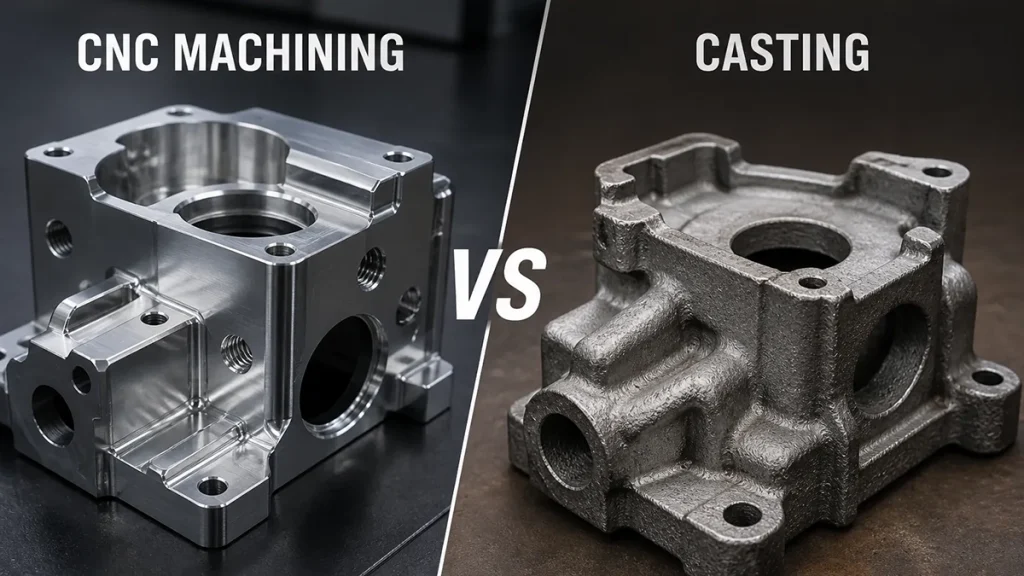
Brass CNC machining is widely used for precision components that require excellent machinability, clean threads, dimensional consistency, good surface finish, and reliable performance in functional assemblies. Compared with materials such as aluminum, stainless steel, and titanium, brass is often selected for smaller precision parts where detail, repeatability, conductivity, and smooth machining behavior are more important than maximum strength or lightweight performance.
For buyers in North America, Europe, and other overseas markets sourcing custom brass machined parts, brass is commonly considered for fittings, connectors, bushings, valve components, inserts, nozzles, electrical parts, and small turned components. These parts often require accurate threads, tight mating features, clean internal holes, and stable production quality across small or medium batches.
Brass is not always the cheapest raw material, but it can be highly efficient to machine. Its excellent machinability can reduce cycle time, lower tool wear, improve surface finish, and support repeatable precision. This is one reason brass is frequently used for CNC turning, milling, drilling, threading, and small-part production.
This guide explains why brass is ideal for precision CNC machined components, which grades are commonly used, what affects cost, where brass performs best, and what buyers should prepare before requesting a quote. If your project requires custom fittings, threaded parts, connectors, inserts, or precision components, working with experienced custom CNC machining services can help confirm whether brass is the right material for your design, tolerance, finish, and production quantity.
Why Brass Is Popular for CNC Machined Components
Brass is popular for CNC machined components because it offers a practical balance of machinability, precision, surface quality, conductivity, and corrosion resistance. For many small and medium-sized functional parts, brass can be easier to machine than stainless steel and more suitable than aluminum when threads, fittings, sealing surfaces, or electrical performance are important.
Unlike materials that are selected mainly for strength or low weight, brass is often selected for manufacturing stability. It machines cleanly, supports accurate small features, and can produce high-quality threads and smooth surfaces. This makes it especially useful for parts where dimensional consistency matters across repeated batches.
Excellent Machinability
One of the biggest reasons buyers choose brass is its excellent machinability. Brass cuts cleanly, produces manageable chips, and usually causes less tool wear than tougher materials such as stainless steel or titanium. This allows efficient turning, milling, drilling, and threading, especially for small precision parts.
For CNC suppliers, good machinability can help improve cycle time and process stability. For buyers, it can support more consistent pricing, better repeatability, and lower risk when parts include small holes, fine threads, or detailed features.
Stable Dimensions for Precision Parts
Brass is suitable for precision components because it can hold dimensions reliably when the design and process are properly controlled. It is often used for fittings, bushings, inserts, nozzles, connectors, valve parts, and small turned components that require accurate mating surfaces or repeatable assembly performance.
For parts that need clean threaded features, stable hole sizes, or tight fit with other components, brass can be a practical material choice. It is especially useful when the part must be manufactured repeatedly with consistent results.
Clean Threads and Detailed Features
Many brass parts include internal or external threads, small holes, grooves, shoulders, knurled areas, or sealing features. Brass is well suited to these details because it machines cleanly and supports sharp, accurate features when the correct tooling and cutting parameters are used.
This is one reason brass is common in fittings, connectors, valve bodies, inserts, and instrument components. The material allows suppliers to create reliable threads and precise features without the same level of machining difficulty found in harder materials.
Good Surface Finish
Brass can achieve a clean, attractive surface finish directly from CNC machining. Depending on the application, brass parts may be left as-machined, polished, plated, brushed, or treated with other surface finishes. For visible components, the natural color of brass can also provide a distinctive appearance.
For functional components, surface finish is not only cosmetic. Smooth surfaces can improve assembly, sealing, handling, and contact performance. This matters for fittings, fluid control parts, connectors, and precision mechanical components.
Conductivity and Functional Performance
Brass provides useful electrical and thermal conductivity compared with many stainless steels and plastics. This makes it suitable for electrical connectors, terminals, sensor-related parts, contact components, and certain equipment fittings.
It also offers moderate corrosion resistance in many environments. While brass is not suitable for every aggressive chemical or marine condition, it performs well in many indoor, industrial, plumbing, and instrument applications.
Practical Material Choice for Repeat Production
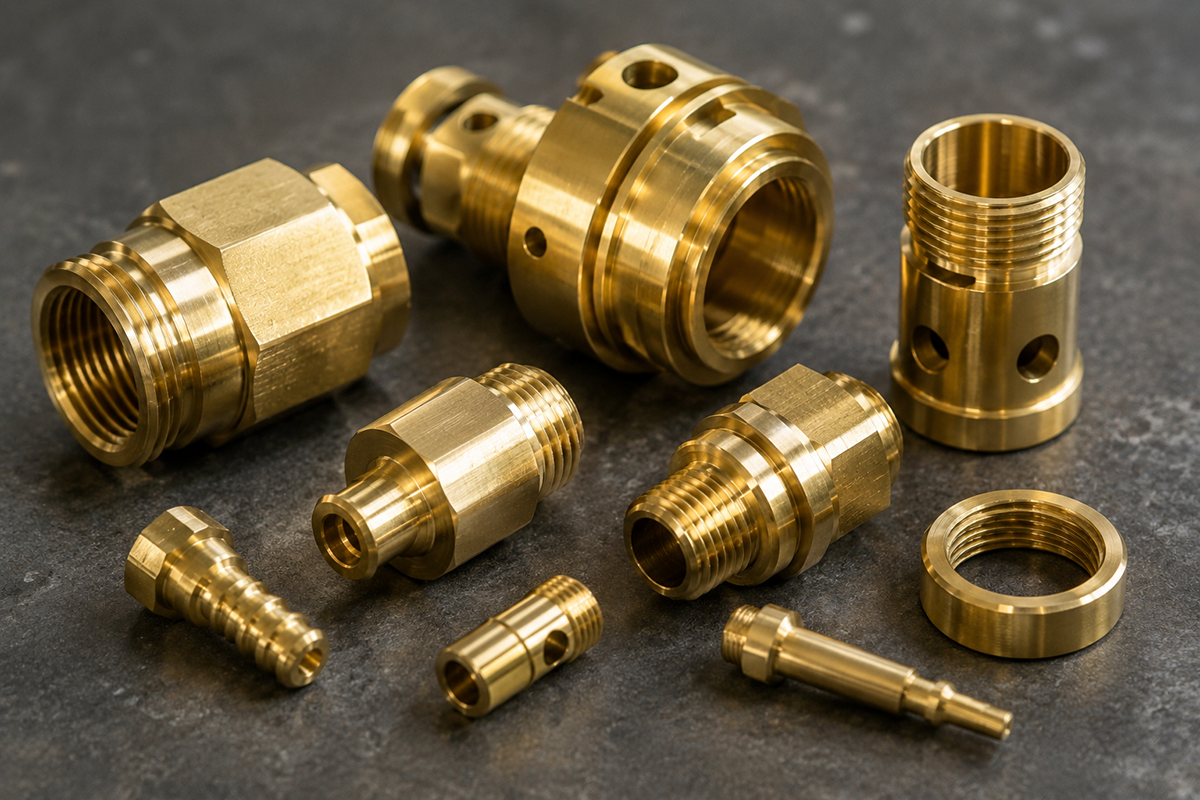
For buyers sourcing repeated batches of precision components, brass can be attractive because it supports stable machining and consistent part quality. When the design includes threads, fittings, or small turned features, brass may reduce manufacturing difficulty compared with harder materials.
Before choosing brass, buyers should still compare it with other CNC machining materials based on strength, corrosion exposure, cost, surface finish, and assembly requirements. Brass is ideal when its machinability and precision advantages match the real function of the part.
Key Advantages of Brass CNC Machining
The main advantage of brass CNC machining is that the material supports accurate, repeatable, and efficient production of precision components. For buyers who need small fittings, threaded inserts, connectors, bushings, valve parts, or electrical components, brass often provides a strong balance between machining efficiency and functional performance.
Brass is not selected because it is the strongest or lightest material. It is selected because it machines cleanly, holds fine details well, supports reliable threads, and can deliver consistent quality across repeated batches. These characteristics make brass especially useful for precision components where small dimensional changes can affect assembly, sealing, or electrical contact.
High Machinability
Brass is one of the easier metals to machine compared with stainless steel, titanium, and many harder alloys. It can usually be cut at efficient speeds, produces clean chips, and places less stress on cutting tools. This helps reduce machining difficulty and supports stable production.
For buyers, high machinability can mean shorter lead times, better part consistency, and more predictable pricing. It is especially helpful when the part includes repeated small features such as drilled holes, threads, grooves, shoulders, or turned diameters.
Good Dimensional Repeatability
Precision brass components often require consistent dimensions across multiple pieces. Brass is well suited for this because it machines in a stable and predictable way when the correct grade and process are used. This is valuable for fittings, inserts, connectors, and turned parts that must assemble smoothly with other components.
Dimensional repeatability is especially important for batch production. A prototype may only need to fit once, but repeat parts must maintain the same thread quality, hole size, shoulder position, and mating surface from one piece to the next.
Excellent Thread Quality
Many brass CNC parts include internal or external threads. Brass is a strong choice for threaded components because it can produce clean thread forms with good surface quality. This is one reason brass is widely used for fittings, inserts, nozzles, connector bodies, and valve-related parts.
Clean threads reduce assembly problems and help improve part reliability. If the thread is used for sealing, adjustment, connection, or repeated assembly, thread quality should be clearly defined in the drawing or RFQ.
Suitable for Small and Detailed Features
Brass supports small features better than many difficult-to-machine materials. It can be used for precision holes, grooves, thin shoulders, fine threads, knurled areas, and compact turned shapes. This makes it useful for parts that require detailed machining but do not need the strength of stainless steel or titanium.
For very small features, buyers should still avoid unnecessary complexity. Extremely small holes, sharp internal corners, or very thin walls can increase cost even when using a machinable material like brass.
Clean Surface Finish
Brass can achieve a smooth and attractive surface directly from CNC machining. Depending on the application, this may reduce the need for heavy post-processing. If a part is visible, brass can also provide a polished or plated appearance that is suitable for instruments, fittings, hardware, or decorative functional components.
For industrial parts, a clean surface finish can improve sealing, assembly, handling, and contact behavior. Buyers should specify whether the finish is cosmetic, functional, or simply standard machined.
Balanced Functional Properties
Brass also offers useful conductivity, moderate corrosion resistance, and good wear behavior for certain applications. This makes it suitable for electrical connectors, terminals, bushings, valve components, and fluid control parts. While it is not the best material for every environment, it works well when machinability, precision, and functional reliability are the main requirements.
These advantages make brass a practical material for many custom precision parts, especially when the design requires clean machining, reliable threads, and repeatable production quality.
Common Brass Grades Used in CNC Machining
Choosing the right brass grade is important because different brass alloys offer different balances of machinability, strength, corrosion resistance, formability, and cost. For buyers, the material specification should not simply say “brass” unless the grade is flexible. A more specific material grade helps the supplier quote accurately and avoid misunderstandings during production.
In CNC machining, brass is often selected because it is easier to cut than many harder metals. However, not every brass grade machines the same way. Some grades are optimized for fast machining and clean chip formation, while others are selected for forming, corrosion resistance, or specific industrial environments.
C360 Brass: Free-Cutting Brass
C360 brass is one of the most common materials for CNC machined brass parts. It is often called free-cutting brass because it offers excellent machinability, clean chip formation, and stable cutting performance. This makes it especially useful for CNC turning, milling, drilling, threading, and high-volume production of small precision components.
C360 brass is commonly used for:
- Threaded fittings
- Inserts and bushings
- Connector bodies
- Valve components
- Nozzles
- Electrical hardware
- Small turned components
For many buyers, C360 is the first grade to consider when the main priorities are efficient machining, clean threads, good surface finish, and repeatable production. It is especially suitable for parts with multiple threaded features, small diameters, grooves, shoulders, and precision mating surfaces.
C260 Brass: Cartridge Brass
C260 brass is often selected when formability is more important than maximum machinability. It is commonly used in applications where the material may need bending, forming, stamping, or a balance of corrosion resistance and mechanical performance.
For CNC machining, C260 can still be used, but it is not usually as efficient to machine as C360. Buyers may choose C260 when the project requires a brass material with good ductility or when the part is connected to a broader manufacturing process that includes forming or shaping.
C260 brass may be suitable for:
- General brass components
- Electrical parts
- Formed or semi-machined components
- Decorative functional parts
- Light-duty industrial components
C464 Naval Brass
C464 naval brass is used when stronger corrosion resistance is needed, especially in marine or moisture-exposed environments. It is often selected for parts that may face saltwater, humidity, or outdoor conditions where standard brass may not provide enough long-term resistance.
C464 is commonly considered for:
- Marine fittings
- Corrosion-resistant hardware
- Pump and valve components
- Outdoor equipment parts
- Fluid handling components
Compared with free-cutting brass, naval brass may require more careful machining review depending on geometry and tolerance requirements. It should be selected for a clear performance reason, not simply because it sounds more durable.
How Buyers Should Choose a Brass Grade
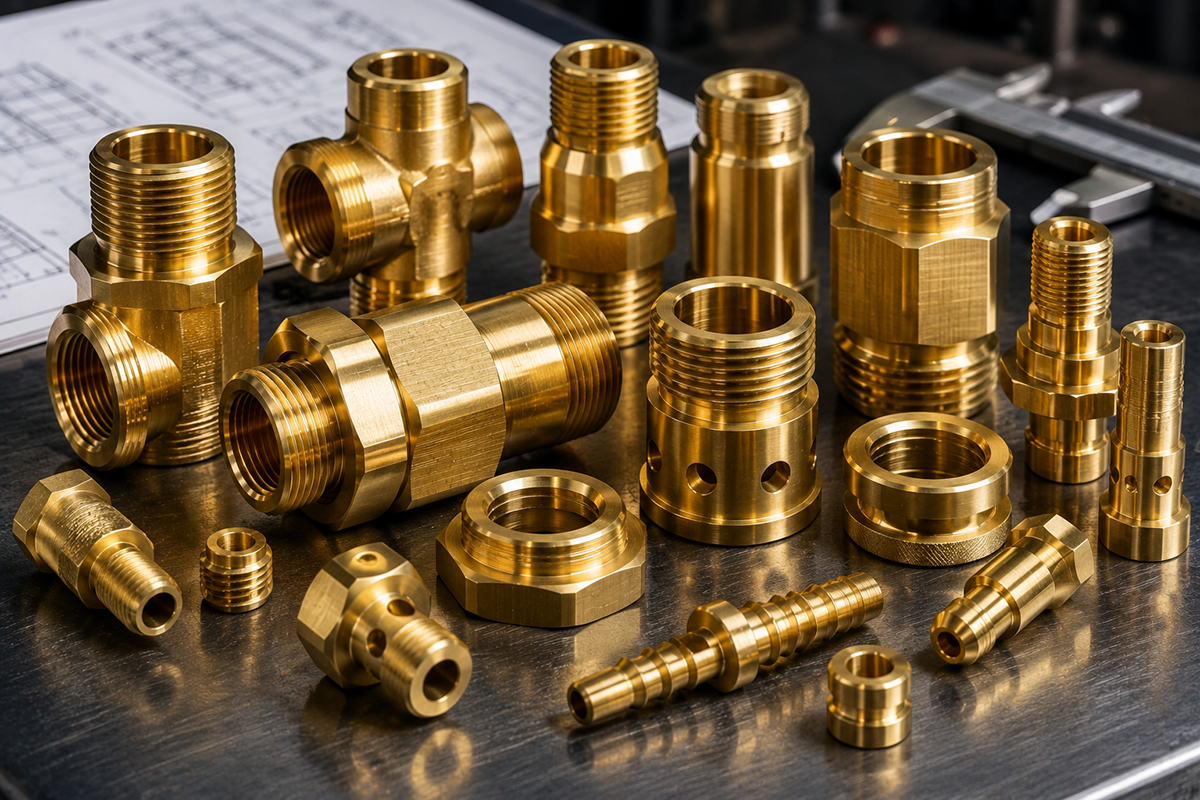
A practical rule is to choose C360 brass when machinability, clean threads, and production efficiency are the main priorities. Choose C260 when formability or general brass performance is more important. Choose C464 when corrosion resistance in marine or moisture-exposed environments is a key requirement.
If the drawing already specifies a brass grade, buyers should confirm whether that grade is fixed or whether equivalents are acceptable. If the grade is flexible, the supplier may recommend a more available or more cost-effective option based on the part geometry, tolerance, finish, and production quantity.
For projects where material choice is still uncertain, reviewing how to choose CNC machining materials can help compare brass with aluminum, stainless steel, copper, plastics, and other material options before requesting a quote.
Precision Considerations for Brass Machined Parts
Brass is well suited for precision components, but good material choice alone does not guarantee accurate finished parts. Precision still depends on the drawing, tolerance strategy, machining method, part geometry, tooling, workholding, and inspection plan. For buyers, the main goal is to define which features are truly critical and avoid adding unnecessary tolerance requirements to non-functional areas.
Many brass machined parts are small, detailed, and assembly-sensitive. They may include threads, holes, shoulders, grooves, sealing surfaces, or tight mating features. These details make brass a strong material choice, but they also require clear specifications before production begins.
Thread Accuracy
Threads are one of the most common precision features in brass parts. Brass is often used for fittings, inserts, connectors, nozzles, and valve components because it can produce clean internal and external threads. However, thread requirements should be clearly defined in the drawing.
Buyers should specify thread size, thread standard, depth, tolerance class, and whether the thread is functional for sealing, fastening, adjustment, or repeated assembly. If the thread must connect with another part, the mating component should also be considered during design review.
Small Holes and Internal Features
Brass can be machined with small holes, slots, grooves, and internal features more easily than many harder metals. This is useful for fluid passages, connector bodies, sensor parts, and instrument components. However, very small holes or deep internal features can still increase machining time and inspection difficulty.
If a small hole is critical for flow, alignment, or assembly, it should be clearly marked. If the feature is only a clearance hole or non-critical passage, a more practical tolerance may help reduce cost and improve production efficiency.
Burr Control
Even though brass machines cleanly, burrs can still appear around holes, threads, cross-drilled features, edges, and small internal details. Burr control is especially important for fittings, valve parts, electrical connectors, and components used in assemblies where loose burrs can affect sealing, contact, or movement.
Buyers should state if burr-free edges, deburring, chamfering, or internal cleaning is required. For fluid control parts, internal burrs can be more important than visible external edges because they may affect flow, sealing, or cleanliness.
Surface Finish Requirements
Brass can achieve a good machined surface finish, but the required finish should still be specified. Some parts only need a standard machined surface, while others may require polishing, plating, brushing, or a cleaner visual finish.
Surface finish may matter for:
- Sealing faces
- Electrical contact areas
- Visible hardware surfaces
- Sliding or wear surfaces
- Valve and fluid control features
- Connector mating areas
If surface finish is functional, it should be included in the drawing. If the finish is only cosmetic, buyers should define which surfaces matter so the supplier does not overprocess hidden or non-critical areas.
Tolerance Strategy
Brass can support accurate machining, but tight tolerances still increase cost when applied too broadly. A practical drawing should separate critical dimensions from standard dimensions. Critical features may include thread position, hole diameter, sealing surfaces, concentricity, flatness, or mating interfaces.
Non-critical surfaces can often use standard machining tolerances. This gives the supplier more flexibility and keeps the cost aligned with the real function of the part.
Inspection Planning
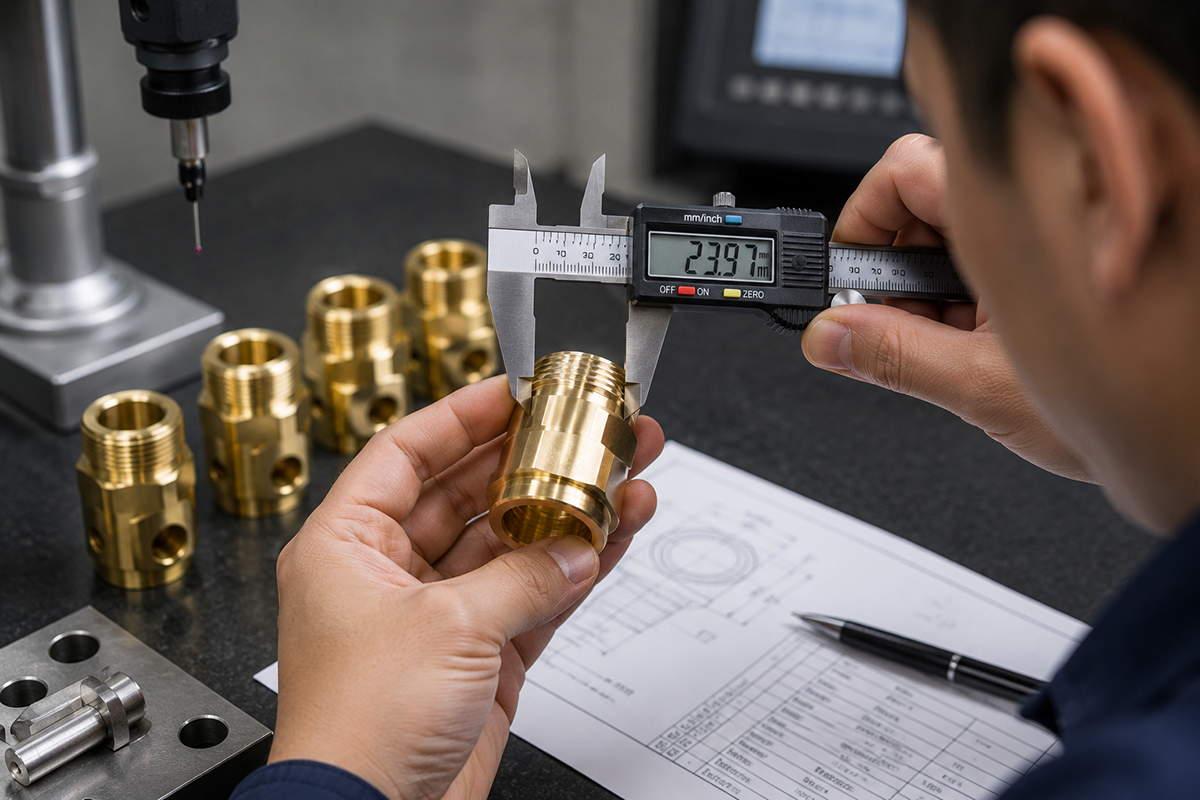
For precision brass components, inspection may include calipers, micrometers, thread gauges, pin gauges, visual inspection, surface checks, or CMM inspection depending on the part complexity. If the part is used in fluid control, electronics, instrumentation, or assembly-critical applications, buyers should define inspection expectations before quoting.
Clear inspection requirements help avoid misunderstandings about what is included in the quote and what documentation will be provided after production. For repeat production, inspection planning also helps maintain batch-to-batch consistency.
Cost Factors in Brass CNC Machining
Cost is an important consideration in brass CNC machining, especially for buyers sourcing fittings, connectors, inserts, bushings, valve parts, and other precision components in repeated batches. Brass is not always the lowest-cost raw material compared with aluminum, but its strong machinability can make the total machining process more efficient. In many projects, brass can reduce cycle time, tool wear, and process difficulty, which helps balance the material cost.
For buyers, the final price of brass machined parts depends on more than the material grade. Part geometry, tolerance requirements, thread complexity, surface finish, production quantity, inspection needs, and deburring requirements all affect the final quote. A simple turned brass fitting may be economical to produce, while a complex brass component with multiple tight features and special finishing can become more expensive.
Material Grade and Availability
The selected brass grade affects both cost and machining behavior. C360 brass is commonly used because it offers excellent machinability and is widely available for many turned and milled components. Its efficient cutting performance can help reduce machining time, especially for parts with threads, holes, and small detailed features.
Other grades, such as C260 or C464, may be selected for formability or corrosion resistance, but they may not machine as efficiently as C360. If the project does not require a specific grade, buyers should ask whether an alternative brass grade can meet the same functional requirements at a better cost or lead time.
Part Geometry
Geometry has a major influence on brass machining cost. Brass is easy to machine compared with many metals, but complex geometry still increases production time. Deep holes, small internal features, thin walls, fine threads, tight grooves, cross-drilled holes, and multiple setups can all add cost.
Cost can increase when the design includes:
- Very small drilled holes
- Deep internal passages
- Multiple internal and external threads
- Thin walls or delicate features
- Complex grooves or undercuts
- Tight concentricity requirements
- Several surfaces requiring precise alignment
Some of these features may be necessary for fittings, connectors, or valve parts. However, when features are not function-critical, simplifying them can reduce machining time and improve repeatability.
Tolerance Requirements
Brass can support accurate machining, but tighter tolerances still require more careful process control and inspection. If every dimension on the drawing is tightly controlled, the supplier must spend more time machining, checking, and managing variation.
Buyers can often reduce cost by applying tight tolerances only to functional areas, such as sealing faces, threaded interfaces, precision holes, mating diameters, and assembly-critical shoulders. Non-critical outside profiles, clearance areas, or cosmetic surfaces may not need the same tolerance level.
Threading and Small Features
Many brass components require threading. Threads are common in fittings, inserts, nozzles, valve components, and connectors. Brass is well suited for clean thread machining, but thread type, depth, tolerance, and inspection requirements still affect cost.
Standard threads are usually easier and more economical than custom thread forms. Very deep internal threads, small thread sizes, or threads located near difficult-to-access features may require special tools or slower machining. If the thread is used for sealing or repeated assembly, the drawing should define the requirement clearly so the supplier can plan the correct process.
Surface Finish and Post-Processing
Brass parts may be used as-machined, polished, plated, brushed, deburred, or cleaned depending on the application. A standard machined finish is usually more economical, while decorative or functional finishing can add cost and lead time.
Plating, polishing, and special cleaning may be required for visible parts, electrical components, fluid control parts, or hardware applications. Buyers should define which surfaces need finishing and which surfaces can remain standard machined. This helps avoid unnecessary processing on hidden or non-critical areas.
Quantity and Batch Size
Quantity has a strong effect on brass machining cost. One-piece prototypes or very small batches may have higher unit prices because programming, setup, tooling, and inspection are spread across fewer parts. For repeat production, brass can be cost-efficient because its machinability supports stable cycle times and consistent quality.
If the design is already validated, combining quantities into a practical batch may reduce unit cost. If the design is still uncertain, a smaller prototype batch may be safer before larger production begins.
Inspection and Quality Requirements
Inspection requirements also affect cost. Simple brass parts may only require standard dimensional checks, while precision fittings, valve parts, connectors, or electrical components may require thread gauges, pin gauges, surface checks, leak-related inspection, or full dimensional reports.
If special inspection is required, it should be included in the RFQ. This helps the supplier quote accurately and prevents later changes after production has started.
For buyers who want to understand how material, tolerance, quantity, finish, and lead time influence pricing, the article on CNC machining cost factors provides a broader cost framework for custom machined parts. In brass projects, cost control usually comes from choosing the right grade, using practical tolerances, standardizing threads, and clearly defining surface and inspection requirements.
Typical Applications of CNC Machined Brass Parts
CNC machined brass parts are widely used when a component needs clean threads, good dimensional repeatability, smooth surface finish, conductivity, or reliable performance in small mechanical assemblies. Brass is especially common in parts that are turned, drilled, threaded, or machined with fine details.
For buyers, brass is often a practical choice when the part is not mainly a structural component, but instead needs precision connection, sealing, electrical contact, fluid control, or stable assembly performance. This makes brass useful across industrial equipment, electronics, plumbing-related systems, instrumentation, automation, and custom mechanical products.
Brass Fittings and Connectors
Fittings and connectors are among the most common applications for brass machining. Brass can produce clean internal and external threads, accurate shoulders, sealing surfaces, and stable mating features. This makes it suitable for threaded adapters, hose fittings, connector bodies, coupling parts, and small assembly components.
For these parts, thread accuracy and burr control are often more important than maximum strength. Buyers should specify thread standards, sealing requirements, surface finish, and inspection expectations clearly before production.
Valve Components and Fluid Control Parts
Brass is frequently used for valve bodies, nozzles, seats, stems, flow control components, and small fluid handling parts. Its machinability allows precise internal passages, threads, grooves, and sealing surfaces. Its moderate corrosion resistance also works well in many water, air, and industrial fluid applications.
For fluid control parts, internal cleanliness is important. Burrs, chips, or rough internal surfaces can affect flow, sealing, or assembly. Buyers should clearly define whether deburring, cleaning, or specific surface finish requirements are needed.
Bushings, Inserts, and Spacers
Brass is also used for bushings, inserts, sleeves, spacers, and small wear-related components. These parts often require stable dimensions, smooth surfaces, and reliable assembly fit. Brass can provide good machinability and suitable wear behavior for light to moderate-duty applications.
Threaded brass inserts are common in plastic assemblies, electronics housings, and equipment parts. In these applications, the insert must maintain clean threads and consistent dimensions so it can be pressed, molded, or assembled reliably.
Electrical and Electronic Components
Because brass offers useful electrical conductivity and good machinability, it is commonly used for terminals, contacts, connector pins, sensor housings, electrical hardware, and small conductive parts. While copper provides higher conductivity, brass may be easier to machine and stronger for certain connector or hardware applications.
For electrical parts, buyers should define conductivity requirements, plating needs, contact surfaces, and tolerance requirements. Plating may be required for corrosion protection, solderability, appearance, or improved contact performance.
Instrument and Precision Hardware Parts
Brass is often used in instruments, gauges, measurement devices, and precision hardware because it can be machined into detailed shapes with clean surfaces. Small turned components, threaded knobs, sleeves, adapters, and fittings are common examples.
In these applications, surface finish and dimensional consistency may be as important as material strength. Brass allows manufacturers to produce detailed components with good repeatability, especially when the part design is optimized for turning or milling.
Decorative Functional Components
Some brass parts are both functional and visible. The natural color of brass, along with polishing or plating options, makes it suitable for hardware, visible fittings, custom knobs, instrument parts, and premium mechanical components.
However, if appearance is important, buyers should define cosmetic surface expectations clearly. A standard machined brass surface may not match a polished or plated finish. Cosmetic requirements should be separated from functional tolerance requirements during the RFQ stage.
Small Turned Components
Brass is especially suitable for small turned components because it machines efficiently and supports clean cylindrical features, threads, grooves, shoulders, and drilled holes. CNC turning can be highly efficient for repeat brass parts such as pins, sleeves, connectors, adapters, bushings, and threaded fittings.
When the design is stable and quantity is suitable, brass turning parts can often be produced with strong repeatability and competitive unit cost. Buyers should provide drawings that clearly define thread details, diameters, lengths, chamfers, and critical mating surfaces.
Application-Based Selection Rule
A practical rule is to choose brass when the part needs precision machining, clean threads, good surface quality, moderate corrosion resistance, or electrical conductivity. Brass is often ideal for fittings, connectors, valve parts, inserts, bushings, nozzles, and electrical hardware.
For high-strength structural parts, lightweight components, or harsh chemical environments, another material may be better. The best use of brass is in precision components where machinability, repeatability, and functional detail matter more than maximum strength or minimum weight.
Brass vs Aluminum and Stainless Steel: When to Choose Brass
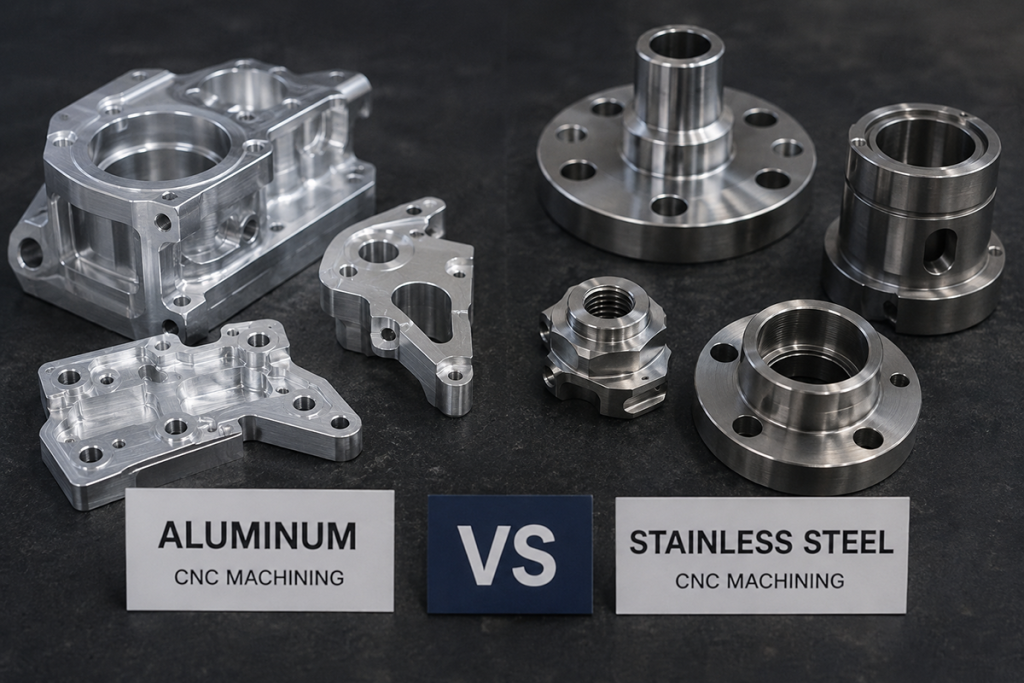
Brass is often compared with aluminum and stainless steel because all three materials can be used for CNC machined components. However, each material serves a different purpose. Aluminum is usually selected for lightweight parts and fast machining. Stainless steel is selected for strength, corrosion resistance, and durability. Brass is selected when precision machining, clean threads, smooth surfaces, electrical conductivity, or reliable small-part production are more important.
The best choice depends on the part’s function. Brass is not usually the best material for large structural parts or lightweight designs, but it can be ideal for fittings, connectors, bushings, inserts, valve components, electrical hardware, and detailed turned parts.
Brass vs Aluminum
Aluminum is lighter than brass and usually more cost-effective for larger machined parts such as brackets, housings, plates, enclosures, and lightweight structural components. It is easy to machine, widely available, and suitable for anodizing or coating. If weight reduction is important, aluminum is usually the better starting point.
Brass is heavier than aluminum, but it can provide advantages for precision threaded parts, fittings, connectors, and conductive components. Brass often produces cleaner threads and more stable small features, making it useful for components that require accurate assembly or repeated connection.
For example, an aluminum housing may be better for a lightweight electronics enclosure, while a brass insert or threaded connector may be better for the mating feature inside that assembly. The two materials can also work together in one product when each is used where it performs best.
Brass vs Stainless Steel
Stainless steel is stronger and generally more corrosion-resistant than brass in demanding environments. It is often used for food-processing equipment, medical fixtures, marine parts, chemical equipment, shafts, supports, and heavy-duty components. If the part must handle high load, aggressive chemicals, or harsh outdoor exposure, stainless steel may be the safer choice.
Brass, however, is usually easier and faster to machine than stainless steel. It is often more practical for small threaded components, fittings, bushings, connectors, and valve parts where machining efficiency and thread quality are important. Brass may also reduce tool wear and support more efficient repeat production for detailed small parts.
If a part needs high strength and corrosion resistance, stainless steel may be better. If it needs clean threads, good machinability, electrical conductivity, and stable precision features, brass may be the more practical material.
When Brass Is the Better Choice
Brass is often the better choice when the part requires:
- Clean internal or external threads
- Small turned features
- Reliable dimensional repeatability
- Good surface finish directly from machining
- Electrical or thermal conductivity
- Moderate corrosion resistance
- Precision fittings, connectors, or inserts
- Efficient batch production of small components
In these cases, brass can provide a strong balance of manufacturability and function. It may not be the cheapest raw material, but its machining efficiency can make it cost-effective for the right type of part.
When Brass May Not Be the Best Choice
Brass may not be suitable when the part requires very high strength, very low weight, or strong resistance to aggressive chemicals, high temperatures, or harsh outdoor conditions. For lightweight structures, aluminum may be better. For high-strength or corrosive environments, stainless steel may be more suitable.
If buyers are comparing common metal options, the article on aluminum vs stainless steel machining can help clarify when aluminum or stainless steel is more practical. For broader material comparison, best materials for CNC machining can also support early-stage material selection.
Practical Material Selection Rule
A practical rule is to choose aluminum when weight and cost are the main priorities, stainless steel when strength and harsh environment durability matter, and brass when precision threads, fittings, connectors, conductivity, or small detailed features are the main requirements.
Brass delivers the most value when its machinability and precision advantages directly support the part’s function. When those advantages are not needed, another material may provide better cost efficiency or performance.
How to Reduce Cost and Improve Quality in Brass Machining
Brass is generally easier to machine than many other metals, but cost and quality still depend on design decisions, tolerance control, material grade, thread requirements, surface finish, quantity, and inspection planning. Buyers can often reduce unnecessary cost by making the drawing clearer and allowing the supplier to focus precision work only where it matters.
The goal is not to make every brass part as simple as possible. Many precision brass components need small features, accurate threads, tight mating surfaces, and clean finishes. The key is to separate functional requirements from non-critical details so the part can be machined efficiently without reducing performance.
Choose the Right Brass Grade
Material grade affects both cost and machining stability. C360 brass is often the best choice for efficient CNC machining because it cuts cleanly and supports accurate threads, holes, grooves, and turned features. If the part does not require special corrosion resistance or forming performance, C360 may provide the best balance of machinability and cost.
Other grades may be necessary for specific applications. C464 naval brass may be selected for marine or moisture-exposed parts, while C260 may be used when formability is important. However, choosing a grade with properties the part does not need can increase cost or reduce machining efficiency.
Use Practical Tolerances
Brass can hold accurate dimensions, but tight tolerances still require more careful machining and inspection. Buyers should avoid applying strict tolerances to every surface unless the part truly requires it.
Critical features may include:
- Threaded areas
- Precision holes
- Sealing faces
- Mating diameters
- Shoulders that control assembly position
- Electrical contact surfaces
Non-critical outside profiles, clearance areas, and cosmetic surfaces can often use standard machining tolerances. This helps reduce machining time, inspection effort, and total cost.
Standardize Thread Requirements
Threads are common in brass fittings, inserts, valve parts, connectors, and nozzles. Using standard thread sizes and thread depths can reduce tooling complexity and improve production efficiency. Custom thread forms, very deep internal threads, or unusually tight thread tolerances can increase cost.
If the thread is used for sealing, repeated assembly, or pressure-related performance, buyers should define the requirement clearly. If it is only used for basic fastening, a standard thread specification may be enough.
Avoid Unnecessary Small Features
Brass supports small features well, but very small holes, thin walls, narrow slots, and deep internal passages can still increase machining time and deburring difficulty. If these details are not essential, simplifying them can improve quality and reduce cost.
For fluid control parts, internal passages should be designed with tool access and cleaning in mind. For connector parts, small grooves and shoulders should be dimensioned only where they support real assembly or sealing functions.
Clarify Surface Finish Requirements
Brass can achieve a clean machined finish, but polishing, plating, brushing, or decorative finishing adds cost and lead time. Buyers should define which surfaces require special finish and which can remain as-machined.
This is especially important for parts that are both functional and visible. A cosmetic surface may need polishing or plating, while hidden internal features may only need deburring and cleaning. Clear finish notes help avoid over-processing the entire part.
Plan for Deburring and Cleaning
Deburring is important for brass parts with holes, threads, grooves, and internal features. Burrs can affect assembly, sealing, electrical contact, or fluid flow. Buyers should specify if the part must be free of loose chips, sharp edges, or internal burrs.
For valve components, nozzles, and fittings, internal cleanliness can be more important than external appearance. Defining this requirement early helps the supplier plan the correct finishing and inspection steps.
Use Batch Quantity Strategically
For repeat brass components, increasing quantity can reduce unit cost because setup, programming, tooling, and inspection are spread across more parts. Brass is well suited for stable batch production, especially when the design is mature and the material grade is available.
If the design is not fully validated, a small prototype batch may be safer. Once the part is tested and approved, larger quantities can be quoted more efficiently.
Allow DFM Review Before Production
Design for manufacturability review can help identify cost-saving opportunities before machining begins. A supplier may suggest larger radii, standard thread forms, clearer tolerances, better material grade options, or simplified finishing requirements.
For brass parts, small changes can make production more stable without changing the part’s function. Early review is especially useful for fittings, connectors, inserts, valve parts, and small precision components where threads and mating features must remain consistent.
What Buyers Should Prepare Before Requesting a Brass CNC Quote
Before requesting a brass CNC quote, buyers should prepare clear technical information so the supplier can understand the part function, material requirement, tolerance needs, thread details, surface finish, quantity, and inspection expectations. Brass is a machinable material, but unclear RFQ details can still lead to inaccurate pricing, production delays, or parts that do not fully match the application.
For precision brass components, small details matter. A fitting, insert, connector, bushing, nozzle, or valve component may look simple, but thread quality, burr control, surface finish, hole size, and mating dimensions can determine whether the part works correctly after assembly. The more complete the RFQ information is, the easier it is for the supplier to quote accurately and recommend practical improvements.
CAD Files and 2D Drawings
Buyers should provide both 3D CAD files and 2D drawings when possible. The CAD file helps the supplier review geometry, machining access, toolpaths, and setup strategy. The 2D drawing should define tolerances, thread specifications, surface finish, material grade, critical dimensions, and inspection notes.
For brass parts, the 2D drawing is especially important when the component includes threads, sealing surfaces, small holes, internal passages, or mating features. These details may not be clear enough from the 3D model alone.
Brass Grade Requirement
The RFQ should state the required brass grade, such as C360, C260, or C464. If the grade is fixed, buyers should make that clear. If the material is flexible, the supplier may suggest a grade that offers better machinability, availability, corrosion resistance, or cost efficiency.
For example, C360 brass is often preferred for efficient machining and clean threads. C464 may be needed for marine or moisture-exposed environments. If the application does not require a specific grade, allowing alternatives can sometimes reduce cost or lead time.
Thread Specifications
Many brass components rely on accurate threads. Buyers should clearly define internal and external thread sizes, thread standards, thread depth, tolerance class, and any sealing requirements. If the thread must connect with another component, that mating condition should be considered during design review.
Thread details are especially important for fittings, inserts, nozzles, connectors, and valve parts. A vague note such as “threaded hole” may not be enough for accurate production or inspection.
Critical Tolerances and Mating Features
Buyers should identify which dimensions are critical to assembly or performance. These may include hole diameters, thread positions, sealing faces, concentric diameters, shoulder locations, flatness, or surface finish requirements.
Not every dimension needs a tight tolerance. Applying strict tolerances only where needed can reduce machining cost while maintaining part function. This is especially useful for repeated brass parts where consistent production quality and cost control are both important.
Surface Finish and Deburring Requirements
The RFQ should specify whether the part requires a standard machined finish, polishing, plating, brushing, cleaning, or other post-processing. Buyers should also define deburring requirements, especially for holes, threads, internal passages, and sealing surfaces.
For brass fittings and valve components, internal burrs can affect flow or sealing. For electrical parts, burrs or rough surfaces may affect contact quality. If burr control or cleanliness is important, it should be written clearly in the drawing or quote request.
Quantity and Production Stage
Quantity affects unit cost, setup planning, tooling, and inspection strategy. Buyers should state whether the request is for a prototype, a small batch, or repeat production. Brass is suitable for repeat production, but if the design is still being tested, a small validation batch may be more practical before larger quantities are ordered.
If future demand is expected, buyers can mention the estimated annual quantity or repeat order plan. This helps the supplier review whether the process should be optimized for one-time production or stable batch manufacturing.
Application Environment
Application details help confirm whether brass is the correct material. Buyers should explain whether the part will be used in fluid systems, electrical assemblies, indoor equipment, outdoor exposure, moisture, heat, or light mechanical wear.
If the part will contact water, air, oil, gas, chemicals, or cleaning agents, that information should be included. The supplier may recommend a different brass grade, surface finish, or alternative material if the environment is not suitable for standard brass.
Inspection and Documentation
If the project requires thread inspection, pin gauge checks, dimensional reports, material certificates, surface finish inspection, or first article inspection, buyers should state these requirements before quoting. Inspection and documentation affect cost, but they may be necessary for precision components or repeat production.
For buyers sourcing custom fittings, connectors, valve parts, inserts, or electrical components, complete RFQ information can reduce unnecessary revisions and improve quote accuracy. Brass is an efficient material when the design, grade, tolerance, finish, and inspection requirements are clearly defined from the beginning.
If your project requires precision brass parts and you are unsure about grade selection, tolerance feasibility, or thread requirements, you can submit drawings through custom CNC machining services for review before production.
Conclusion
Brass CNC machining is ideal for precision components that require clean threads, stable dimensions, smooth surface finish, good machinability, and reliable performance in detailed assemblies. It is especially suitable for fittings, connectors, inserts, bushings, valve components, nozzles, electrical hardware, and small turned parts where accuracy and repeatability matter.
Brass is not chosen because it is the lightest or strongest material. Aluminum is usually better for lightweight brackets, housings, and cost-sensitive structural parts. Stainless steel is usually better for high-strength, harsh environment, or strong corrosion-resistant applications. Brass is most valuable when the part requires precision machining, threaded features, conductivity, moderate corrosion resistance, or efficient repeat production of small components.
The main advantages of brass include excellent machinability, lower tool wear, clean thread formation, good dimensional repeatability, and attractive surface finish. These properties can make brass highly efficient for CNC turning, milling, drilling, threading, and batch production. However, buyers should still choose the correct brass grade, define functional tolerances clearly, and specify thread, finish, deburring, and inspection requirements before production begins.
Cost control in brass machining depends on practical design and clear RFQ information. Buyers can reduce unnecessary cost by using standard threads, avoiding overly tight tolerances on non-critical features, simplifying unnecessary small details, choosing the right brass grade, and clearly identifying which surfaces require polishing, plating, deburring, or special inspection.
For custom precision parts, the best material is not always the strongest or most expensive option. Brass is often the right choice when the component needs small detailed features, reliable threads, clean machining, and stable assembly performance. When used for the right application, brass can provide an efficient balance of precision, manufacturability, function, and repeatable quality.
If you are developing brass fittings, connectors, inserts, valve components, electrical parts, or other precision machined components, our team can review your drawings and help evaluate material grade, tolerance feasibility, surface finish, thread requirements, and production cost before manufacturing.